Aloinopsis schooneesii
Aloinopsis schooneesii – The Textured Jewel of the Desert
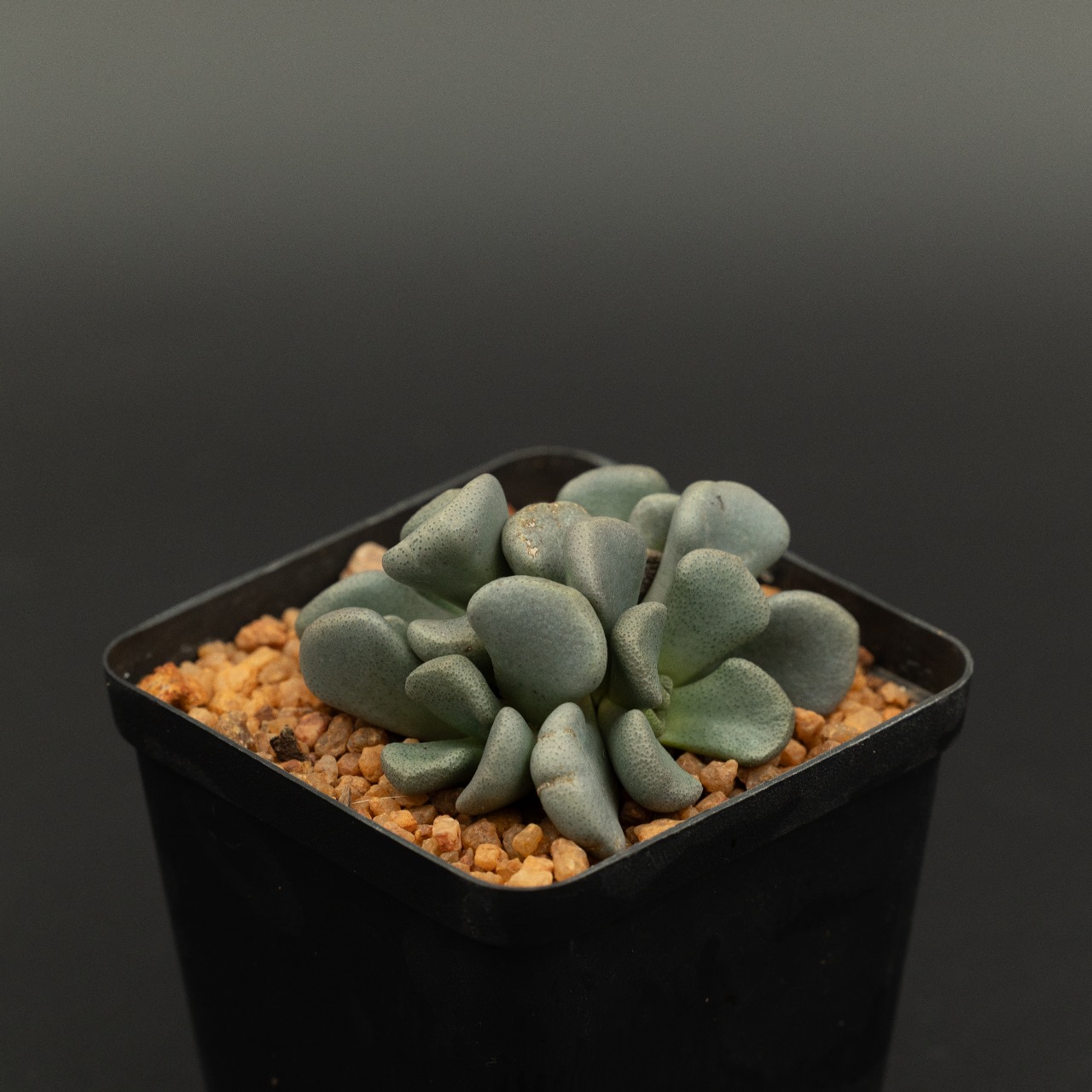
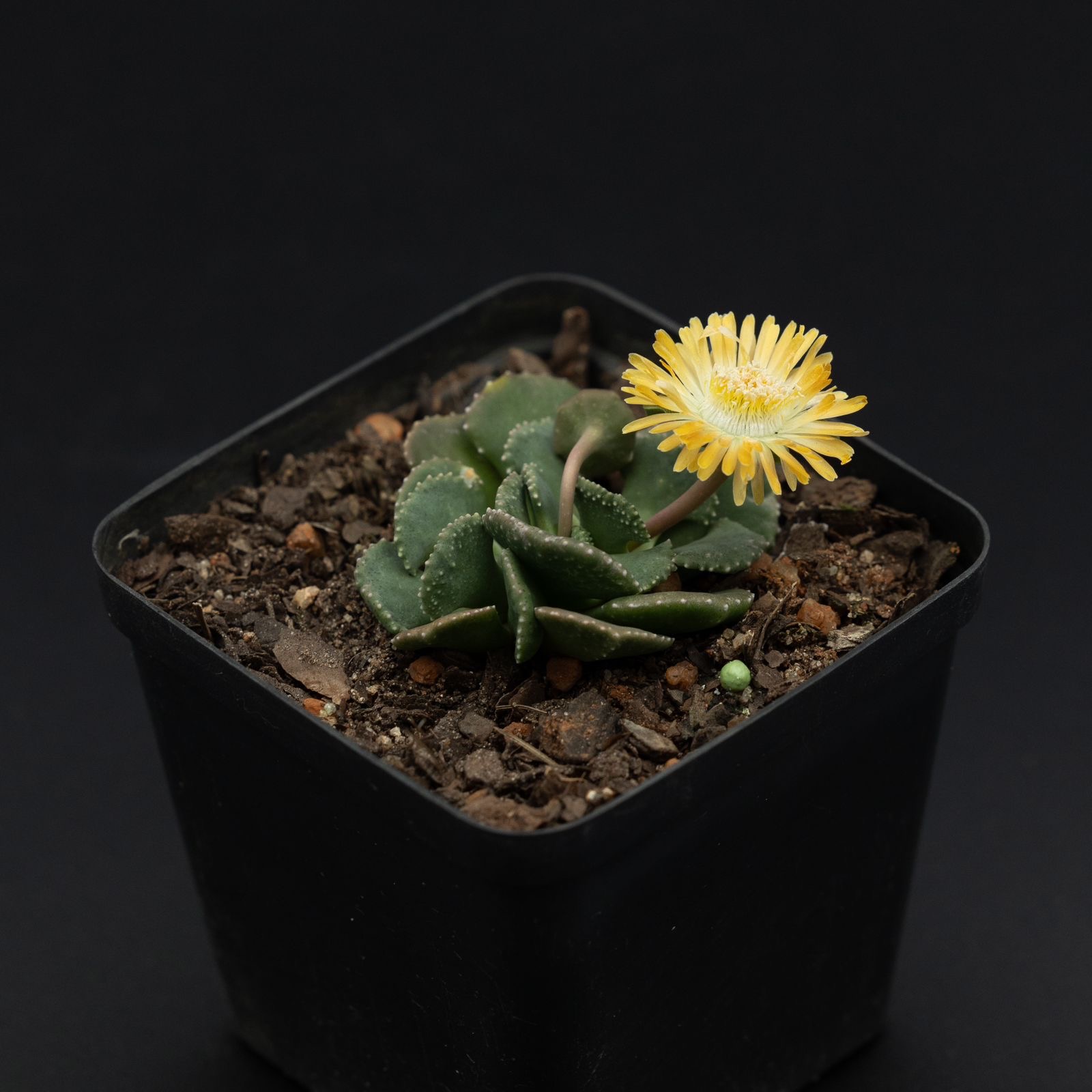
Aloinopsis schooneesii, a distinctive member of the Aizoaceae family, is a small succulent species native to South Africa’s arid regions. Known for its unique, knobby foliage and vibrant winter flowers, A. schooneesii is popular among succulent collectors for its unusual texture and hardy nature.
Common Characteristics
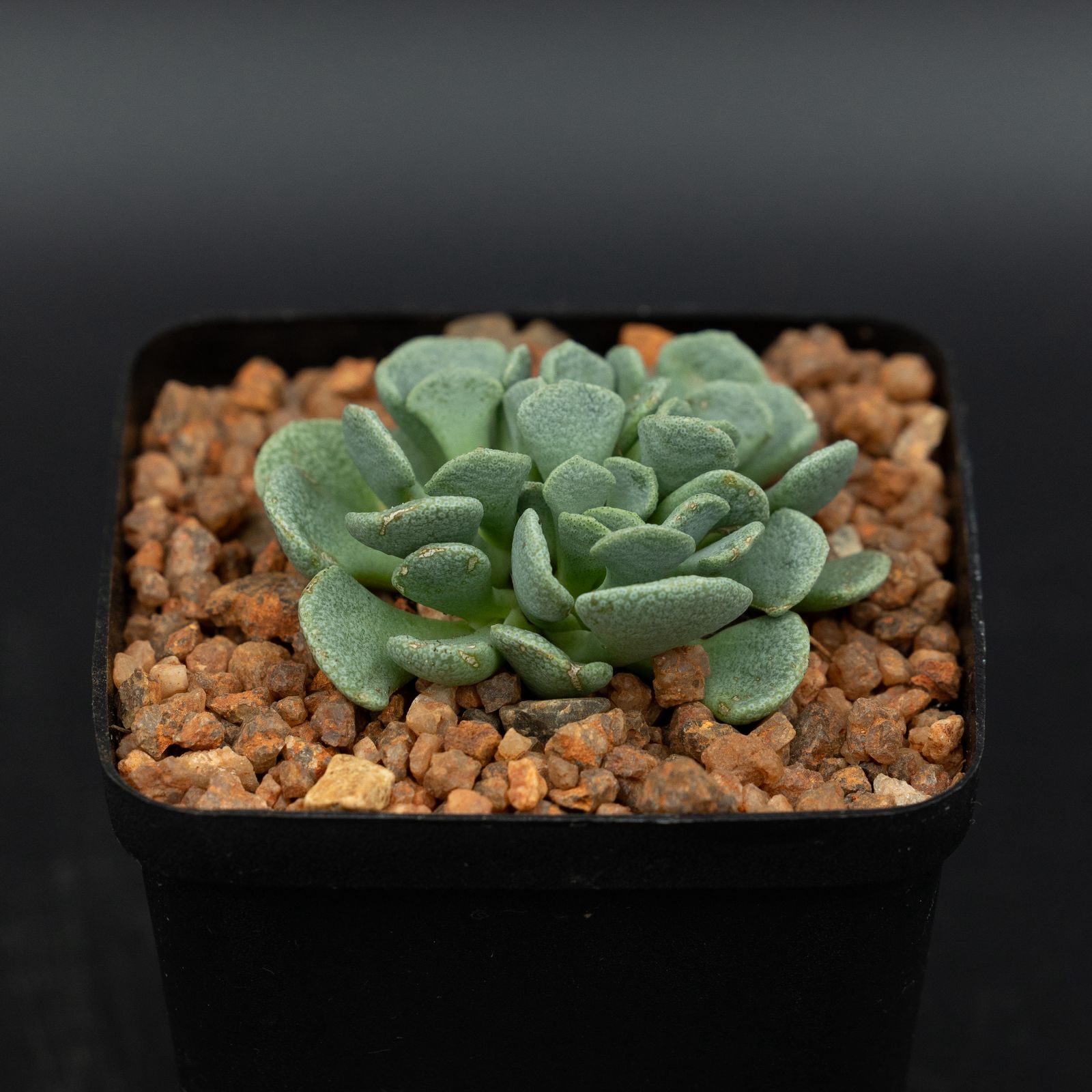
Low-Growing Rosettes: A. schooneesii forms compact, ground-hugging rosettes that rarely grow more than a few inches tall, making it a suitable choice for small gardens or container displays.
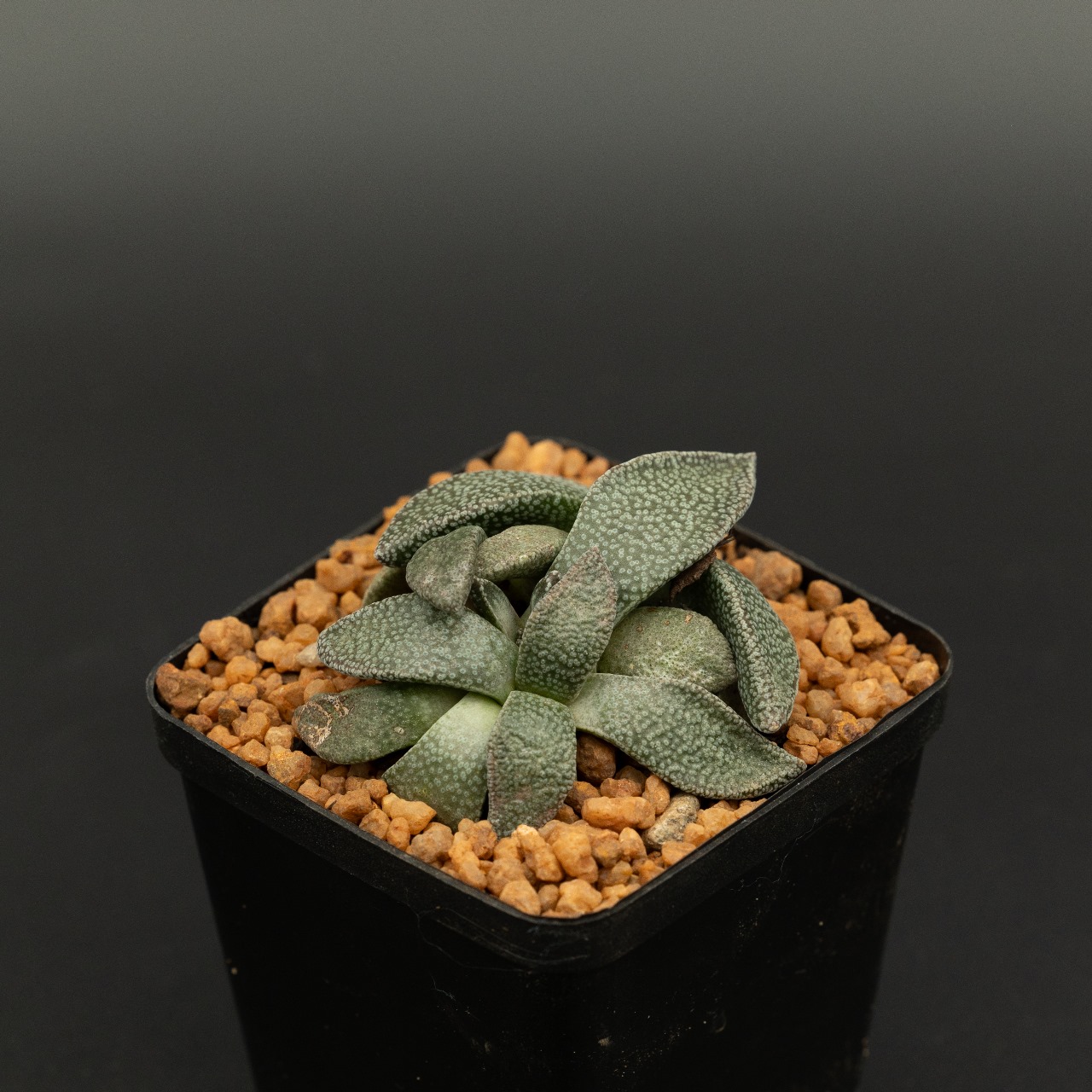
Knobby, Warty Leaves: The species features thick, fleshy leaves with a knobby or warty texture that gives it a stone-like appearance. The leaves are usually gray-green but may develop a hint of red or purple under intense sunlight.
Bright Yellow Flowers: During winter, A. schooneesii produces eye-catching, daisy-like flowers in shades of yellow or orange. These bright blooms contrast beautifully with the plant’s muted foliage, adding cheer to winter landscapes.
Thick Taproot: Like other members of the Aloinopsis genus, A. schooneesii has a large taproot that helps it access deep water reserves, allowing it to endure long periods of drought.
Native Habitat and Origins
Aloinopsis schooneesii is native to the Northern Cape region of South Africa, where it grows in rocky, gravelly soils and sparse, mountainous terrain. This harsh environment, with extreme temperatures and minimal rainfall, has shaped A. schooneesii into a tough, drought-tolerant plant. In the wild, it often grows partially buried among stones, allowing its knobby foliage to blend with its surroundings for camouflage.
Care Guide for Aloinopsis schooneesii
With proper care, A. schooneesii can thrive indoors or outdoors, making it an excellent addition to any succulent collection:
Soil: Use a well-draining, gritty cactus or succulent mix with added sand, perlite, or pumice. Good drainage is essential to prevent rot, especially around the taproot.
Watering: Water sparingly, particularly in the summer when the plant may enter a dormant period. During the winter growing season, water only when the soil has completely dried out.
Light: A. schooneesii does well in bright, indirect sunlight but can tolerate a few hours of direct morning sun. Strong light brings out the best color in its leaves.
Temperature: While A. schooneesii is somewhat cold-tolerant and can handle brief exposure to light frost (down to around 25°F/-4°C), it should be protected from prolonged freezing conditions.
Fertilization: Apply a diluted cactus fertilizer once or twice during the winter growing season to encourage healthy growth and flowering.
A Unique Feature: Mimicry of Natural Surroundings
One of the most unique aspects of Aloinopsis schooneesii is its resemblance to the stones and gravel of its natural habitat. The knobby, textured leaves help it blend seamlessly into the rocky terrain, providing a natural form of camouflage that protects it from herbivores. This mimicry, combined with its deep taproot, makes A. schooneesii a master of survival in harsh environments. Its stone-like appearance, along with its bright winter blooms, makes it a fascinating and beautiful choice for any succulent enthusiast.
Below are some species we are familiar with…