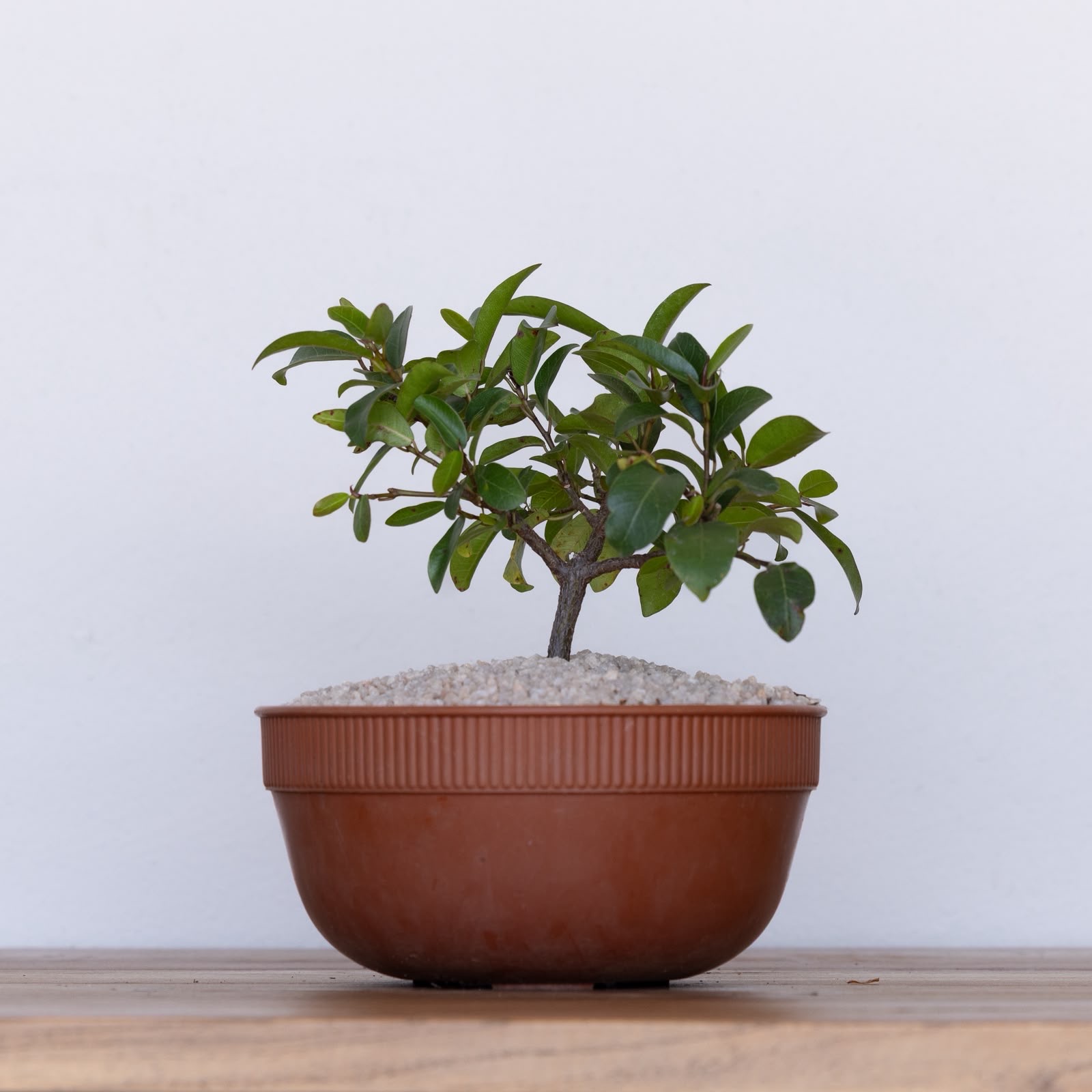
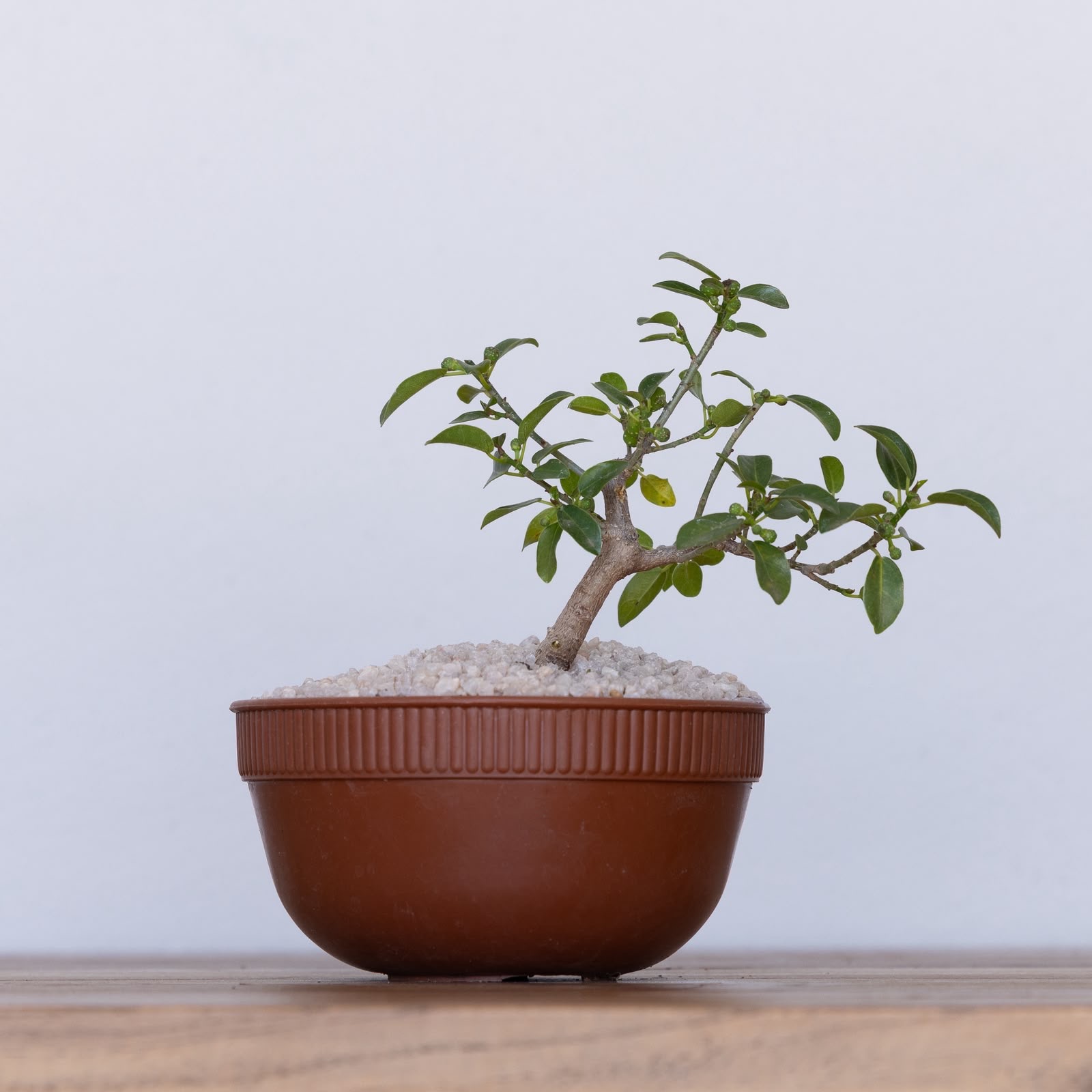
Ficus burtt-davyi
Ficus burtt-davyi – The Scrambling Fig
Description:
Ficus sur, commonly known as the Broom Cluster Fig or Cape Fig, is a fast-growing indigenous African tree found from South Africa through tropical Africa. It is admired for its broad canopy, smooth grey bark, and large, glossy green leaves that create a lush tropical appearance. In nature, it often grows along rivers, forest margins, and moist valleys, where it can become an impressive shade tree.
One of its most distinctive features is the way it produces clusters of figs directly on the trunk and older branches, a characteristic known as cauliflory. The fruit changes from green to shades of yellow, orange, red, and eventually purple as it ripens, attracting a wide variety of birds, monkeys, bats, and other wildlife.
As a bonsai, Ficus sur develops an attractive trunk relatively quickly and responds exceptionally well to pruning. Although its leaves are naturally larger than those of some other Ficus species, regular pruning and bonsai culture gradually reduce leaf size while encouraging dense branching. It is an excellent choice for growers looking to create a bold, tropical bonsai with an unmistakably African character.
General Bonsai Care:
- Light: Prefers full sun to bright light. Plenty of sunlight encourages compact growth and smaller leaves.
- Water: Water thoroughly when the soil begins to dry. Enjoys consistent moisture but should never remain waterlogged.
- Soil: Use a free-draining bonsai mix that retains moderate moisture while providing excellent aeration.
- Temperature: Thrives in warm conditions and should be protected from frost. Ideal range is 15–35°C.
- Feeding: Feed regularly during the growing season with a balanced bonsai fertilizer to support vigorous growth and ramification.
- Pruning: Responds extremely well to pruning and back-budding. Regular trimming encourages smaller leaves and a dense canopy.
- Wiring: Young branches wire easily, while older branches become more rigid with age. Check wire regularly to prevent scarring.
- Repotting: Repot every two to three years during active growth. Root pruning is generally well tolerated.
With its impressive trunk, tropical foliage, and unique clusters of fruit growing from the bark itself, Ficus sur is a true celebration of Africa’s forests—bringing the wild beauty of the continent into bonsai form.
Below are some species we are familiar with…