
Delosperma vinaceum
Delosperma vinaceum – Wine Colored Ice Plant
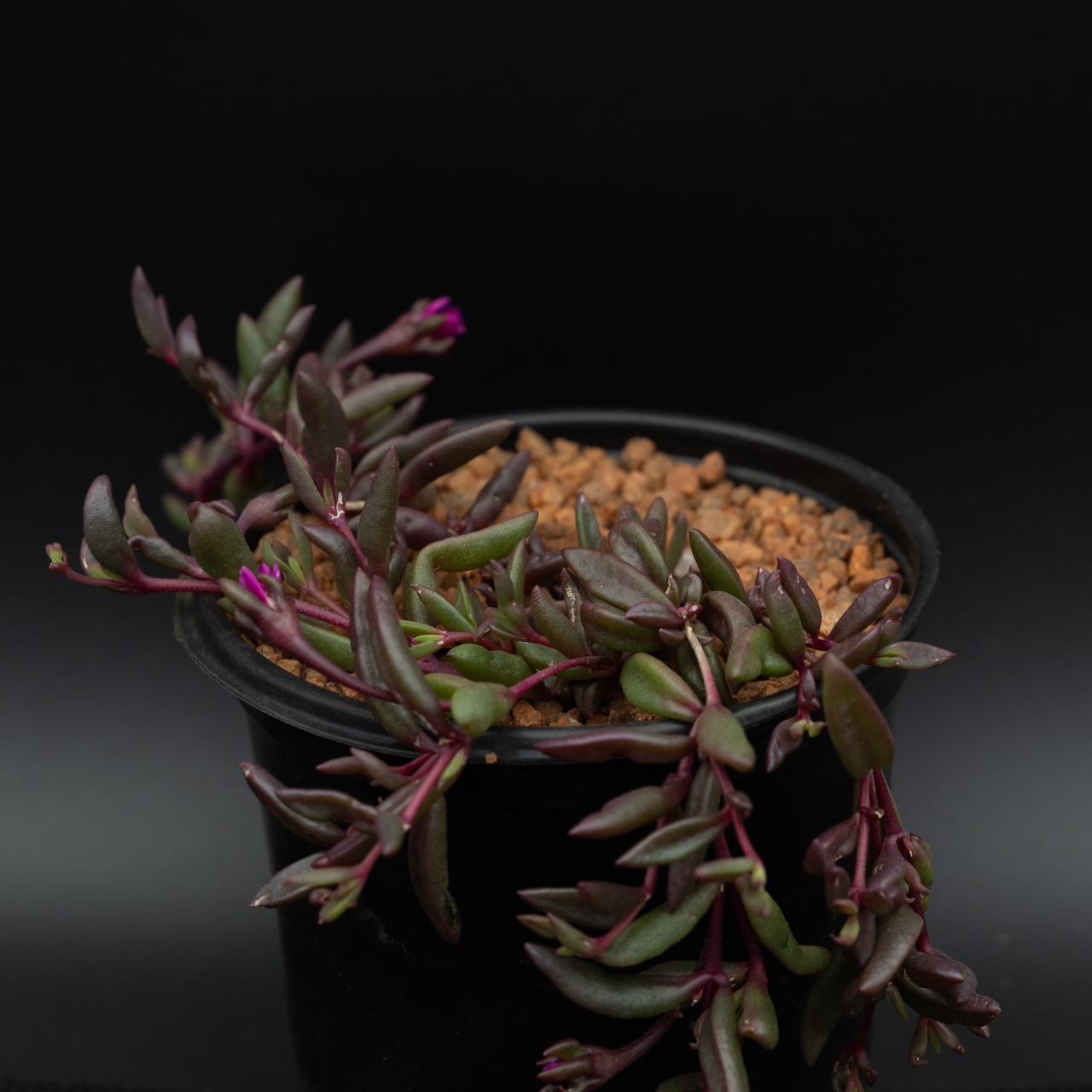
Delosperma vinaceum, commonly referred to as the wine-colored ice plant, is a low-growing, perennial succulent from the Aizoaceae family. Known for its hardiness and beautiful wine-colored blooms, this species is particularly well-suited for rock gardens and dry landscapes, adding vibrant color and lush ground cover in the warmer months.
Common Characteristics
- Compact, Spreading Growth: Delosperma vinaceum forms a compact, mat-like growth, spreading along the ground to create a dense carpet of small, succulent leaves. This growth habit makes it ideal for use as a ground cover in rockeries or containers.
- Succulent, Cylindrical Leaves: The leaves are fleshy, cylindrical, and bright green, often covered with a faint shimmer that gives the plant a slight “frosted” look, especially when exposed to direct sunlight.
- Wine-Colored Flowers: This species produces striking, daisy-like flowers in shades of deep pink to purple, often with a hint of red, giving it the nickname “wine-colored ice plant.” The flowers bloom from late spring through early fall, opening during the day to reveal their vibrant colors.
- Cold-Hardy: Unlike many succulents, Delosperma vinaceum is remarkably cold-tolerant and can survive in regions with colder winters, making it a popular choice in temperate climates.
Native Habitat and Origins
Delosperma vinaceum is native to the mountainous regions of South Africa, where it grows in rocky, well-drained soils under intense sunlight. This environment is characterized by high altitudes, fluctuating temperatures, and periods of drought, which have shaped the plant’s adaptations to survive in both hot and cold conditions.
Care Guide for Delosperma vinaceum
Delosperma vinaceum is a low-maintenance plant, ideal for gardeners looking for a resilient and colorful addition to their landscape:
- Soil: Plant in well-draining soil, such as a cactus or succulent mix, or amend regular soil with sand or gravel to improve drainage. Good drainage is crucial to prevent root rot.
- Watering: Water deeply but infrequently. Allow the soil to dry out completely between waterings, especially during the growing season. In winter, reduce watering significantly to prevent over-saturation.
- Light: This plant thrives in full sun, which promotes flowering and healthy growth. It can tolerate partial shade, but too little light may result in fewer blooms and a leggier growth habit.
- Temperature: Delosperma vinaceum is highly tolerant of temperature fluctuations, from hot summer days to cool winter nights. It can withstand light frost, making it a versatile choice for gardens in temperate zones.
- Fertilization: A light feeding of balanced, diluted fertilizer once in early spring can support growth, though Delosperma vinaceum is generally not a heavy feeder and will thrive without regular fertilization.
A Unique Feature: Exceptional Cold Hardiness for an Ice Plant
One of the most unique and special characteristics of Delosperma vinaceum is its cold tolerance, which sets it apart from many other species in the Delosperma genus. This hardy succulent can withstand temperatures as low as 0°F (-18°C), making it a valuable choice for gardeners in colder climates who want to enjoy the beauty of an ice plant without the risk of winter loss. Its vibrant, wine-colored blooms and resilience make Delosperma vinaceum a standout choice in both arid and cooler regions, adding a year-round pop of color and texture to the landscape.
Below are some species we are familiar with…
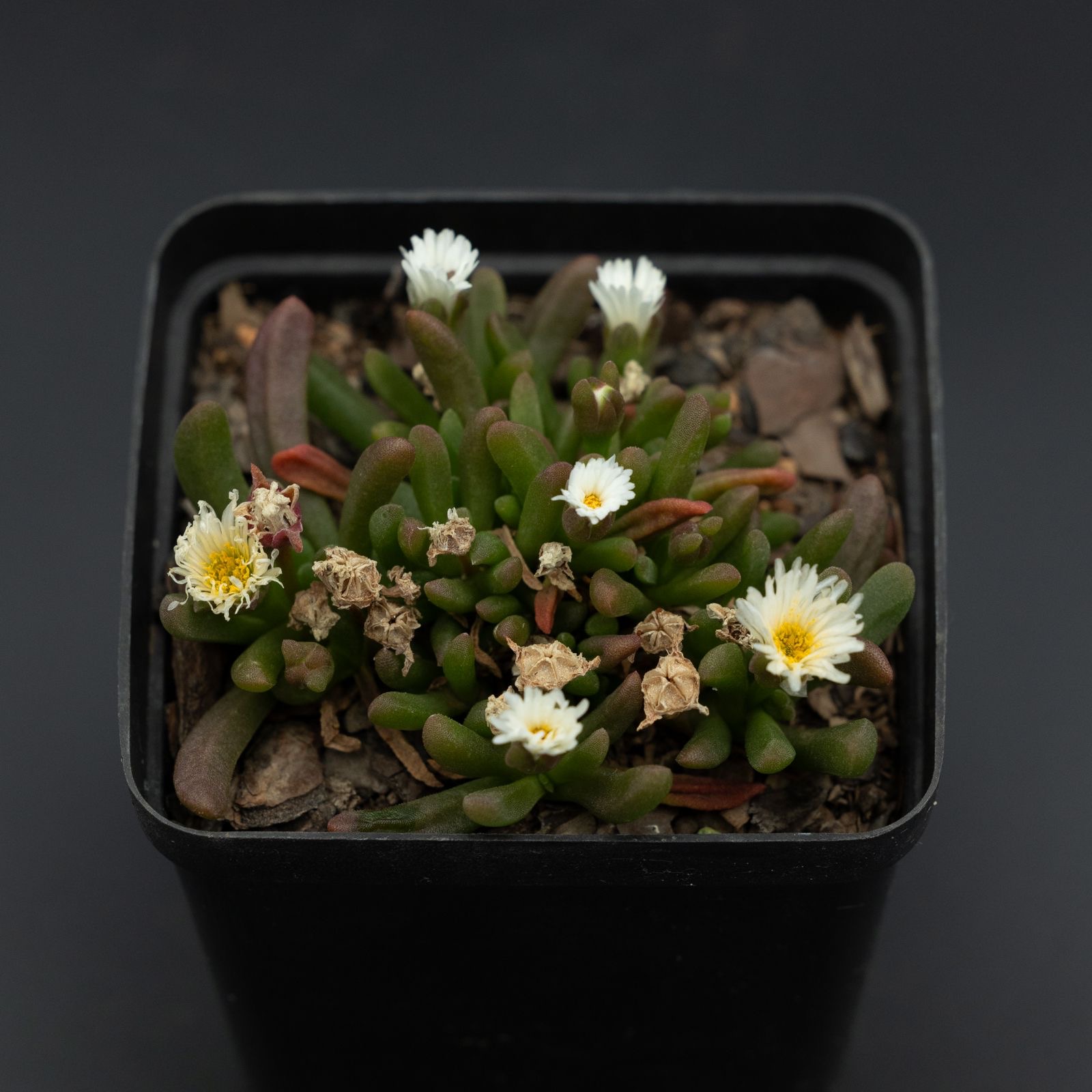
Delospema esterhuyseniae