
Agave victoriae-reginae
Agave victoriae-reginea – The Queen Agave
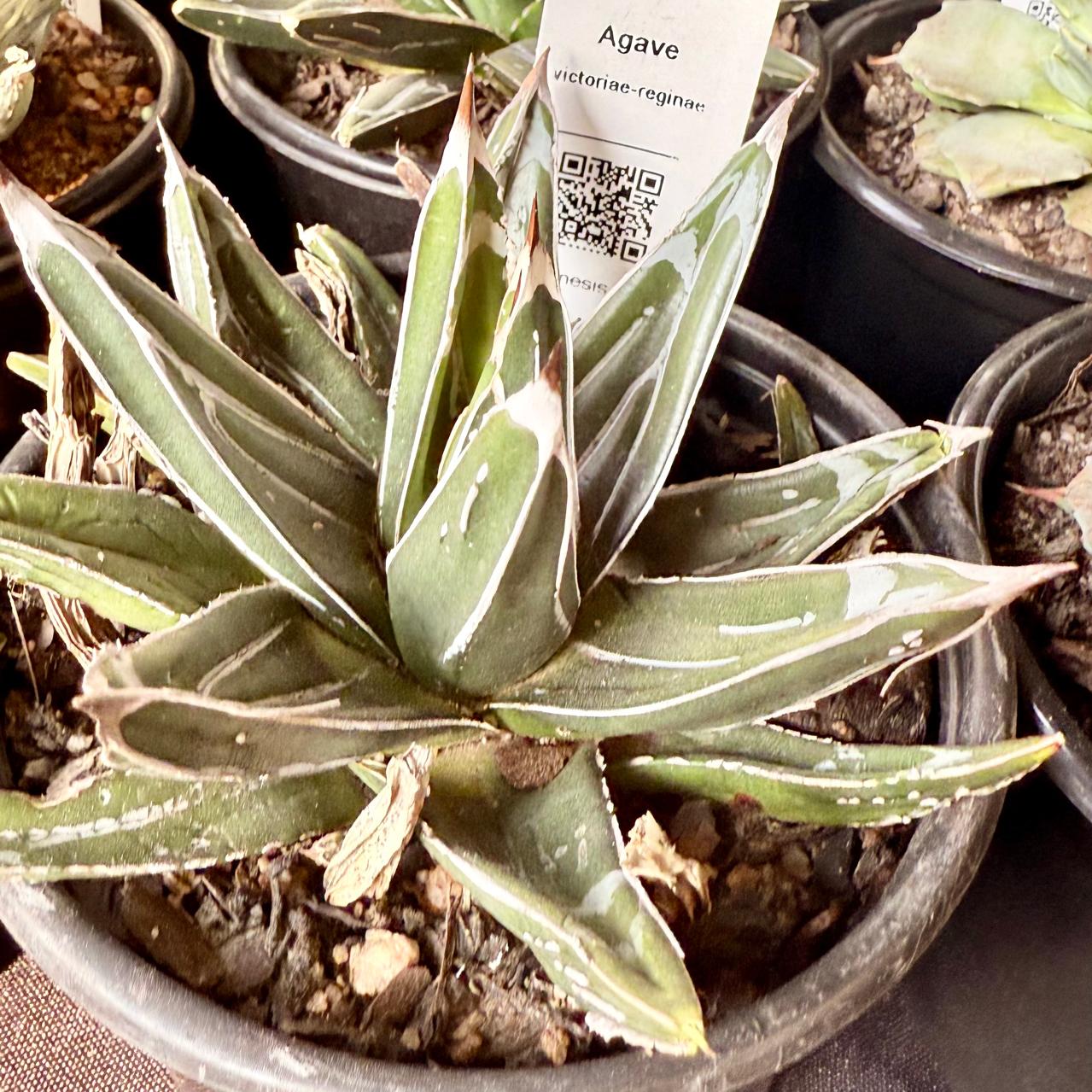
Agave victoriae-reginae, commonly known as the Queen Victoria Agave, is a striking species of agave that is prized for its compact size, symmetrical rosette, and stunning geometric leaf patterns. This species is one of the most sought-after agaves by collectors and landscapers alike, due to its beauty and unique characteristics.
Common Characteristics:
- Size: Agave victoriae-reginae is a slow-growing, compact plant that typically forms a rosette up to 1 to 1.5 feet (30-45 cm) in diameter. It rarely exceeds 2 feet (60 cm) in height, making it an excellent choice for small gardens or containers.
- Leaves: The leaves of this agave are thick, stiff, and dark green, with distinctive white margins and small, sharp spines. The leaf tips are often adorned with a dark brown terminal spine, adding to its overall striking appearance. The arrangement of the leaves is symmetrically organized, creating a perfectly round rosette that gives this plant its geometric allure.
- Flowers: Like most agave species, Agave victoriae-reginae produces a tall flowering stalk that can reach up to 10 feet (3 meters) when the plant is mature. The flowers are greenish-yellow and are often hidden beneath the protective leaves of the rosette. However, this species only flowers once in its lifetime, after which the plant dies, although it usually produces offsets before this event.
- Shape: The plant’s leaves form a dense, symmetrical rosette that gives it a highly architectural, sculptural look. This appearance is one of the main reasons it is often used in ornamental gardening and succulent displays.
Native Habitat:
Agave victoriae-reginae is native to the arid regions of northeastern Mexico, particularly in the Chihuahuan Desert and the surrounding mountainous areas. It thrives in rocky, well-drained soils, where it can be exposed to full sunlight and low water availability. This agave is adapted to withstand long periods of drought due to its thick, fleshy leaves, which store water.
Care Instructions:
- Light: Agave victoriae-reginae requires full sunlight to thrive. It should be placed in a spot that receives at least 6 hours of direct sunlight daily. Insufficient light may result in slow growth and a less vibrant appearance.
- Watering: Like most agaves, Agave victoriae-reginae is drought-tolerant and requires infrequent watering. Water the plant thoroughly, but allow the soil to dry out completely between waterings. Overwatering can lead to root rot, so it is important to ensure proper drainage.
- Soil: Well-draining, sandy or gravelly soils are ideal for this species. A cactus or succulent mix is a good choice for container-grown plants. If planting in the ground, ensure the soil is light and drains well to prevent water from accumulating at the roots.
- Temperature: This species is hardy in USDA zones 9a to 11, and it tolerates temperatures as low as 20°F (-6°C) for short periods. It prefers warm, dry conditions and should be protected from frost. In colder climates, it can be grown in containers and brought indoors during winter.
- Fertilization: Fertilization is not necessary for Agave victoriae-reginae, but a light feeding with a balanced, low-nitrogen fertilizer during the growing season can encourage healthy growth. Over-fertilizing can result in leggy growth, so it’s best to avoid excessive feeding.
- Pruning: Pruning is minimal for this species. You can remove dead or damaged leaves as necessary to maintain the plant’s tidy rosette form. The plant may also produce offsets (pups) around the base, which can be separated and propagated.
Unique and Special Feature:
What makes Agave victoriae-reginae so special is its symmetrical, geometric shape and its striking contrast between the dark green leaves and the white margins. This species is often referred to as one of the most beautiful agaves due to its architectural form and the intricate pattern created by the leaves. It is a perfect choice for low-maintenance yet visually stunning landscaping, and it adds a unique aesthetic to any succulent collection.
Fun Fact: Agave victoriae-reginae is sometimes called the “Queen Victoria Agave” because of its regal, symmetrical appearance. Its compact size and ability to thrive with minimal water requirements make it a favorite among gardeners and collectors who seek a beautiful, easy-care plant. This agave is also prized for its slow growth, which means it can be enjoyed for many years before it blooms and dies, making it a cherished specimen in gardens and homes alike.
Below are some species we are familiar with…
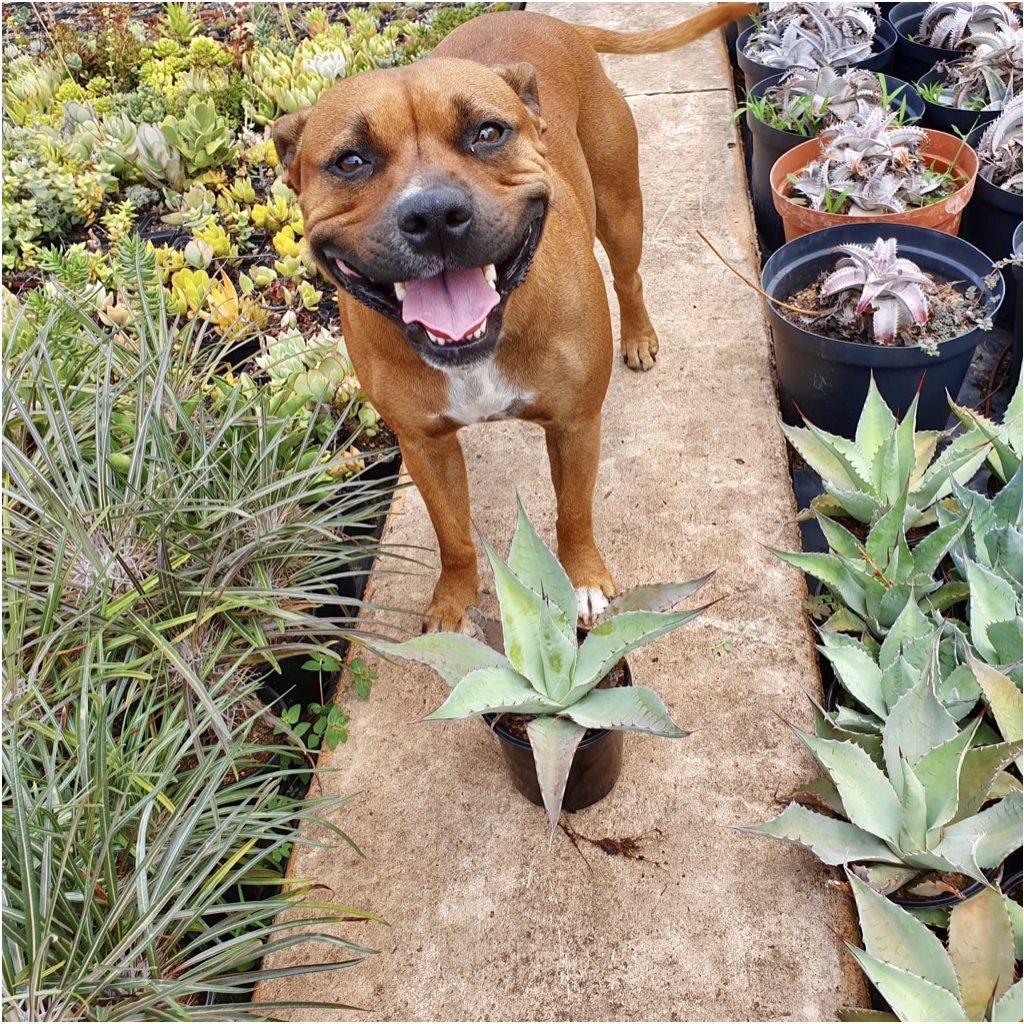
Agave americana mediopicta alba
Agave applanata creme spike
Agave colorata
Agave confederate rose
Agave creme brulee
Agave filifera
Agave geminiflora
Agave isthmensis
Agave isthmensis variegata
Agave kichiokan
Agave lophantha
Agave ovatifolia
Agave parryi
Agave parryi huachucensis
Agave parryi truncata
Agave stricta
Agave titanota
Agave toumeyana
Agave vilmoriniana
Agave victoriae-reginae
Agave victoriae-reginae picasso
Agave victoriae-reginae snow princess
Agave rum runner