
Agave parryi truncata
Agave parryi truncata – The Truncated Parry’s Agave
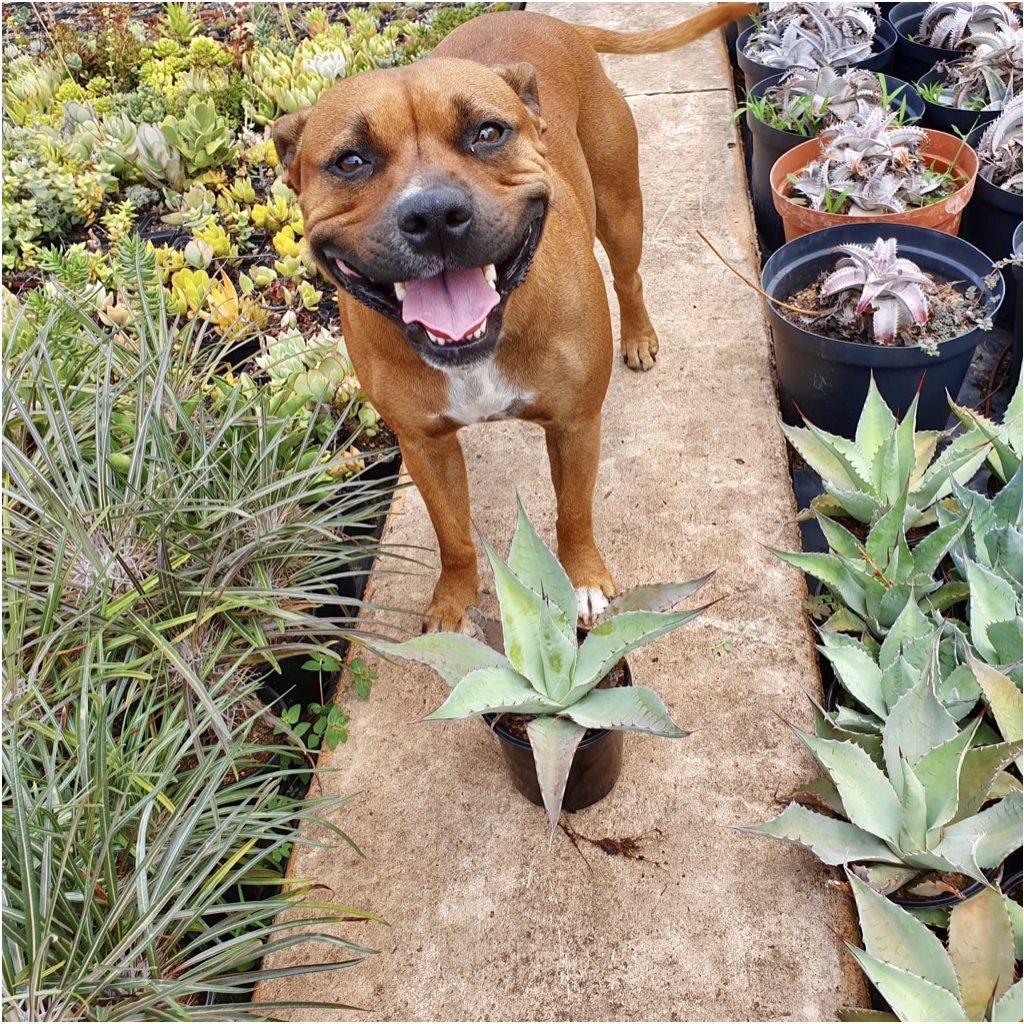
Agave parryi var. truncata, commonly known as the Truncated Parry’s Agave, is a distinct and striking variety of the Agave parryi species, distinguished by its compact, rounded rosette of thick, blue-gray leaves. This species is known for its symmetrical, architectural form, making it a popular choice for landscape design, especially in arid or xeriscaped gardens.
Common Characteristics:
- Size: Agave parryi var. truncata typically forms a compact rosette that grows to about 18-24 inches (45-60 cm) in height and can spread up to 2-3 feet (60-90 cm) wide. This variety is smaller than other forms of Agave parryi, making it an excellent choice for smaller gardens or containers.
- Leaves: The leaves are thick, fleshy, and a striking blue-gray color, often with a powdery or waxy coating that helps retain moisture. The leaves are broad at the base and taper to a point, with spiny edges. Unlike other Agave parryi varieties, the leaves of A. parryi truncata are notably “truncated” or rounded at the tips, giving the plant a distinct and somewhat “clipped” appearance. Each leaf also has a sharp terminal spine.
- Flowering: Like other agave species, Agave parryi var. truncata produces a tall flower stalk when it reaches maturity, typically after several years. The flowers are yellow-green and appear on a tall, central spike that can reach up to 10 feet (3 meters) in height. After flowering, the plant dies, but not before producing pups (offspring) around its base, which can be used to propagate the plant.
- Offsets: The Truncated Parry’s Agave often produces offsets at the base of the plant, which can be separated and grown as new plants. These offsets help ensure the continued existence of the species even after the parent plant has bloomed and died.
Native Habitat:
Agave parryi var. truncata is native to the southwestern United States, particularly the deserts of New Mexico and Arizona. It is well-adapted to the arid conditions of these areas, where it grows in rocky, well-drained soils at elevations of around 3,000 to 5,000 feet (900 to 1,500 meters). In its native habitat, it experiences hot summers and cold winters, making it highly resilient to temperature extremes.
Care Instructions:
- Light: This variety of agave requires full sun, thriving in areas where it can receive at least 6 hours of direct sunlight per day. In hotter climates, some afternoon shade may be beneficial to prevent sunburn.
- Watering: Agave parryi var. truncata is highly drought-tolerant, typical of desert plants. Watering should be done deeply but infrequently, allowing the soil to dry out completely between waterings. Overwatering can lead to root rot, so it’s important to ensure good drainage in the soil.
- Soil: This agave species prefers well-draining soil, ideally sandy or rocky with a pH ranging from slightly acidic to neutral. Cactus and succulent soil mixes are a good option for growing A. parryi var. truncata.
- Temperature: Agave parryi var. truncata is hardy to USDA zones 5-9, capable of tolerating cold temperatures down to about 15°F (-9°C). However, in regions that experience prolonged freezing temperatures, it may need to be grown in containers and brought indoors during the winter months.
- Fertilization: This species requires minimal fertilization. A balanced, low-nitrogen fertilizer applied once in the spring is sufficient to encourage healthy growth. Too much fertilizer can cause weak, spindly growth.
- Pruning: Regular pruning is unnecessary, but removing dead or damaged leaves can help maintain the plant’s appearance. The tall flower stalks can be removed after blooming, but it’s often best to leave the pups to propagate naturally.
Unique and Special Feature:
One of the most distinctive features of Agave parryi var. truncata is its truncated leaf tips, which set it apart from other Agave parryi varieties. This unique shape, combined with its dense rosette and striking blue-gray coloration, makes it a favorite among gardeners looking for an architectural, low-maintenance plant that adds visual interest to the landscape. The plant’s small size also makes it suitable for container gardening, providing flexibility for those with limited space.
Fun Fact: While Agave parryi var. truncata is a relatively slow grower, it is highly resilient to both drought and cold, which makes it ideal for tough desert landscapes. Its striking form is also highly ornamental, often being used as a focal point in succulent gardens or as part of rock garden displays. This variety’s ability to survive in harsh environments and its unique leaf shape make it a prized addition to desert-themed landscapes.
Below are some species we are familiar with…
Agave americana mediopicta alba
Agave applanata creme spike
Agave colorata
Agave confederate rose
Agave creme brulee
Agave filifera
Agave geminiflora
Agave isthmensis
Agave isthmensis variegata
Agave kichiokan
Agave lophantha
Agave ovatifolia
Agave parryi
Agave parryi huachucensis
Agave parryi truncata
Agave stricta
Agave titanota
Agave toumeyana
Agave vilmoriniana
Agave victoriae-reginae
Agave victoriae-reginae picasso
Agave victoriae-reginae snow princess
Agave rum runner