
Agave ovatifolia
Agave ovatifolia – The Whale Tongue
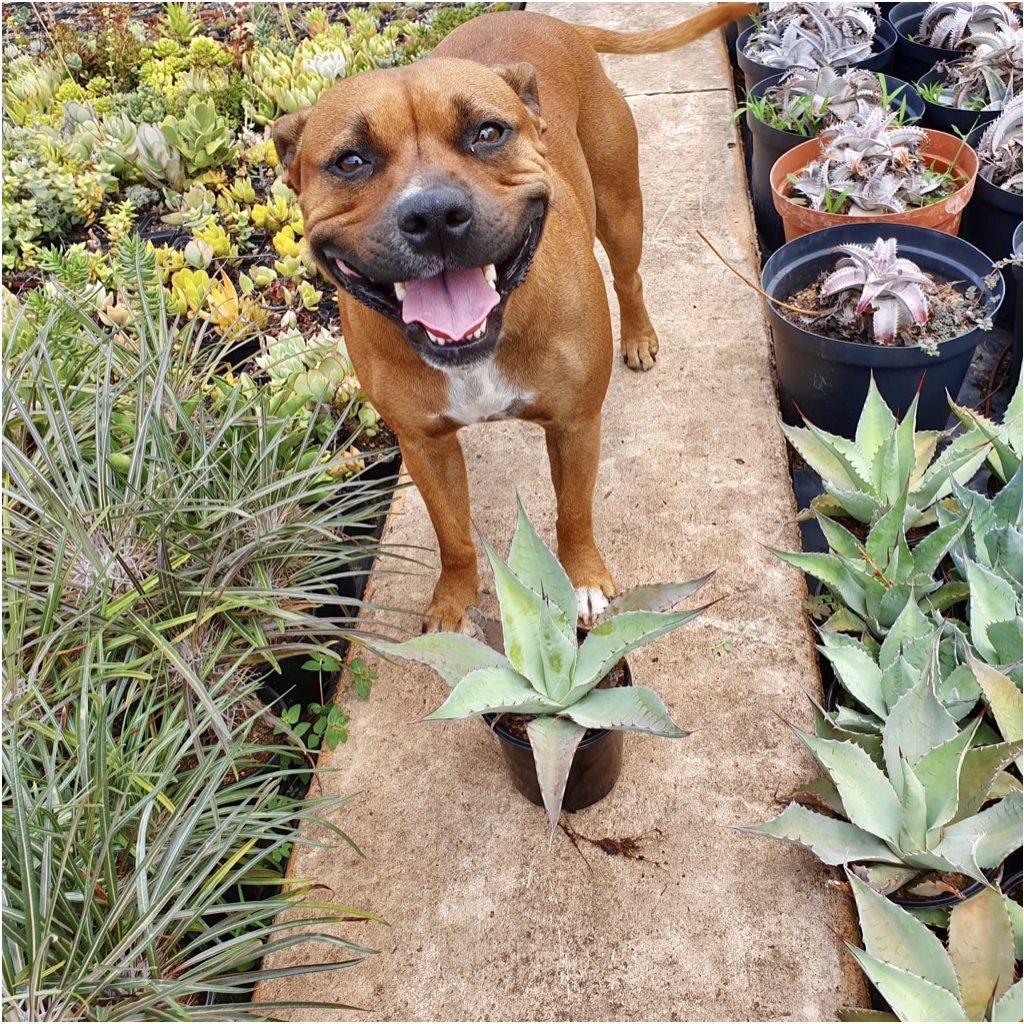
Agave ovatifolia, commonly known as the Blue Whale Agave, is a striking species from the Asparagaceae family, renowned for its large, rounded rosette of blue-gray leaves and its impressive size and ornamental value. This species is favored for its dramatic, sculptural presence in both garden and landscape design.
Common Characteristics:
- Size: Agave ovatifolia grows to form a large, dense rosette that can reach up to 3 feet (90 cm) in height and 5 to 6 feet (1.5–1.8 meters) in diameter, making it one of the larger agaves.
- Leaves: The plant has thick, fleshy, blue-gray leaves that are broad and ovate in shape, giving it a distinct rounded appearance. The leaves have a smooth texture, with subtle leaf margins that are typically armed with small, soft teeth. The tip of each leaf often ends in a sharp, dark spine.
- Flowering: Agave ovatifolia produces a tall flower stalk that can reach up to 10 feet (3 meters) in height when it matures. The flowers are pale yellow or greenish-yellow, typically blooming in late spring to summer after several years of growth. Like other agave species, Agave ovatifolia flowers once in its lifetime, and after flowering, the plant dies, though it often produces pups or offsets before this happens.
- Offsets: This species is known for producing pups or offshoots at the base of the main rosette, which can be removed for propagation.
Native Habitat:
Agave ovatifolia is native to the northeastern regions of Mexico, particularly the states of Durango and Coahuila, where it grows in the rugged, arid mountainous regions. It is adapted to grow in rocky, well-drained soils, often found in the dry, semi-desert conditions of its native environment.
Care Instructions:
- Light: This species thrives in full sun and requires at least 6 hours of direct sunlight each day to maintain its compact and robust form. In regions with intense afternoon heat, partial shade can help protect the leaves from sunburn.
- Watering: Like most agaves, Agave ovatifolia is drought-tolerant once established. During the growing season (spring and summer), water the plant deeply but infrequently, allowing the soil to dry out completely between waterings. In the winter months, reduce watering significantly as the plant enters dormancy.
- Soil: This agave prefers well-draining soil. Use a cactus or succulent mix, or amend regular soil with sand or perlite to improve drainage. The plant cannot tolerate standing water, so ensure the soil is well-drained.
- Temperature: Agave ovatifolia is hardy to USDA zones 8b to 11. It can tolerate temperatures down to 20°F (-6°C) for short periods but may be damaged by prolonged freezing conditions. In colder regions, it should be grown in containers and brought indoors during the winter.
- Fertilization: Feed with a balanced, low-nitrogen fertilizer during the growing season to support healthy growth. Avoid over-fertilizing, as this can result in weak or leggy growth.
- Pruning: Prune away dead or damaged leaves, especially those that die off after flowering. If you wish to control its size, you can remove pups that grow around the base, but be cautious of the plant’s sharp leaf tips while handling.
Unique and Special Feature:
Agave ovatifolia is often regarded for its striking, silvery-blue coloration and unique, rounded form. It stands out in gardens due to its bold architectural structure, especially when planted in groups or as a focal point. The color contrast of the blue-gray leaves against dry, rocky landscapes creates a captivating visual effect.
Fun Fact: The Blue Whale Agave is highly prized by landscape designers and gardeners for its size and sculptural quality. It’s not just beautiful, but also quite functional in xeriscaping, as it requires minimal water once established and can thrive in dry, hot conditions. Additionally, because it is a slow-growing agave, it’s less likely to outgrow a space too quickly, making it an excellent long-term investment for landscaping projects.
In its native environment, Agave ovatifolia serves an important ecological role, as its deep roots help prevent soil erosion in rocky, mountainous areas. It also attracts pollinators like bees and hummingbirds, contributing to the health of the local ecosystem.
Below are some species we are familiar with…
Agave americana mediopicta alba
Agave applanata creme spike
Agave colorata
Agave confederate rose
Agave creme brulee
Agave filifera
Agave geminiflora
Agave isthmensis
Agave isthmensis variegata
Agave kichiokan
Agave lophantha
Agave ovatifolia
Agave parryi
Agave parryi huachucensis
Agave parryi truncata
Agave stricta
Agave titanota
Agave toumeyana
Agave vilmoriniana
Agave victoriae-reginae
Agave victoriae-reginae picasso
Agave victoriae-reginae snow princess
Agave rum runner