
Agave creme brulee
Agave creme brulee- The Creme Brulee Agave
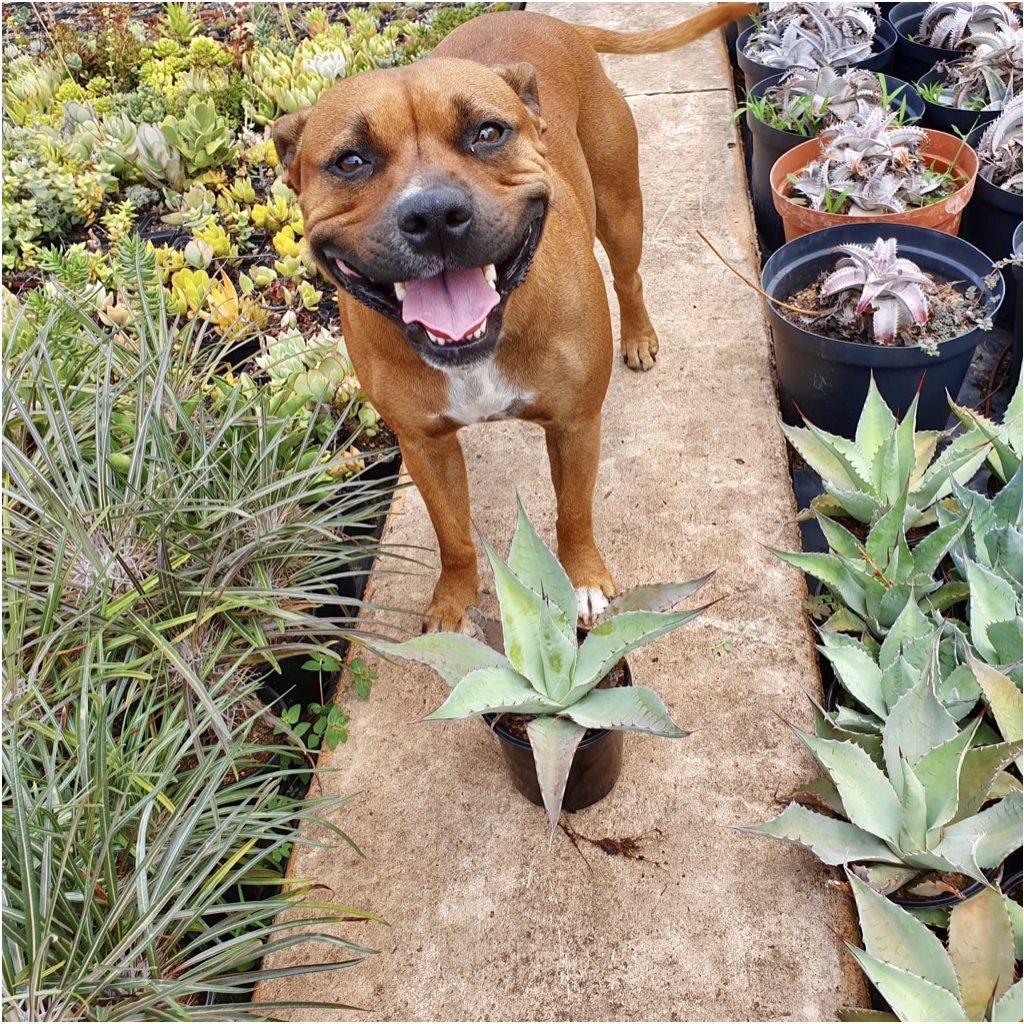
Agave creme brulee is a captivating, variegated succulent from the Asparagaceae family, recognized for its creamy-edged, bluish-green leaves that create a striking contrast. This cultivar is part of the Agave guiengola species and is native to the arid, rocky slopes of Oaxaca, Mexico. Known for its slow growth, Agave creme brulee forms a tight rosette that can reach up to 2–3 feet (60–90 cm) in height and 3–4 feet (90–120 cm) in diameter as it matures. The plant’s leaves are thick, succulent, and adorned with pale yellow to white margins, creating a dramatic effect against the deep blue-green center. The leaf edges are typically armed with small, sharp spines, and the plant has a prominent terminal spine at the tip of each leaf.
Common Characteristics:
- Size: Can grow up to 2-3 feet tall and 3-4 feet wide.
- Leaf Color: Blue-green with pale yellow or creamy white edges.
- Shape: Rosette formation with broad, thick leaves.
- Spines: Small spines along the leaf edges and a spiny terminal point at the tip.
- Growth Rate: Slow-growing but can live for many years with proper care.
Native Habitat:
Agave creme brulee originates from the dry, rocky hillsides of Oaxaca, Mexico, where it thrives in well-draining, sandy, or rocky soils. It is adapted to environments with prolonged dry periods and minimal rainfall, making it ideal for xeriscaping and dry gardens.
Care Instructions:
- Light: Prefers full sun but can tolerate partial shade in hotter climates. More sunlight will enhance the vibrant color of the leaves.
- Watering: Like most agaves, it is drought-tolerant. Water sparingly, allowing the soil to dry out between waterings. Overwatering can lead to root rot.
- Soil: Requires well-draining soil. A cactus or succulent mix is ideal. You can also add perlite or sand to improve drainage.
- Temperature: Thrives in warm temperatures, ideally between 70°F (21°C) and 90°F (32°C). It is hardy in USDA zones 9b–11, tolerating brief periods of cold but not freezing temperatures.
- Fertilization: Fertilize during the growing season (spring and summer) with a diluted, balanced fertilizer or a special cactus fertilizer. Avoid fertilizing in the winter when the plant is dormant.
Unique and Special Feature:
One of the most unique and special characteristics of Agave creme brulee is its stunning variegation, which intensifies as the plant matures. The contrast between the blue-green center and creamy yellow edges gives it an almost “painted” appearance. This visual appeal, coupled with its low-maintenance care requirements, makes it a sought-after choice for succulent collectors and enthusiasts.
Moreover, like other agave species, Agave creme brulee can take many years to flower, producing a tall flower spike with tubular yellow or red flowers when it finally blooms. This rare blooming event adds to the plant’s intrigue and charm.
For more detailed information on Agave creme brulee, visit gardening resources or succulent enthusiast websites that specialize in agave care and cultivation.
Below are some species we are familiar with…
Agave americana mediopicta alba
Agave applanata creme spike
Agave colorata
Agave confederate rose
Agave creme brulee
Agave filifera
Agave geminiflora
Agave isthmensis
Agave isthmensis variegata
Agave kichiokan
Agave lophantha
Agave ovatifolia
Agave parryi
Agave parryi huachucensis
Agave parryi truncata
Agave stricta
Agave titanota
Agave toumeyana
Agave vilmoriniana
Agave victoriae-reginae
Agave victoriae-reginae picasso
Agave victoriae-reginae snow princess
Agave rum runner