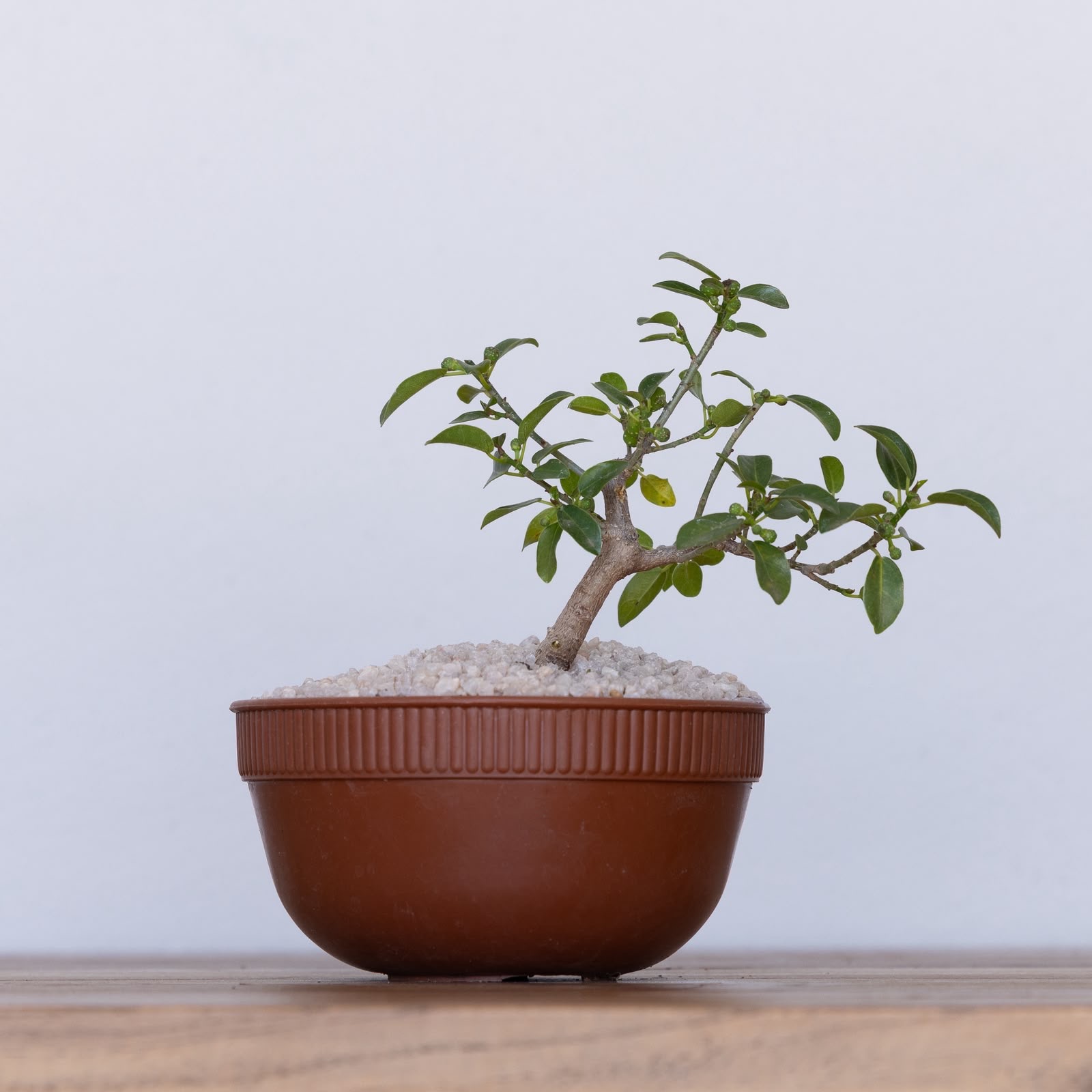
Ficus natalensis
Ficus natalensis – The Natal Fig
Description:
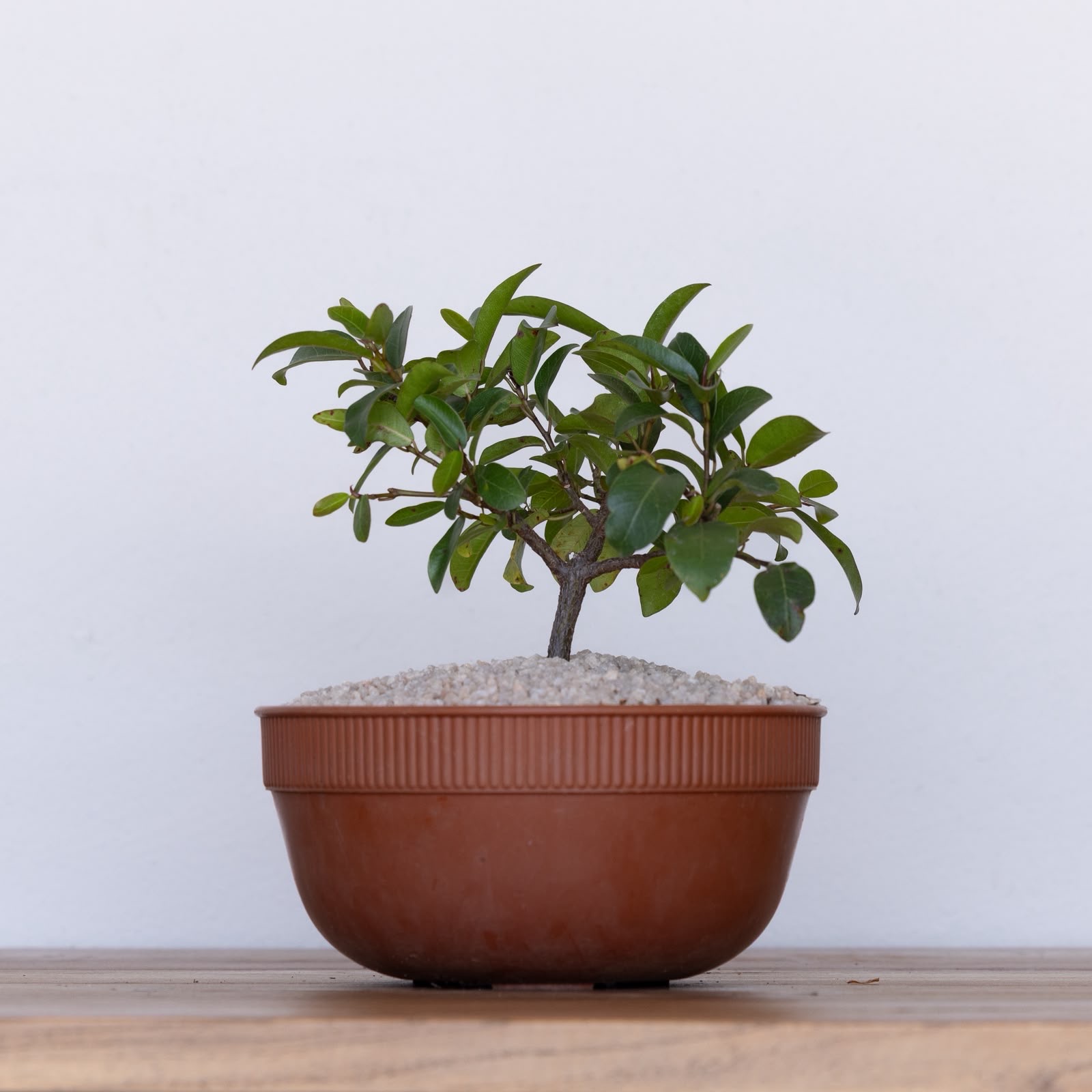
Ficus natalensis, commonly known as the Natal Fig, is a beautiful evergreen tree indigenous to southern and eastern Africa. It is one of the finest African species for bonsai, valued for its naturally small, glossy green leaves, smooth grey bark, and vigorous growth. In nature, it grows as a forest and riverine tree, often developing an impressive spreading canopy and, in ideal conditions, aerial roots that add to its tropical character.
The Natal Fig produces small paired figs that ripen from green to shades of red, purple, or black, providing food for birds and other wildlife. As a bonsai, it responds exceptionally well to pruning, producing abundant back-budding and fine ramification. Its naturally small foliage allows growers to create refined bonsai with excellent proportions, making it a favourite among both beginners and experienced enthusiasts.
Its adaptability, resilience, and elegant appearance make Ficus natalensis one of the most rewarding indigenous bonsai species in South Africa.
General Bonsai Care:
- Light: Prefers full sun to bright light. Plenty of sunlight encourages compact growth, smaller leaves, and dense branching.
- Water: Water thoroughly when the soil begins to dry. Keep the soil evenly moist but avoid prolonged waterlogging.
- Soil: Use a well-draining bonsai mix that provides excellent aeration while retaining moderate moisture.
- Temperature: Thrives in warm conditions and should be protected from frost. Ideal growing range is 15–35°C.
- Feeding: Feed regularly during the growing season with a balanced bonsai fertilizer to encourage vigorous growth and ramification.
- Pruning: Responds exceptionally well to pruning and defoliation, readily producing new shoots from old wood. Regular trimming develops a dense, refined canopy.
- Wiring: Young branches are flexible and wire easily. Monitor wire regularly, as vigorous growth can cause branches to thicken quickly.
- Repotting: Repot every two to three years while young and less frequently as mature trees. Root pruning is generally well tolerated during active growth.
With its naturally fine foliage, elegant form, and remarkable resilience, Ficus natalensis captures the beauty of Africa’s indigenous forests—offering a bonsai that becomes more refined and characterful with every passing season.
Below are some species we are familiar with…