
Agave sharkskin
Agave sharkskin – The Shark Skin’s Agave
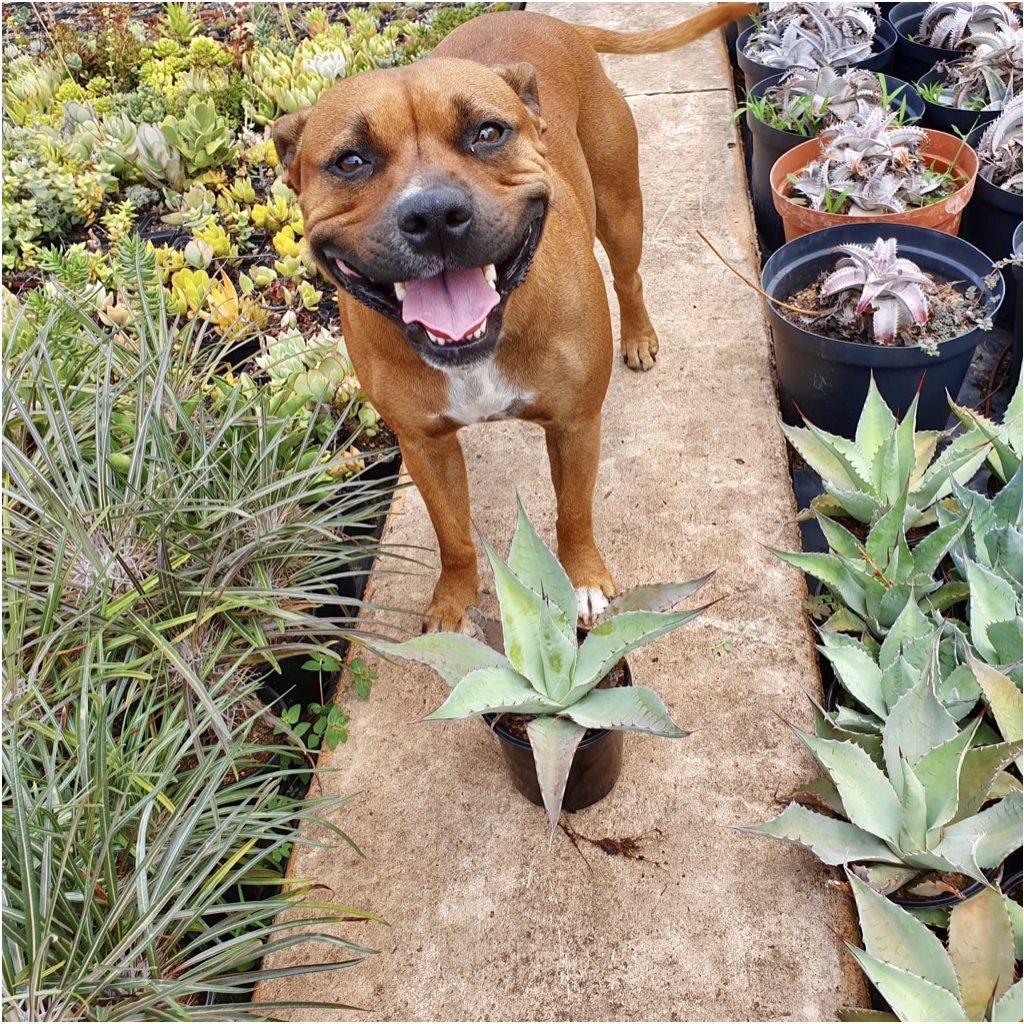
Agave sharkskin is a stunning species within the Agave genus from the family Asparagaceae, celebrated for its distinct and striking appearance, often compared to the texture of shark skin, hence its name. This plant is a favorite among collectors for its unique aesthetic and relatively hardy nature.
Common Characteristics:
- Size and Shape: Agave sharkskin forms a dense rosette, typically growing up to 1.5 to 2 feet (45-60 cm) in diameter. The plant maintains a compact growth habit, making it ideal for smaller spaces, container gardening, or rock gardens.
- Leaves: One of the most notable features of Agave sharkskin is its thick, leathery leaves that have a characteristic rough texture resembling shark skin. The leaves are typically a bluish-gray or light green color and are covered in fine, sandpapery bumps, which is where the “shark skin” descriptor originates. The edges of the leaves often have sharp, reddish-brown spines, adding to the plant’s tough and resilient appearance.
- Flowering: Like many agaves, Agave sharkskin blooms only once in its lifetime. When it reaches maturity, it sends up a tall, flowering stalk, often several feet high. The flowers are generally yellow-green or pale in color, though the flowering event is relatively short-lived.
- Growth Habit: This species forms a rosette of stiff, triangular leaves that grow in a spiral pattern from the center, and like other agave species, it produces offsets (pups) around the base, which can be separated and replanted.
Native Habitat:
Agave sharkskin is native to arid regions in Mexico. It grows in rocky, well-drained soils, typically in higher elevations where it can endure both intense sunlight and drought. The plant is adapted to withstand harsh conditions, making it a popular choice for dry landscapes or xeriscaping.
Care Instructions:
- Light: This species thrives in full sun, where it can develop its vibrant color and strong structure. It requires at least 6 hours of direct sunlight daily to flourish. Insufficient light can cause the plant to become leggy and lose its compact form.
- Watering: Like many agaves, Agave sharkskin is drought-tolerant and should be watered sparingly. It is important to let the soil dry out completely between waterings. Overwatering is the most common mistake when caring for agaves, as it can lead to root rot. During the growing season, watering every 2-3 weeks is usually adequate, but reduce watering during the winter months when the plant is dormant.
- Soil: Well-draining soil is essential. A cactus or succulent-specific mix, or a sandy-loam soil with added gravel, will ensure that the roots do not become waterlogged. If grown in a pot, make sure the container has drainage holes to prevent water accumulation at the bottom.
- Temperature: Agave sharkskin prefers warm conditions, thriving in temperatures between 70°F and 85°F (21°C to 29°C). It is cold-hardy to USDA zones 9-11 but should be protected from frost. It can tolerate brief periods of cold but should not be exposed to freezing temperatures.
- Fertilization: This agave species does not require much fertilization. A low-nitrogen cactus or succulent fertilizer can be applied in the spring during the growing season, but it is not necessary to fertilize heavily. Avoid fertilizing in winter, as the plant is dormant during this time.
- Pruning: Minimal pruning is needed. You can remove dead leaves from the base to keep the plant tidy and to prevent any pests from taking hold. Careful handling is necessary, as the spines along the edges of the leaves can be sharp.
Unique and Special Feature:
Agave shark skin stands out for its distinct leaf texture, which resembles the rough surface of shark skin. This texture, combined with its silvery-blue or grayish-green color, gives it a visually appealing and rugged look that’s perfect for adding contrast to a succulent collection.
Fun Fact: Unlike many agaves that take many years to flower, Agave shark skin produces offsets regularly, allowing you to propagate the plant before it blooms. This is especially useful for gardeners who want to preserve the plant long after it has flowered and died, as agaves typically die after blooming.
Special Note: Its unique appearance, with the combination of rugged texture and compact form, makes Agave sharkskin an excellent addition to desert-inspired gardens, container plants, or as a striking centerpiece in xeriscaping landscapes. It is particularly adored for its resilience and ability to thrive in dry, low-maintenance environments.
Below are some species we are familiar with…
Agave americana mediopicta alba
Agave applanata creme spike
Agave colorata
Agave confederate rose
Agave creme brulee
Agave filifera
Agave geminiflora
Agave isthmensis
Agave isthmensis variegata
Agave kichiokan
Agave lophantha
Agave ovatifolia
Agave parryi
Agave parryi huachucensis
Agave parryi truncata
Agave stricta
Agave titanota
Agave toumeyana
Agave vilmoriniana
Agave victoriae-reginae
Agave victoriae-reginae picasso
Agave victoriae-reginae snow princess
Agave rum runner