
Agave stricta
Agave stricta – The Hedgehog Agave
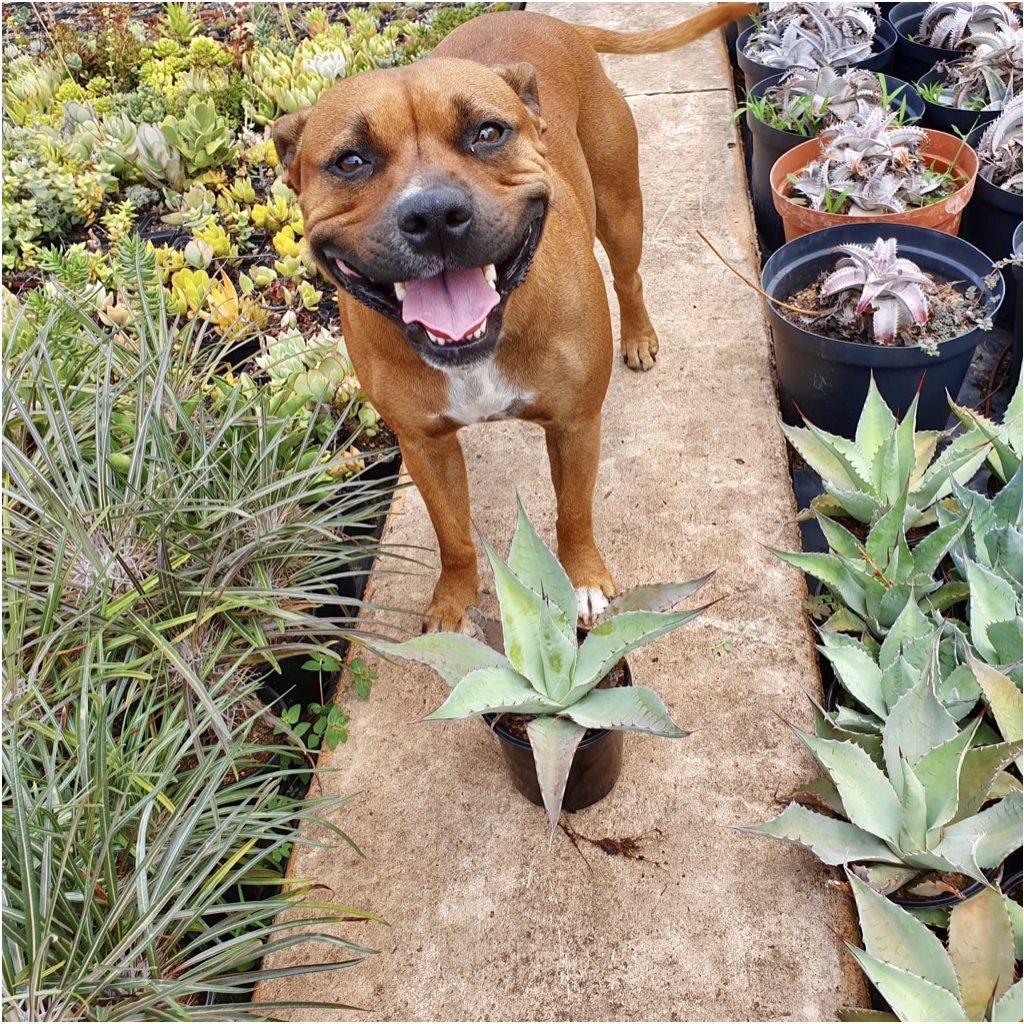
Agave stricta, commonly known as the Hedgehog Agave, Slender Agave or Twig Agave, is a distinctive species of agave that belongs to the family Asparagaceae. This species is known for its slender, spiky rosette and is well-regarded for its ornamental value in succulent and desert gardens.
Common Characteristics:
- Size: Agave stricta is a relatively small agave, typically growing to a height of 12 to 18 inches (30 to 45 cm), with a spread of 18 to 24 inches (45 to 60 cm). Its compact form makes it an excellent choice for smaller gardens or as part of container plantings.
- Leaves: The leaves of Agave stricta are narrow, stiff, and spiny, typically dark green to gray-green in color. They grow in dense, vertical rosettes that resemble spikes or twigs, often giving the plant a somewhat “brush-like” appearance. The leaf tips are sharp, and some varieties may feature a slight reddish tinge along the edges.
- Flowering: Like other agaves, Agave stricta produces a tall flowering stalk, although it flowers relatively rarely. The flowers are tubular, and they are typically greenish-yellow in color, appearing in clusters at the end of a tall, spiny stem. After blooming, the plant typically dies, though it may offset pups that can be used for propagation.
- Offsets: Agave stricta often produces pups at the base of the main plant, which helps the species propagate naturally. These offsets can be separated and transplanted to form new plants.
Native Habitat:
Agave stricta is native to the arid regions of northeastern Mexico, particularly the states of Nuevo León and Coahuila. It thrives in dry, rocky soils and can be found growing on hillsides or cliffs, where it is exposed to full sunlight and experiences both extreme heat and cool temperatures during the winter months.
Care Instructions:
- Light: Agave stricta requires full sunlight to thrive. It should be placed in a location that receives at least 6 hours of direct sunlight per day. In areas with intense sun, some light afternoon shade can help prevent sunburn.
- Watering: This species is highly drought-tolerant and requires minimal watering. It should be watered deeply but infrequently, allowing the soil to dry out completely between waterings. Overwatering is a common cause of root rot in agaves, so it’s important to ensure that the plant is in well-draining soil.
- Soil: Agave stricta prefers well-draining, sandy, or rocky soil with a slightly acidic to neutral pH. Cactus and succulent soil mixes are ideal for growing this species. It is essential that the soil drains well to prevent water from accumulating around the roots.
- Temperature: Agave stricta is hardy in USDA zones 9-11, meaning it can tolerate temperatures as low as 20°F (-6°C), but it thrives in warm, sunny conditions. In regions with harsh winters, it is best to grow this agave in containers that can be brought indoors during colder months.
- Fertilization: This plant is low-maintenance and does not require frequent fertilization. A balanced, low-nitrogen fertilizer applied once in the spring can encourage healthy growth, but over-fertilizing can lead to weak, spindly growth.
- Pruning: Pruning is generally unnecessary for this species. However, removing dead or damaged leaves can help maintain its compact form and overall appearance.
Unique and Special Feature:
One of the most unique aspects of Agave stricta is its slender, twig-like appearance, which differentiates it from many other agave species. The tightly arranged, spiky leaves form a dense, brush-like rosette that makes the plant stand out in garden beds and containers. Its small size and architectural form make it ideal for modern, minimalist landscapes or rock gardens, where its unusual appearance can be appreciated.
Fun Fact: Unlike many larger agaves, Agave stricta tends to remain compact and is well-suited for smaller spaces or container gardening. This characteristic, along with its striking foliage, makes it a popular choice for succulent enthusiasts and gardeners looking to add a sculptural, drought-tolerant element to their plant collections.
Below are some species we are familiar with…
Agave americana mediopicta alba
Agave applanata creme spike
Agave colorata
Agave confederate rose
Agave creme brulee
Agave filifera
Agave geminiflora
Agave isthmensis
Agave isthmensis variegata
Agave kichiokan
Agave lophantha
Agave ovatifolia
Agave parryi
Agave parryi huachucensis
Agave parryi truncata
Agave stricta
Agave titanota
Agave toumeyana
Agave vilmoriniana
Agave victoriae-reginae
Agave victoriae-reginae picasso
Agave victoriae-reginae snow princess
Agave rum runner