Trichodiadema
Trichodiadema – the Crowned Succulent
The genus Trichodiadema, a member of the Aizoaceae family, is a collection of small succulents that are uniquely recognizable by their delicate, bristled leaf tips that resemble tiny crowns. This feature, along with their striking flowers and compact growth form, makes Trichodiadema an interesting addition to succulent collections, bonsai projects, and rock gardens.
Common Characteristics
- Cylindrical, Bristled Leaves: Trichodiadema plants are characterized by their cylindrical leaves that are covered in fine, white bristles at the tips. These “crowns” are actually clusters of small hairs, which may serve as a form of protection against intense sunlight.
- Compact, Shrubby Growth: These succulents grow in low, dense, shrubby formations, creating small mounds or clusters over time. Their compact form and manageable size make them ideal for container gardening.
- Bright, Dazzling Flowers: In spring or summer, Trichodiadema produces bright, daisy-like flowers in vivid shades of pink, purple, yellow, or orange. The flowers are often large in comparison to the plant’s size and can bloom prolifically under the right conditions.
- Hardy in Dry Conditions: Like many Aizoaceae, Trichodiadema is well-adapted to arid conditions, able to withstand long periods of drought thanks to its water-storing leaves.
Native Habitat and Origins
Trichodiadema is native to South Africa, where it grows in rocky, dry, and well-drained soils. The plant’s natural habitat experiences hot days, cool nights, and low humidity, which have influenced its adaptations for drought tolerance and intense sunlight.
Care Guide for Trichodiadema
*Caring for Trichodiadema is straightforward, as it requires little water and thrives in bright light:
- Soil: Use a well-draining soil mix, such as a cactus or succulent blend. Adding perlite or sand to the soil mix further improves drainage, which helps prevent root rot.
- Watering: Water sparingly, only when the soil is completely dry. During the plant’s active growing season (spring and summer), water deeply but infrequently, allowing the soil to dry between waterings. Reduce watering significantly in winter.
- Light: Trichodiadema needs full sun to partial shade. Indoors, place it in a south-facing window or under grow lights to ensure it gets enough light to maintain its compact form and encourage flowering.
- Temperature: This genus tolerates a range of temperatures, preferring warm conditions but needing protection from frost. It can tolerate temperatures as low as 40°F (5°C) if kept dry.
- Fertilization: Fertilization is optional but can be applied lightly in early spring with a balanced, diluted succulent fertilizer.
A Unique Feature: “Crown” Bristles and Bonsai Appeal
The unique “crown” of bristles on each leaf tip makes Trichodiadema especially distinct among succulents. This feature not only adds visual interest but also helps protect the plant by diffusing intense sunlight. Beyond its appearance, Trichodiadema is highly prized in bonsai culture due to its woody stems and tree-like growth habit. When trained, it creates a miniature tree form that is both ornamental and resilient, making it a versatile choice for succulent bonsai enthusiasts.
Below are some species we are familiar with…
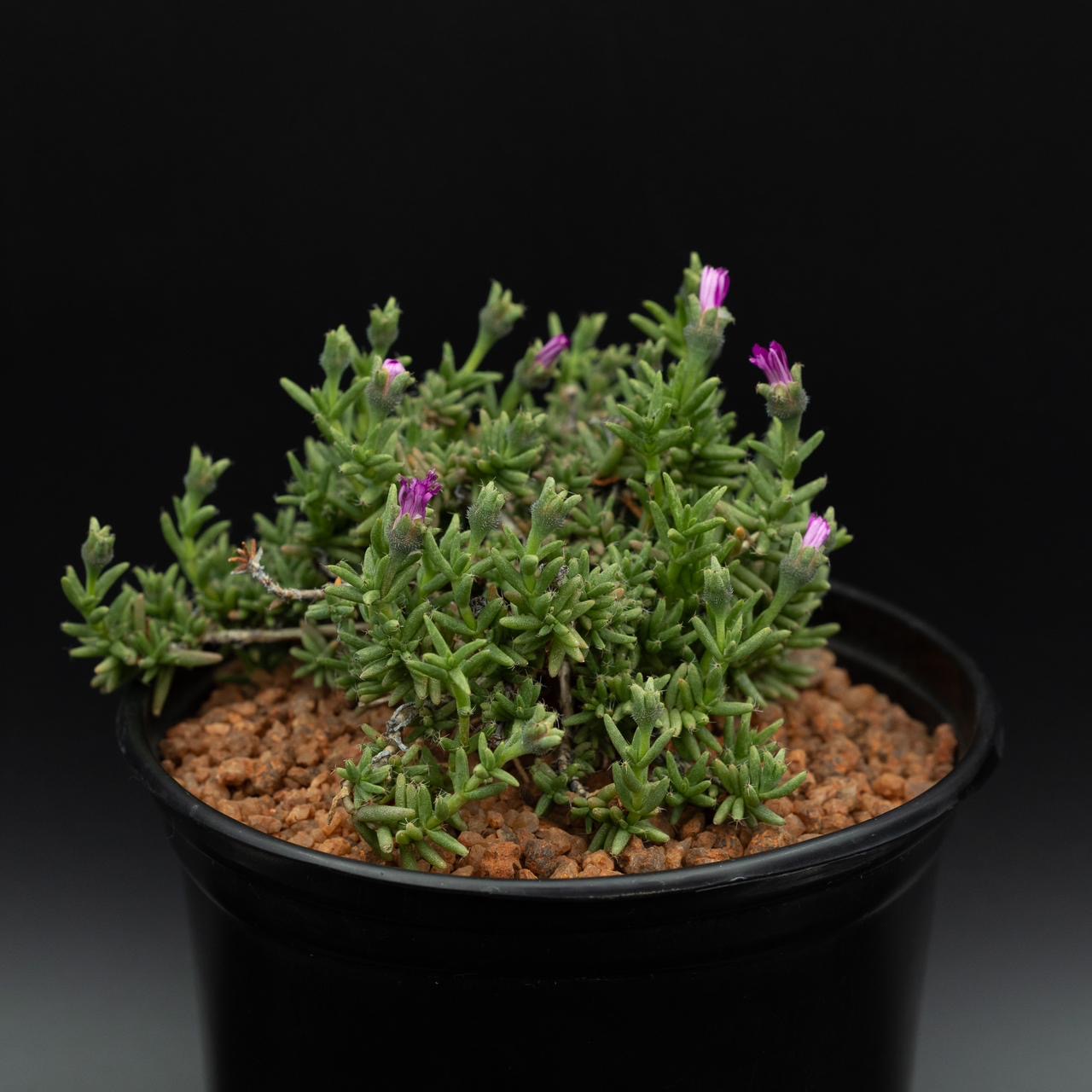
Trichodiadema bulbosum

Trichodiadema densum