
Titanopsis primosii
Titanopsis primosii – The White Diamond


Titanopsis primosii is a remarkable succulent species known for its compact rosettes and fascinatingly textured leaves that blend effortlessly with its natural rocky environment. A unique and rare addition to any succulent collection, it showcases nature’s ingenuity in adaptation.
Common Characteristics
- Growth Habit: Forms small, dense rosettes measuring up to 5 cm (2 inches) in diameter. This low-growing species often creates clusters over time.
- Leaves: The leaves are short, triangular, and covered with rough, warty textures at their tips. These textures often mimic the surrounding rocky terrain, with colors ranging from gray-green to hues of orange, pink, or cream.
- Flowers: Produces small, daisy-like flowers in shades of yellow or orange, typically blooming in late autumn to early winter. Flowers open during the day and close at night.
- Roots: Has a compact root system adapted to thrive in shallow, gritty soils.
- Lifespan: A long-lived perennial that is highly resilient in arid conditions.
Native Habitat and Origins
Titanopsis primosii is native to the arid regions of Namibia and South Africa, particularly in rocky and quartzite-rich soils. It thrives in these challenging environments, where its unique leaf texture and coloration provide camouflage and protection from herbivores.
Care Guide for Titanopsis primosii
- Light: Prefers bright, indirect light or full sun. Gradually introduce it to intense sunlight to prevent leaf scorch.
- Watering: Follow a “soak and dry” watering method. Water sparingly during its active growth periods (autumn and spring), allowing the soil to dry completely between waterings. Reduce watering significantly during summer dormancy.
- Soil: Requires a well-draining, gritty substrate, such as a cactus mix with added pumice, sand, or perlite.
- Temperature: Hardy in USDA zones 9–11. While it can tolerate mild frost, temperatures below freezing should be avoided. Protect it in winter if grown in colder climates.
- Fertilizer: Use a diluted, low-nitrogen fertilizer during the active growing season. Fertilize sparingly to prevent overgrowth.
- Propagation: Propagation is primarily through seeds. Sow seeds in a well-draining mix and keep them lightly moist until germination occurs.
Unique and Special Feature
What sets Titanopsis primosii apart is its extraordinary ability to mimic the appearance of stones and gravel in its environment. This not only helps it evade predators but also makes it an intriguing living example of evolutionary adaptation. The plant’s warty, stone-like leaf tips are an artistic marvel, making it a sought-after gem for succulent enthusiasts and collectors.
Below are some species we are familiar with…
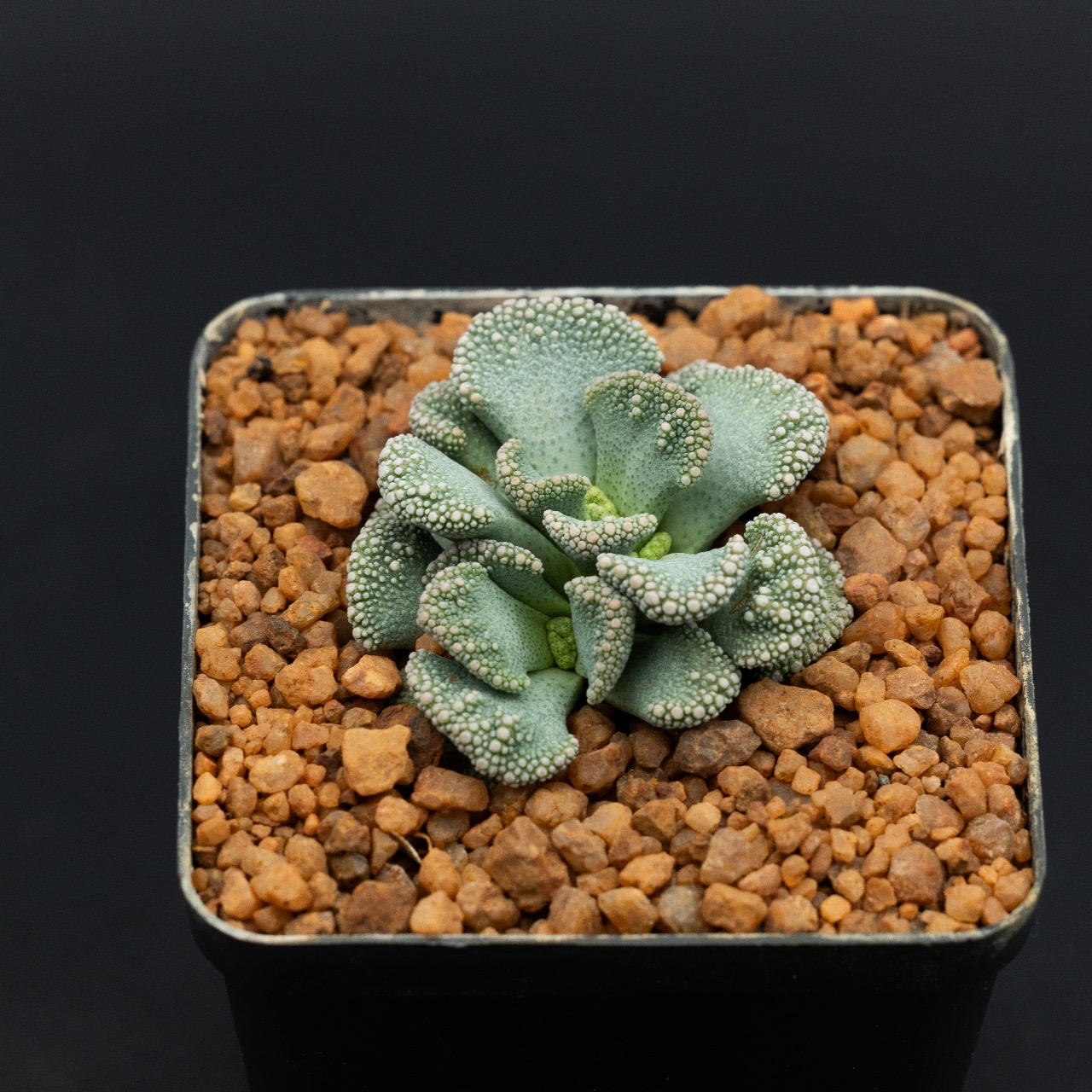
Titanopsis calcarea
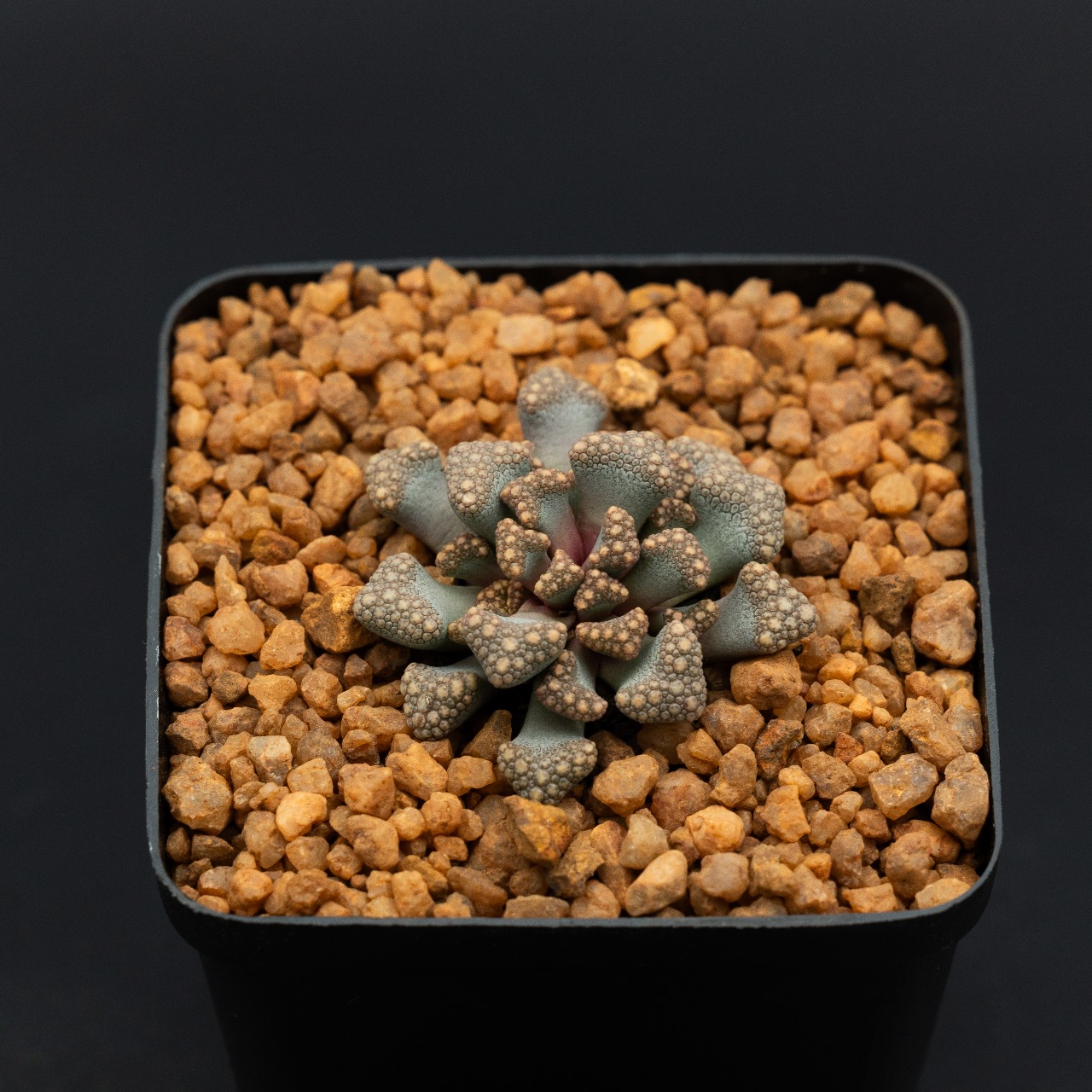
Titanopsis hugo-sclechteri