
Titanopsis calcarea
Titanopsis calcarea – The Giant Jewel Plant


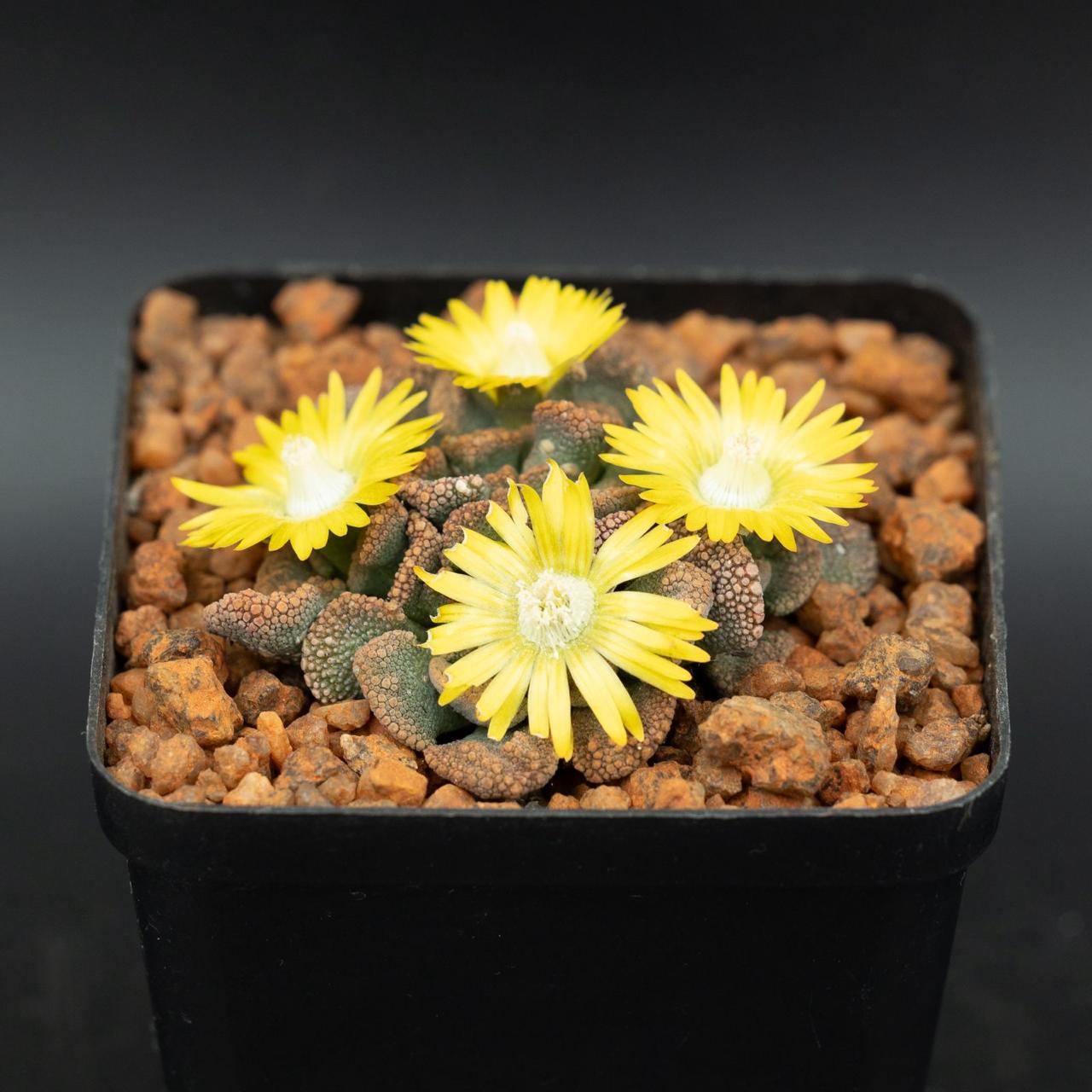
Titanopsis calcarea is a striking and compact succulent renowned for its unique leaf textures and subtle, intricate coloration. Its resemblance to weathered limestone makes it a favorite among collectors and xeriscape enthusiasts.
Common Characteristics
- Growth Habit: A small, clumping succulent that forms rosettes measuring 3–5 cm (1–2 inches) in diameter.
- Leaves: Fleshy, triangular leaves with rough, wart-like surfaces that mimic rocks. The colors range from gray-green to bluish, with orange, pink, or yellow tones on the textured tips.
- Flowers: Produces daisy-like, bright yellow to pale orange flowers in late autumn to early winter. The blooms open during the day and close at night.
- Roots: Has a compact root system that allows it to thrive in rocky or sandy soils.
- Lifespan: A long-lived perennial succulent.
Native Habitat and Origins
Titanopsis calcarea is native to South Africa, specifically the arid regions of the Karoo and Free State. It thrives in rocky, limestone-rich soils, where its camouflaged appearance helps protect it from herbivores.
Care Guide for Titanopsis calcarea
- Light: Prefers bright, indirect light or full sun. Avoid scorching midday sun in very hot climates to prevent sunburn.
- Watering: Use a “soak and dry” method during the growing season (autumn and spring). Reduce watering significantly during dormancy in summer. Overwatering can lead to root rot.
- Soil: Requires well-draining soil with a gritty texture, such as a cactus mix with added sand or pumice.
- Temperature: Tolerates moderate frost, with a hardiness range of USDA zones 9-11. Protect it from prolonged exposure to freezing temperatures.
- Fertilizer: Use a diluted cactus or succulent fertilizer once or twice during the growing season. Avoid over-fertilizing, as the plant thrives in nutrient-poor soils.
- Propagation: Propagate via seeds or offsets. Seeds germinate best when sown in well-draining soil and kept slightly moist until sprouting.
Unique and Special Feature
The textured, camouflaged appearance of Titanopsis calcarea is a remarkable example of mimicry in nature. Its ability to blend seamlessly with surrounding rocks protects it from predation. The rough, warty leaf surfaces also reflect sunlight, reducing water loss in harsh environments. This plant’s beauty lies in its ability to mirror the very landscape it calls home, making it a living piece of art in any collection or garden.
Below are some species we are familiar with…
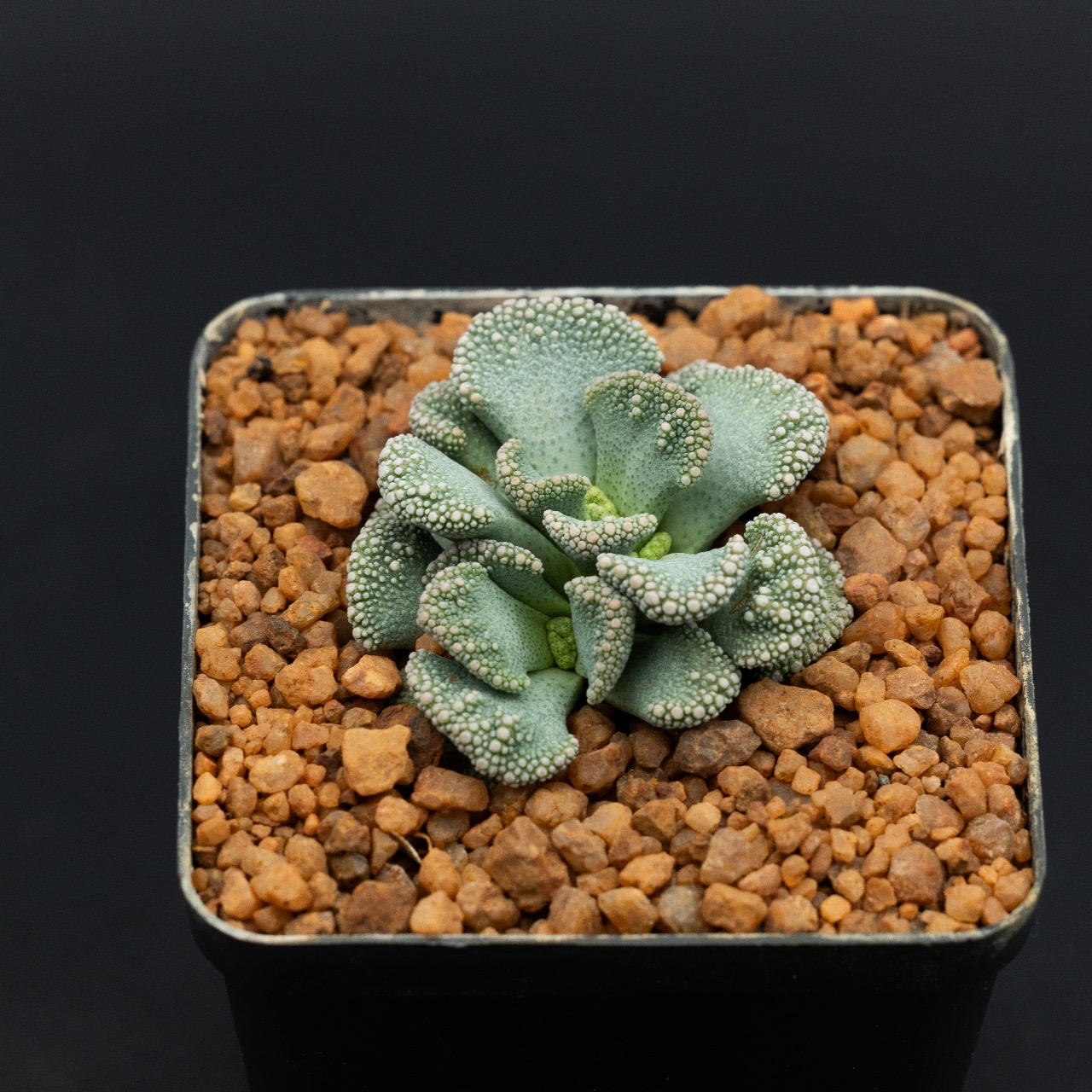
Titanopsis calcarea
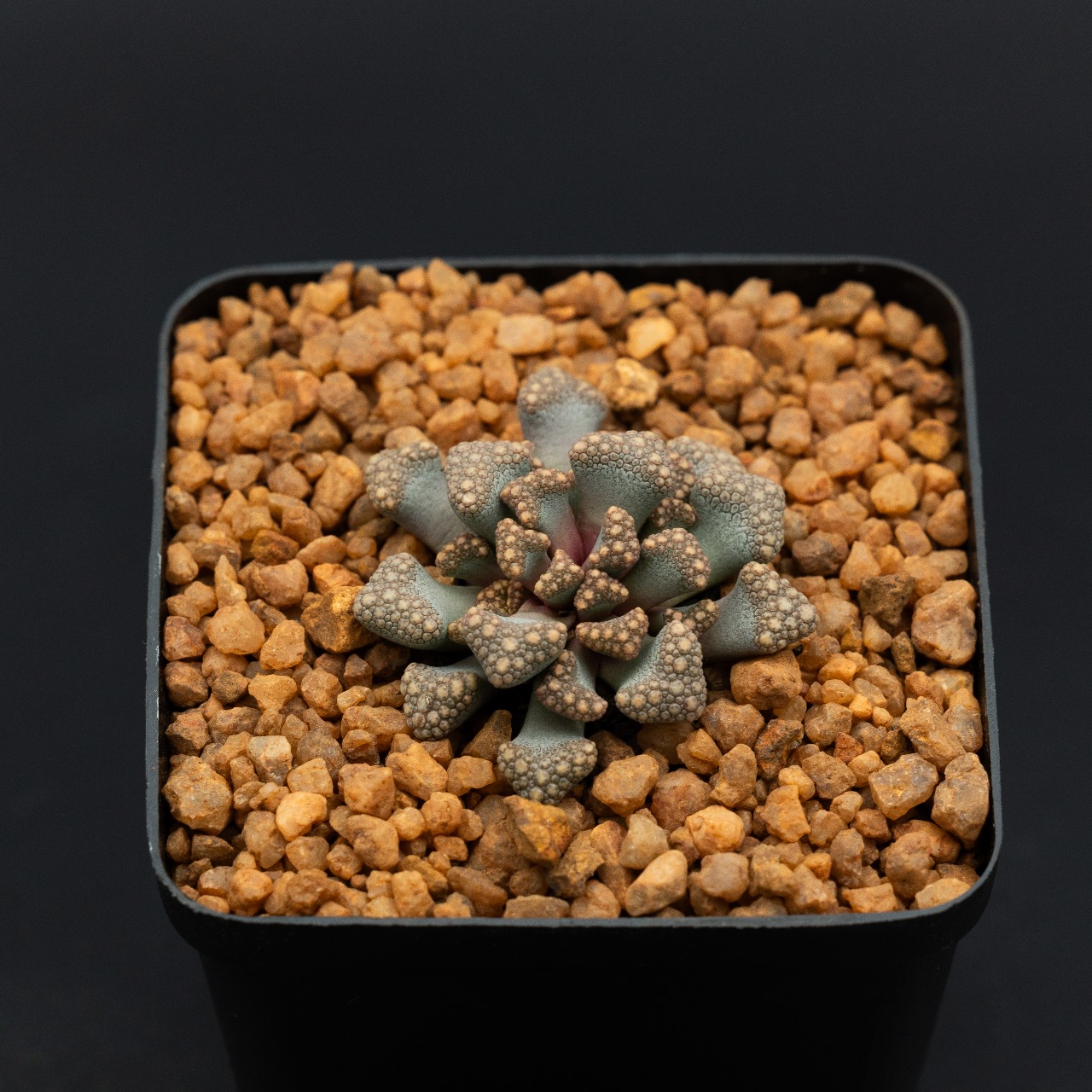
Titanopsis hugo-sclechteri
