
Senecio mandraliscae
Senecio mandraliscae – The Blue Chalk Sticks
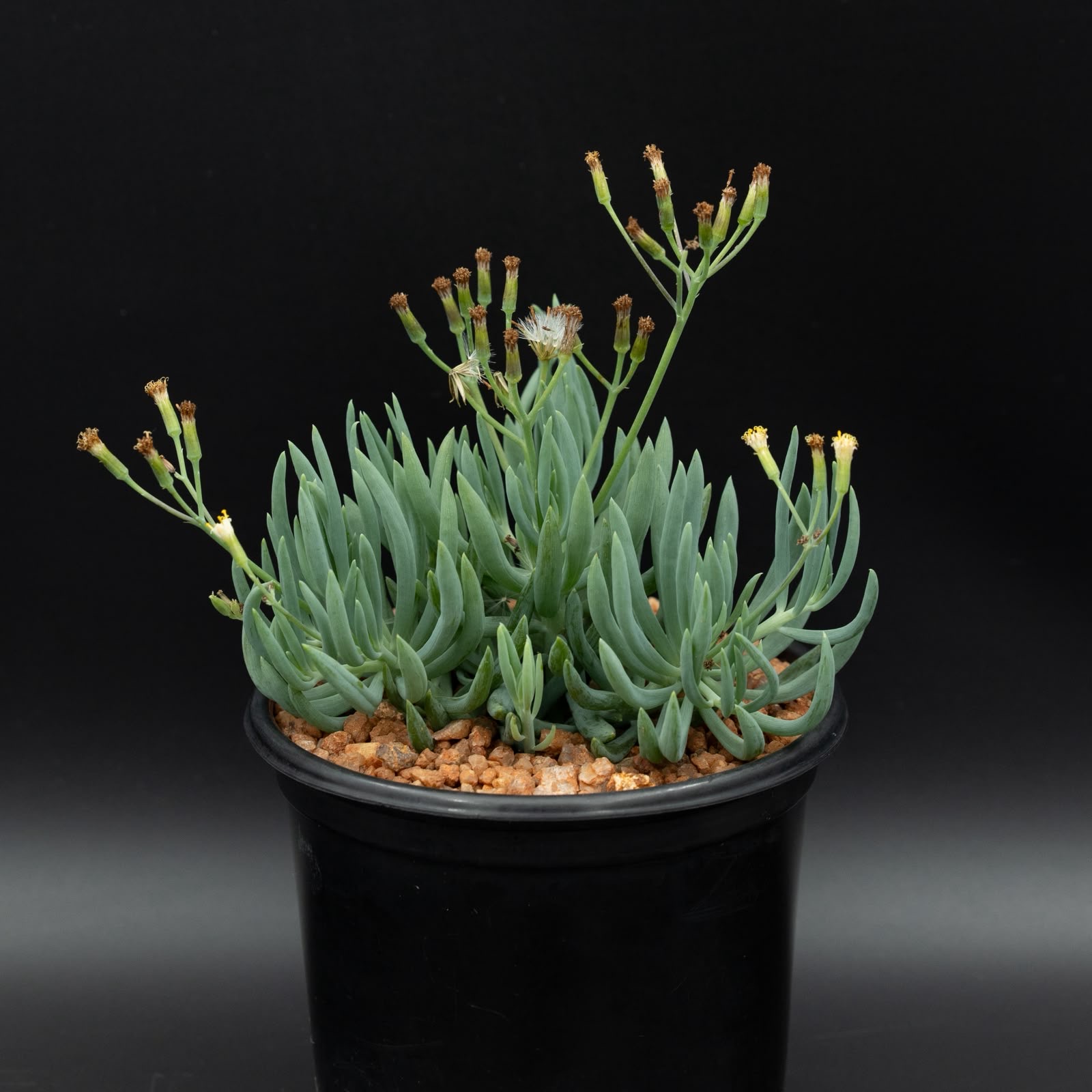
Senecio mandraliscae, also known as Blue Chalksticks or Blue Senecio, is a striking succulent characterized by its fleshy, cylindrical, and pale blue-green leaves that grow in upright clusters. The plant forms a branching, bushy habit and can reach heights of 12-18 inches (30-45 cm) with a spread of up to 24 inches (60 cm). Its leaves have a smooth, waxy texture and are arranged in a dense, rosette-like formation. The leaves often have a bluish tint, which is most vibrant under full sunlight, making it a visually appealing addition to succulent gardens and container plantings.
During its blooming season, Senecio mandraliscae produces small, yellow, daisy-like flowers that grow in clusters on tall stems. While the flowers are attractive, it is the foliage that is most often prized for ornamental purposes. These flowers typically appear in late spring to early summer, although they are not as striking as the leaves themselves.
Native Range:
This species is native to South Africa, where it thrives in the dry, rocky soils of coastal areas and open hillsides. It is found in regions that experience mild to hot temperatures, with low rainfall and dry conditions, typical of the Mediterranean-like climate of its home environment.
Care Tips:
- Light: Senecio mandraliscae prefers full sun to partial shade. It requires at least 4 hours of direct sunlight per day to maintain its characteristic blue color. If grown indoors, it should be placed near a bright window where it can receive ample light.
- Watering: As a drought-tolerant succulent, it should be watered sparingly. Water thoroughly but allow the soil to dry out completely between waterings. Over-watering can lead to root rot, so it’s essential to avoid keeping the soil too moist. During the winter months, when the plant is dormant, watering should be reduced further.
- Soil: This species requires well-draining, sandy, or cactus-specific soil. A mix that includes perlite, sand, or pumice is ideal for ensuring proper drainage. Senecio mandraliscae is susceptible to root rot in soils that retain moisture, so good drainage is crucial.
- Temperature: It thrives in warm temperatures ranging from 60°F to 80°F (15°C to 27°C). While it can tolerate some heat, it is not frost-tolerant and should be protected from freezing conditions. In colder climates, it can be grown indoors or brought inside during the winter months.
- Fertilizing: Fertilizing is not necessary for this species, but a light application of a balanced, diluted fertilizer during the growing season (spring to summer) can help boost its growth. Over-fertilizing can lead to leggy growth or damage.
- Pruning: The plant doesn’t require extensive pruning but can be trimmed back to maintain its shape or remove any dead or damaged stems. Pruning is best done in early spring before the growing season begins.
Propagation:
Senecio mandraliscae can be easily propagated from stem cuttings. Cut a healthy stem with a few leaves and allow it to callus over for a few days. Once the cut surface has dried and hardened, plant the cutting in well-draining soil. The cutting should root in a few weeks, and new growth will begin to appear.
Unique and Special:
One of the most unique features of Senecio mandraliscae is its striking blue color, which is rare among succulents. The plant’s soft, pencil-like stems and vibrant hue make it an excellent addition to both succulent collections and landscapes. This species is also particularly well-suited for coastal gardens, as it can tolerate salty air and thrives in poor, well-draining soils. Additionally, Senecio mandraliscae is a low-maintenance plant that requires minimal care, making it an excellent choice for beginners or busy gardeners looking for a stunning and resilient plant. Its eye-catching color and shape make it a conversation starter in any garden or home decor.
Below are some species we are familiar with…
Senecio barbertonicus
Senecio haworthii
Senecio mandraliscae
Senecio peregrinus
Senecio radicants
Senecio rowleyanus
Senecio scaposus