Portulacaria
afra
Portulacaria afra – Spek Boom
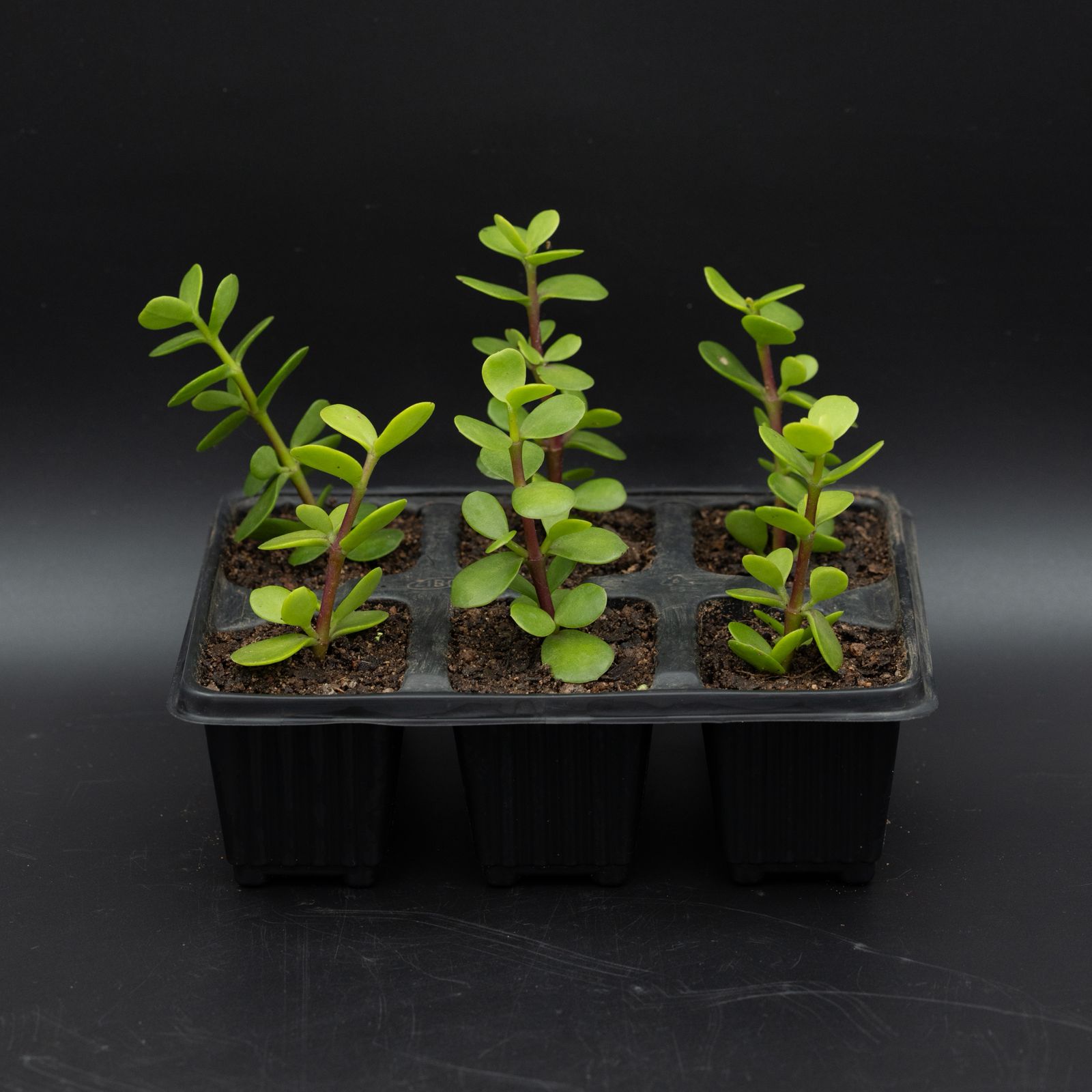
Portulacaria afra, commonly known as the “Elephant Bush,” “Dwarf Jade Plant,” or “Spekboom,” is a versatile succulent native to South Africa. It is highly valued for its ornamental appeal and ecological benefits. Despite its resemblance to Crassulaceae family members, P. afra belongs to the family Didiereaceae.
- Growth Habit: This plant grows as a small shrub or ground cover, often reaching heights of 6–15 feet (2–4.5 meters) in its natural habitat. In pots, it remains compact, making it an excellent choice for indoor bonsai or container gardening.
- Leaves: The plant has small, rounded, fleshy leaves that are bright green and sometimes tinged with red along the edges in full sunlight. The leaves grow in pairs along reddish-brown, woody stems.
- Stems: Young stems are smooth and reddish, aging to a woody brown as the plant matures.
- Flowers: P. afra occasionally produces small, star-shaped pink or lavender flowers in clusters at the tips of its stems. Flowering is more common in mature plants and typically occurs in spring or summer, depending on growing conditions.
- Drought Resistance: Like many succulents, P. afra stores water in its leaves, allowing it to survive prolonged dry periods.
Native Range:
This species is native to the dry regions of South Africa, particularly the Eastern Cape and Limpopo provinces. It thrives in semi-arid scrublands and rocky hillsides, where it plays a critical role in preventing soil erosion and supporting local wildlife, including elephants, which browse its leaves for food.
Care Instructions:
- Light: Provide bright, indirect light to full sun. Indoors, place it near a sunny window. Outdoors, ensure it gets at least 4–6 hours of sunlight daily.
- Soil: Use well-draining, sandy or gritty soil. A cactus or succulent mix works well. Avoid water-retentive soils to prevent root rot.
- Watering: Water sparingly, allowing the soil to dry out completely between waterings. During its active growth period in spring and summer, water more frequently but always with caution. Reduce watering significantly during the winter dormancy period.
- Temperature: This plant thrives in warm climates but can tolerate temperatures down to 25°F (-4°C) for short periods. Protect it from frost to prevent damage.
- Fertilization: Feed with a balanced, diluted fertilizer during the growing season. Fertilize sparingly, as excessive nutrients can lead to leggy growth.
- Pruning: Trim back overgrown stems to encourage bushier growth. Pruned stems can be propagated easily by planting them in well-draining soil.
- Propagation: Propagate through stem cuttings. Let the cuttings callous for a day or two before planting in soil to prevent rot.
Unique and Special Characteristics:
Portulacaria afra is not just a beautiful ornamental plant; it is also a powerhouse for carbon sequestration. Its ability to absorb large amounts of carbon dioxide makes it a vital player in combating climate change. Additionally, it is highly drought-resistant and contributes to sustainable water usage in arid environments. In South African culture, it is revered as a symbol of resilience and is sometimes used in traditional medicine. The Spekboom is an ecological treasure that combines visual appeal with environmental significance.
Below are some species we are familiar with…
Portulacaria afra