
Pachypodium rosulatum
Pachypodium rosulatum – The Madagascar Palm

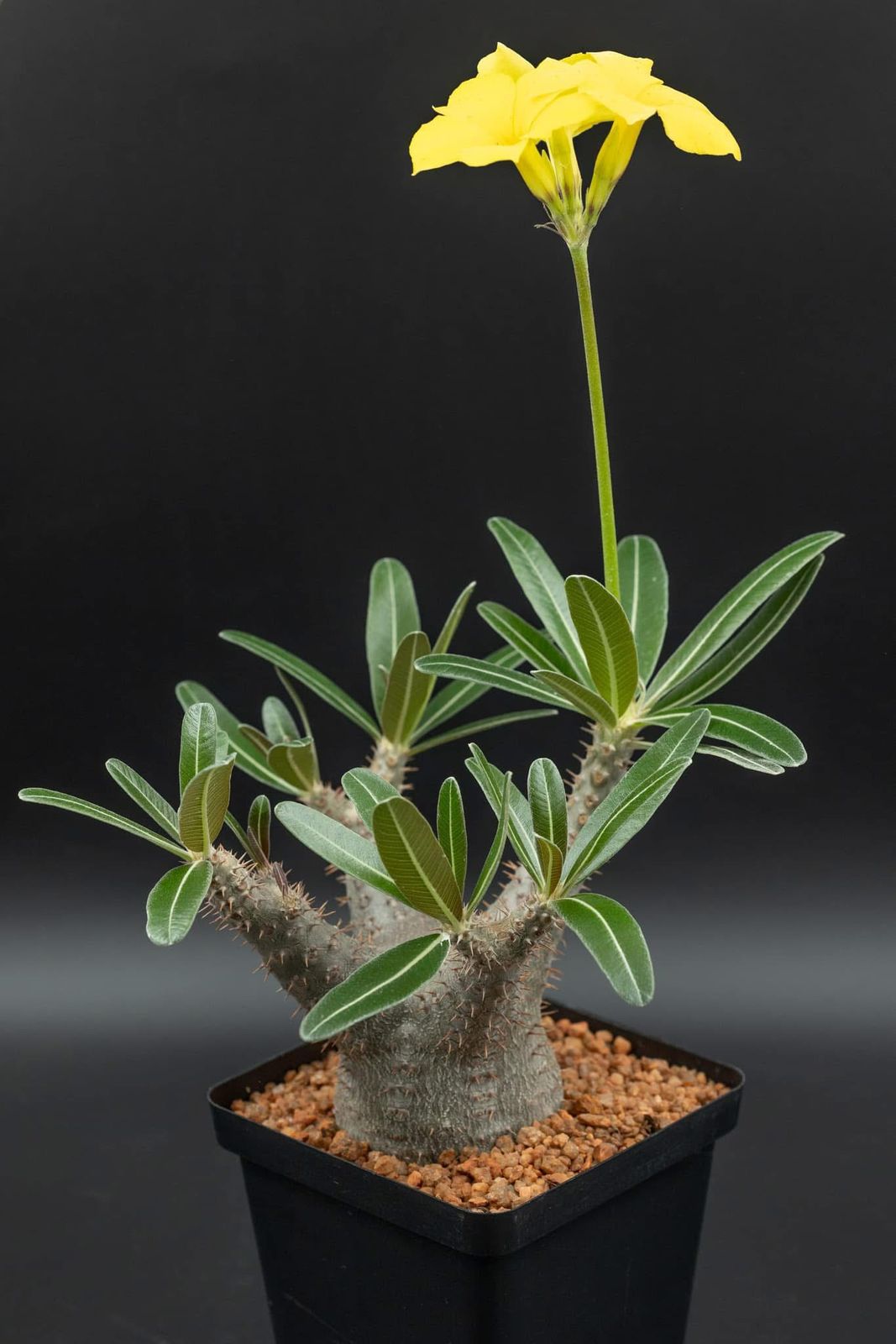

Pachypodium rosulatum, commonly known as the Rosulate Pachypodium, is a striking succulent native to the arid regions of southern Madagascar. It is particularly admired for its swollen, water-storing stem (caudex), which allows it to survive in harsh, drought-prone environments. Known for its unique shape and beautiful flowering display, this species is a popular choice among succulent enthusiasts and collectors.
Common Characteristics:
- Caudex:
- The caudex is thick, swollen, and barrel-shaped, acting as a storage organ for water, which is essential for surviving dry periods.
- It is covered with smooth, gray bark and becomes more pronounced as the plant matures.
- Leaves:
- The leaves are thick, leathery, and glossy with an elliptical shape, forming in rosettes at the tips of the stems.
- They are typically dark green, though some varieties can have a slight red tint on the edges.
- The plant may lose its leaves during dormancy, usually in the dry season, and regrow them when environmental conditions improve.
- Spines:
- The plant has short, sharp spines along the stems, though these are less pronounced compared to some other Pachypodium species.
- These spines provide protection from herbivores.
- Flowers:
- Pachypodium rosulatum produces beautiful, fragrant flowers that are typically white or pale yellow, with a tubular shape and a star-like structure.
- The flowers emerge in clusters from the top of the plant, usually during the warmer months.
- They are particularly striking against the plant’s smooth, spiny bark.
- Growth Habit:
- This species grows slowly, reaching heights of up to 1–2 feet (30–60 cm) in cultivation, though larger plants may develop over time with proper care.
- It tends to form a small, bushy shape, with multiple branches emanating from the central caudex.
Native Range:
Pachypodium rosulatum is endemic to the southern regions of Madagascar, where it thrives in dry, rocky, and semi-arid habitats. The environment is characterized by minimal rainfall, intense sunlight, and poor soil conditions. The plant has evolved to survive in such harsh conditions by storing water in its swollen stem and shedding leaves during the dry season.
Care Tips:
- Light:
- Provide full sun for optimal growth and flowering. A sunny windowsill or an outdoor spot with bright light is ideal.
- If growing indoors, place it in the sunniest location possible to mimic its native environment.
- Watering:
- Water thoroughly but infrequently, allowing the soil to dry out completely between waterings. Overwatering can cause root rot.
- During the winter months or dormancy, reduce watering even further, as the plant needs little moisture during this period.
- Soil:
- Use a well-draining cactus or succulent mix, preferably with added sand or perlite to improve drainage.
- A soil that mimics the rocky, dry conditions of its native habitat is ideal for the plant’s growth.
- Temperature:
- Pachypodium rosulatum thrives in warm temperatures, ideally between 70–90°F (21–32°C).
- It is sensitive to cold and should be protected from temperatures below 50°F (10°C) to prevent damage.
- Fertilization:
- Fertilize sparingly, about once a month during the growing season (spring and summer), using a diluted cactus or succulent fertilizer.
- Avoid fertilizing during the dormant period in the winter.
- Repotting:
- Repot the plant every 2–3 years or when it outgrows its container. Be careful not to damage the caudex or the root system during repotting.
- Pruning:
- Minimal pruning is required. You can trim away any dead or damaged stems to maintain a tidy shape.
- Be careful when handling the spiny stems, as they can be sharp.
- Propagation:
- Propagation is most commonly done by cuttings, though this can be challenging as the plant requires a warm, dry environment to root successfully.
- Seeds can also be sown, though they require warmth and patience to germinate.
Unique and Special Aspects:
Pachypodium rosulatum is particularly notable for its ability to store water in its swollen caudex, a feature that allows it to thrive in drought conditions. This plant’s unique combination of a water-storing stem and attractive, fragrant flowers make it a fascinating specimen for collectors. In addition, its slow-growing nature and striking form make it an ideal plant for bonsai enthusiasts, who appreciate its sculptural beauty and the challenge of cultivating it. The ability to adapt to Madagascar’s harsh conditions—losing leaves in drought and regrowing them when water becomes available—highlights its remarkable survival mechanisms and makes it a resilient and resilient addition to any succulent collection.
Below are some species we are familiar with…

Pachypodium geayi

Pachypodium geayi ‘adriaan’

Pachypodium lamerei

Pachypodium horombense
Pachypodium rosulatum

Pachypodium saundersii
