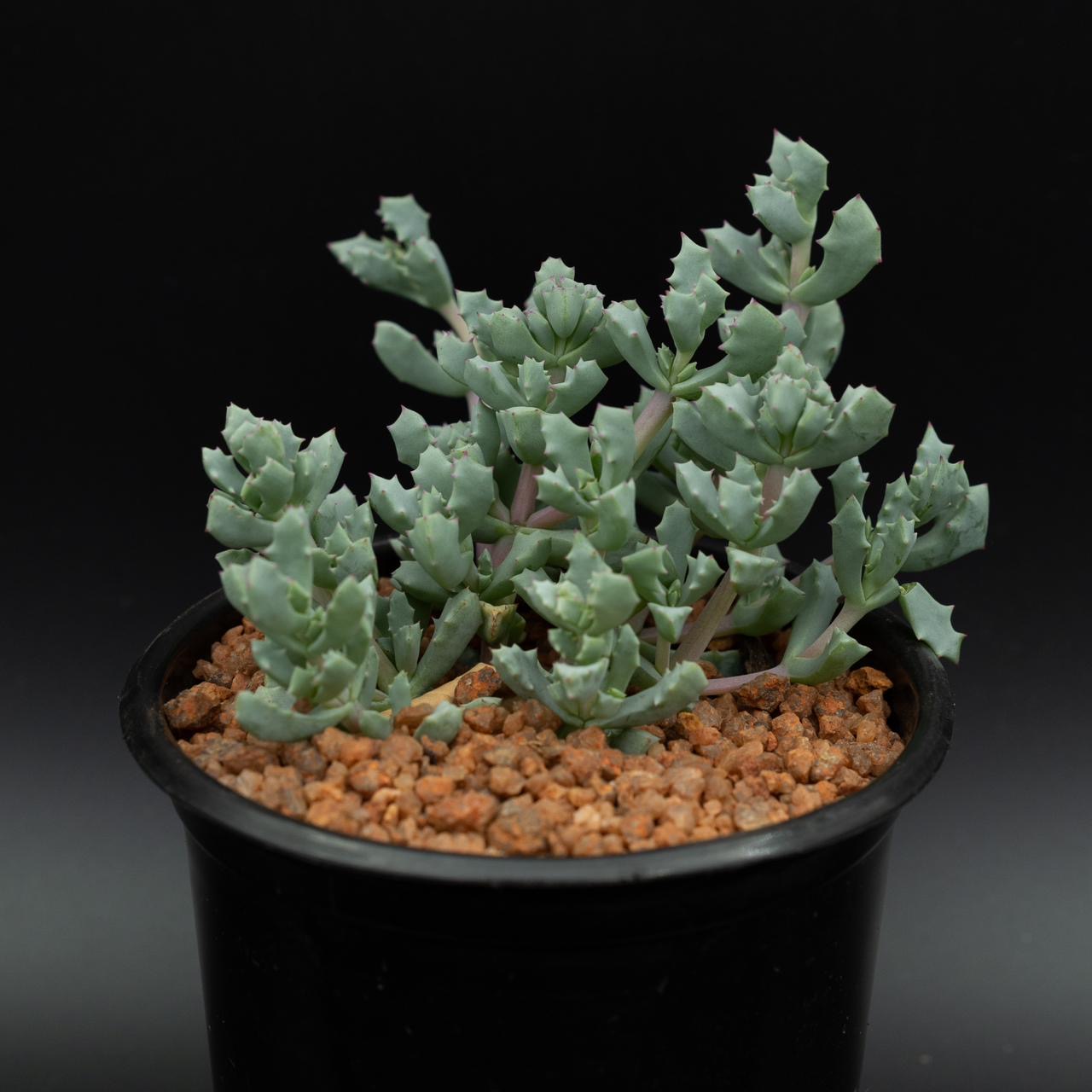
Oscularia
Oscularia – the Delicate Ice Plant
The genus Oscularia, part of the Aizoaceae family, is known for its beautiful, gray-green, angular leaves and abundant, vibrant blooms. Often called “ice plants,” these succulents are popular for their soft, sprawling growth and delicate appearance, which makes them a striking addition to rock gardens, ground covers, or hanging baskets.
Common Characteristics
- Angular, Fleshy Leaves: Oscularia plants are known for their distinctive, triangular to sickle-shaped leaves that grow in a stacked, slightly twisted pattern along the stems. The leaves are usually gray-green to blue-gray, often with a waxy or powdery coating that gives them a soft, pastel appearance.
- Prostrate, Sprawling Growth: Most species in this genus have a low, spreading growth habit, forming mats or cascading trails of leaves. This growth makes them excellent ground cover plants or candidates for cascading displays in pots and hanging baskets.
- Abundant, Daisylike Flowers: Oscularia produces profuse, small, daisylike flowers in colors ranging from bright pink and magenta to purple. These blooms cover the plant densely, creating a striking contrast with the subtle leaf color. The flowering season is typically spring to early summer.
- Drought Tolerance: Like many members of the Aizoaceae family, Oscularia has fleshy leaves that store water, making it very drought-resistant and suitable for dry, low-water gardens.
Native Habitat and Origins
Oscularia is native to the coastal and mountainous regions of South Africa, where it grows in rocky, sandy soils and receives ample sunlight. These regions are characterized by a dry, Mediterranean climate, with mild, wet winters and hot, dry summers. The plant’s growth pattern and leaf structure help it adapt to harsh conditions by minimizing water loss.
Care Guide for Oscularia
Oscularia is a hardy succulent that thrives with minimal care, provided its basic requirements are met:
- Soil: Plant in a well-draining succulent or cactus mix, ideally with added sand or grit to replicate the rocky, sandy soils of its native habitat. Good drainage is essential to prevent root rot.
- Watering: Water sparingly, allowing the soil to dry out completely between waterings. During the growing season (spring and early summer), water a bit more frequently, but still sparingly. Reduce watering in the winter when the plant is less active.
- Light: Full sun is ideal for Oscularia to promote compact growth and encourage abundant flowering. If grown indoors, place it in a bright location with plenty of direct sunlight.
- Temperature: Oscularia prefers warm temperatures and can tolerate mild frost, but it should be protected from prolonged exposure to freezing temperatures. In cold climates, bring it indoors during winter or keep it in a container that can be moved.
- Fertilization: Feeding is not generally necessary, but a diluted cactus or succulent fertilizer can be applied once during the growing season if desired.
A Unique Feature: Edged with Red Margins
A unique and eye-catching feature of Oscularia is the red or pink tint that often appears along the edges of its leaves, especially when the plant is exposed to full sun or cooler temperatures. This coloration gives Oscularia a striking, two-toned effect that enhances its beauty. The red-edged leaves, combined with its vibrant pink blooms, make Oscularia an appealing choice for adding color and texture to succulent arrangements, ground covers, or container gardens. This genus brings a unique blend of toughness and delicate beauty, perfect for both beginners and experienced succulent enthusiasts.
Below are some species we are familiar with…