
Oscularia deltoides
Oscularia deltoides – The “Dassie Vygie”
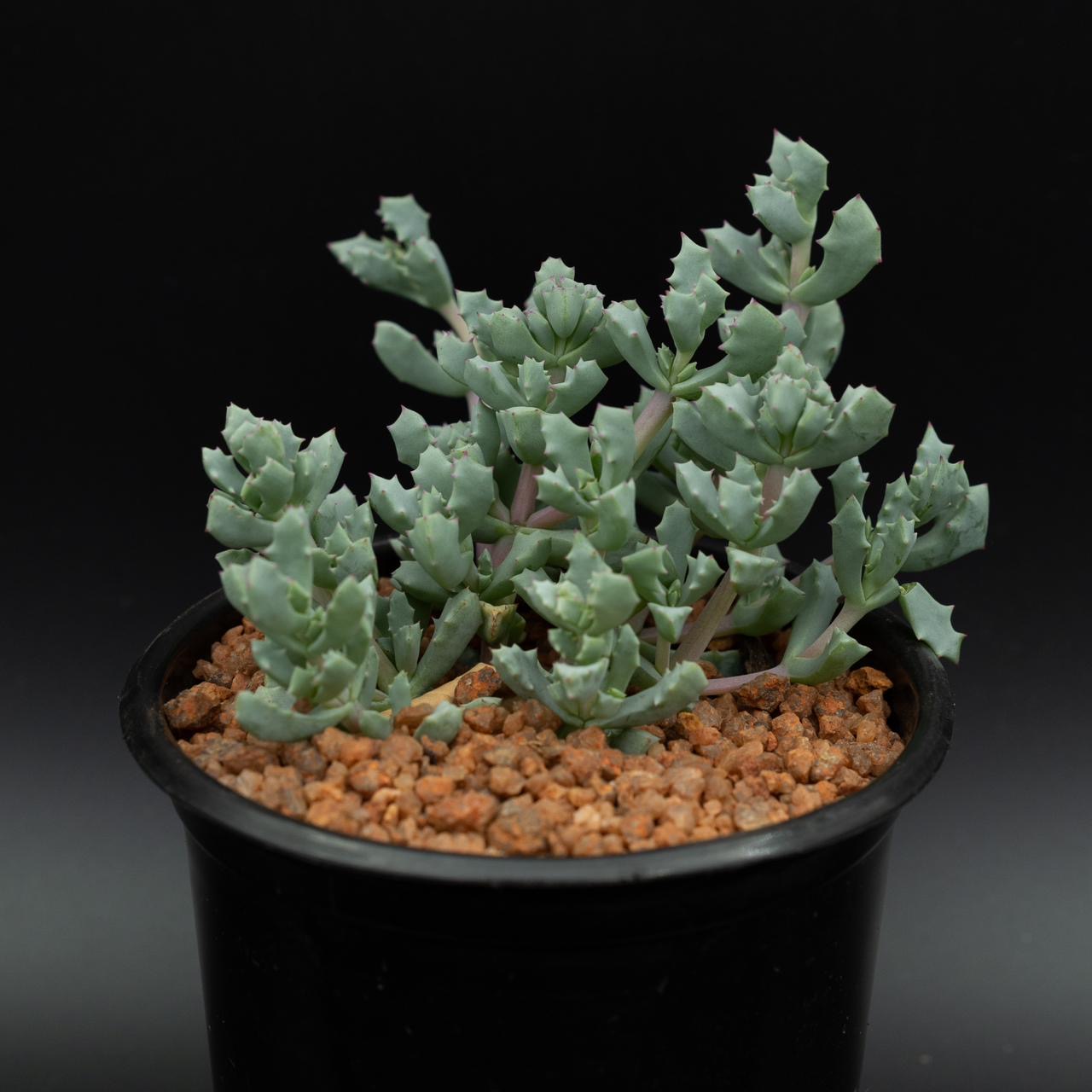
Oscularia deltoides, commonly known as the “Pink Ice Plant,” is a striking succulent prized for its unusual foliage and vibrant blooms. Its geometric, blue-green leaves and profuse pink flowers make it a standout addition to succulent collections and drought-tolerant landscapes.
Common Characteristics
- Growth Habit: A low-growing, spreading succulent that forms dense, trailing mats. It can cascade over the edges of containers or cover the ground in rock gardens.
- Leaves: Triangular, fleshy leaves with a distinctive blue-gray coloration and reddish edges. The leaves are arranged in pairs along the stems, giving the plant a sculptural, angular appearance.
- Flowers: Abundant small, daisy-like flowers in shades of pink to magenta. Blooms are typically seen in late spring to early summer and are lightly scented.
- Size: Can grow up to 30 cm (12 inches) tall and spread over a meter (3 feet), making it an excellent ground cover.
Native Habitat and Origins
This species is native to the Western Cape of South Africa, where it thrives in arid, rocky environments. It has adapted to survive with minimal water, intense sunlight, and poor soils, making it a perfect plant for xeriscaping.
Care Guide for Oscularia deltoides
- Light: Requires full sun to maintain its compact growth and vibrant foliage colors. Partial shade can be tolerated but may reduce flowering.
- Watering: Water deeply but infrequently, allowing the soil to dry out completely between waterings. It is highly drought-tolerant once established.
- Soil: Plant in well-draining, sandy or gritty soil. A cactus or succulent mix is ideal.
- Temperature: Prefers warm climates and is hardy in USDA zones 9-11. Protect from frost, as prolonged exposure to freezing temperatures can damage the plant.
- Fertilizer: Feed sparingly during the growing season (spring and summer) with a diluted succulent fertilizer to encourage growth and flowering.
- Pruning: Trim back leggy stems to maintain a tidy shape and encourage denser growth.
- Propagation: Easily propagated through stem cuttings. Allow cuttings to callous before planting in well-draining soil.
Unique and Special Feature
The combination of geometric foliage and a profusion of vibrant blooms makes Oscularia deltoides a true garden gem. Its leaves take on a reddish tinge in cooler weather or under stress, adding seasonal interest. Additionally, this species is a magnet for pollinators, particularly bees, which are drawn to its brightly colored flowers. Its adaptability and resilience in harsh conditions make it an invaluable addition to water-wise gardens.
Below are some species we are familiar with…