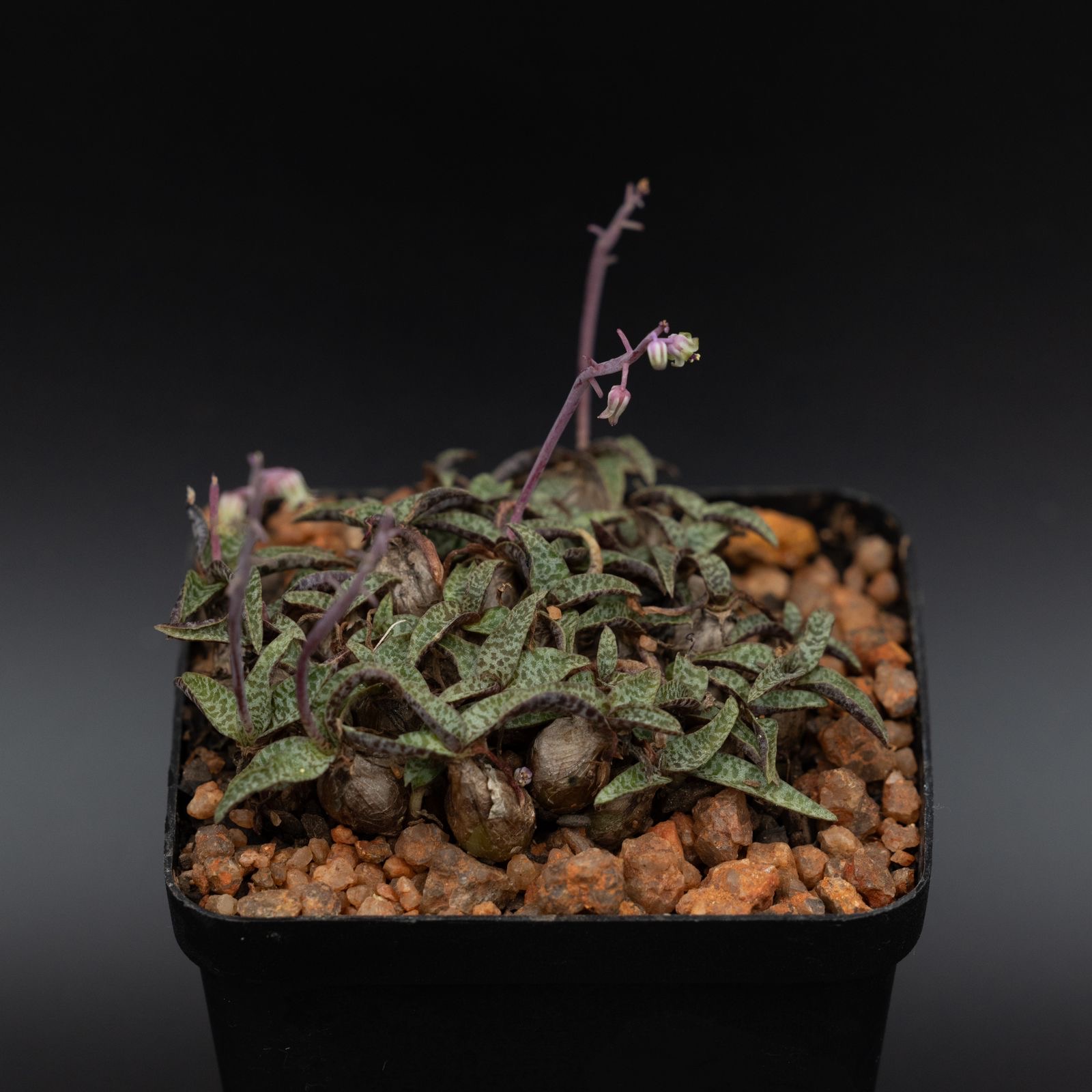
Ledebouria
Genus Ledebouria – The Squil Plant
The genus Ledebouria is a group of small, bulbous plants within the family Asparagaceae, often known for their attractive foliage and easy-care nature. These plants are popular for their unique appearance and suitability for low-maintenance gardening. Ledebouria species are native to regions of Africa, particularly southern Africa, where they grow in a variety of habitats, including grasslands, woodlands, and rocky outcrops.
Key characteristics of Ledebouria include:
- Bulbous Growth Habit: The plants are characterized by bulbous bases that store water and nutrients, which help them survive in arid conditions. From these bulbs, numerous slender, fleshy leaves grow, forming clusters that can be highly ornamental.
- Leaf Structure: The leaves of Ledebouria species are often long, narrow, and linear, with an attractive leathery texture. Some species have highly variegated or spotted foliage, which adds to their decorative appeal. The leaves are typically green, though some varieties have silver or purplish markings.
- Flowering: Ledebouria produces delicate flowers that are typically small and borne on slender, leafless stems. The flowers can be green, white, or purple, and they are often clustered in racemes or spikes. Although the flowers are not the main attraction, they add a subtle charm to the plant when in bloom.
- Size: Most Ledebouria species are small, with mature plants reaching a height of around 6 to 12 inches (15 to 30 cm). This makes them perfect for container gardening or as a low-growing ground cover in larger garden beds.
- Slow Growth: These plants are slow-growing, which makes them well-suited for container gardening. Their bulbs multiply over time, and they can form small clumps that add texture and interest to garden arrangements.
Native Habitat:
Ledebouria species are native to Southern Africa, including countries like South Africa, Namibia, and Zimbabwe. They are typically found in well-drained, rocky soils and are adapted to semi-arid environments, where they can endure dry spells and occasional droughts. They grow in various elevations, from coastal regions to higher-altitude habitats.
These plants are often found in areas with seasonal rainfall, where they store water in their bulbous roots to survive through drier periods. Their adaptability to low-water conditions makes them suitable for xeriscaping and drought-tolerant garden designs.
Care Requirements:
- Light: Ledebouria thrives in bright, indirect light. While they can tolerate some direct sunlight, they should be protected from harsh midday sun, as it may scorch their delicate foliage. A spot near a window with filtered light is ideal for these plants. In lower light conditions, their growth may slow down.
- Watering: These plants are adapted to dry environments and should be watered moderately. Allow the soil to dry out between waterings, as overwatering can lead to root rot. In the winter months, reduce watering to prevent the plant from becoming waterlogged during its dormant phase.
- Soil: Ledebouria prefers well-draining soil. A cactus or succulent mix is a great choice, or you can make your own by combining regular potting soil with perlite or sand for better drainage. Ensure that the plant’s pot has drainage holes to prevent water from accumulating at the base of the bulb.
- Temperature: These plants do well in temperatures between 65°F and 75°F (18°C to 24°C). Ledebouria is not frost-tolerant and should be brought indoors or protected during cold weather. They prefer warm, stable temperatures and may go dormant in cooler conditions.
- Humidity: Ledebouria plants prefer low to moderate humidity levels, similar to their native habitat. If grown indoors, they generally do well in the average household humidity. However, they should not be placed in overly humid conditions, as excessive moisture can encourage fungal diseases.
- Fertilization: Fertilizing Ledebouria is not necessary for their survival, but you can feed them lightly during the growing season (spring and summer). Use a diluted, balanced liquid fertilizer to promote healthy foliage growth. Avoid fertilizing during their dormant period in the winter.
- Repotting: Ledebouria grows slowly, and repotting is typically only necessary every 2–3 years. Choose a container that is just slightly larger than the bulb, as this will encourage better growth and prevent the plant from becoming root-bound. A pot with good drainage is essential to avoid waterlogging the roots.
Unique Feature:
One of the most special aspects of Ledebouria is the beautiful variegation and spotting patterns that many of its species exhibit on their leaves. Some varieties have striking silver, purple, or cream markings on the green foliage, making them look quite ornamental and eye-catching. These unique leaf patterns add a touch of elegance and interest, making them perfect for both indoor and outdoor succulent collections.
Additionally, Ledebouria species are low-maintenance and drought-tolerant, making them perfect for beginner gardeners or those with limited time to care for plants. Their compact size and attractive foliage also make them ideal for small spaces, container gardening, or as part of a succulent arrangement.
Below are some species we are familiar with…

Ledebouria socialis