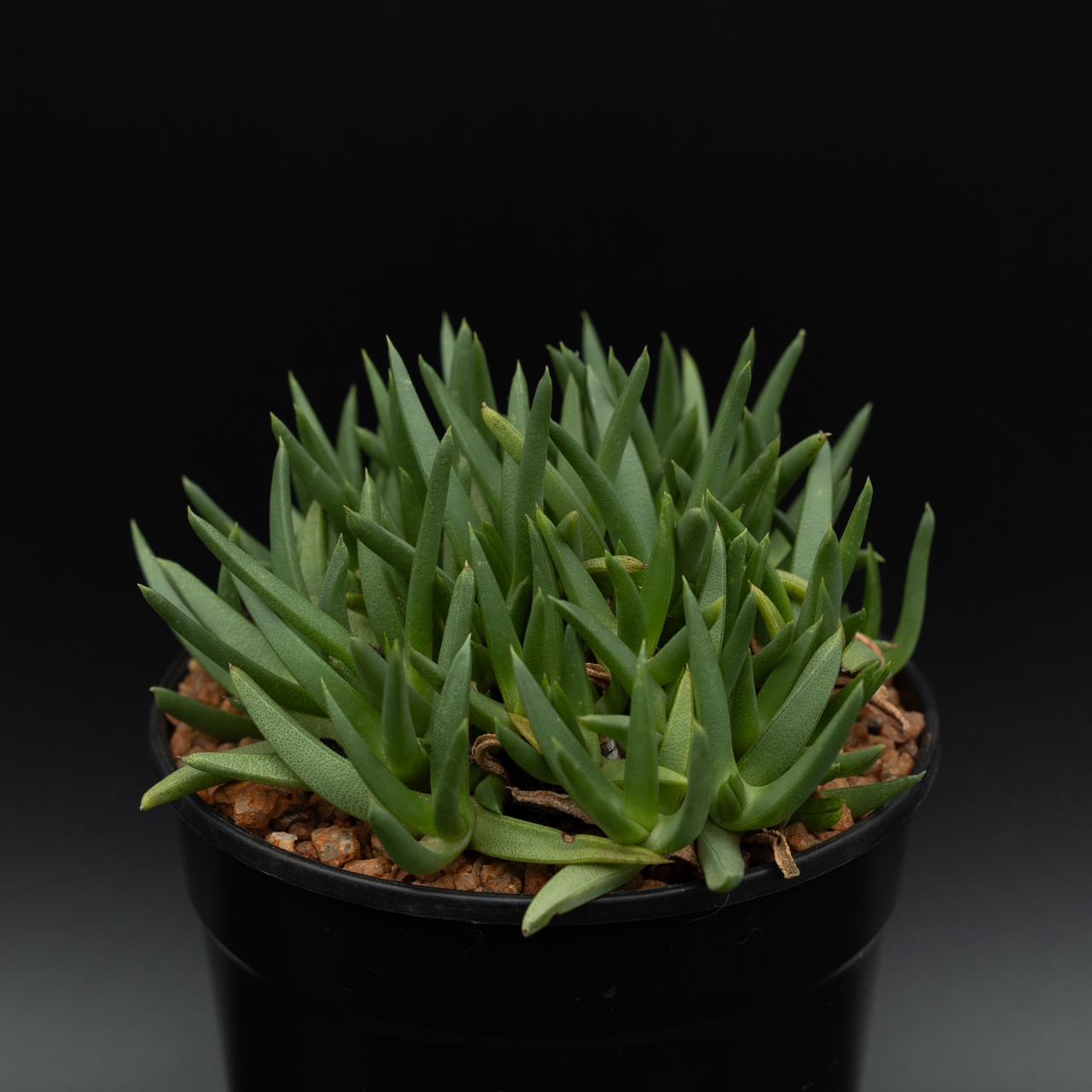
Khadia acutipetala
Khadia acutipetala – Sharp-petaled Khadia

Khadia acutipetala, belonging to the Aizoaceae family, is a compact, mat-forming succulent known for its attractive, pointed foliage and showy flowers. Often referred to as “Sharp-Petaled Khadia,” this species offers gardeners a vibrant display of colors, both in foliage and bloom. It is a hardy plant that can thrive in challenging conditions, making it an excellent choice for rock gardens and succulent collections.
Common Characteristics
- Leaves: The leaves of Khadia acutipetala are fleshy, pointed, and typically arranged in compact rosettes. They are triangular to ovate with a slightly rough texture, often a muted green that can develop red or purple tinges in bright sunlight.
- Growth Form: This species grows low to the ground, forming dense mats that can spread over time, making it ideal for ground cover in arid gardens.
- Flowers: Khadia acutipetala produces eye-catching, daisy-like flowers in shades of bright pink to magenta, which open in the afternoon and close at night. The blooms typically appear in late summer to fall, creating a vibrant display above the foliage.
Native Habitat and Origins
Khadia acutipetala is native to South Africa, specifically found in the arid regions of the Karoo and surrounding rocky landscapes. The plant has adapted to grow in areas with extreme temperatures, limited rainfall, and intense sunlight. It often grows in rocky crevices or among sparse vegetation, where it takes advantage of drainage and slight shade.
Care Guide for Khadia acutipetala
To cultivate Khadia acutipetala successfully, it’s best to mimic its native arid conditions, particularly focusing on excellent drainage and limited watering.
- Soil: Use a well-draining cactus or succulent mix, ideally with added sand or grit to enhance drainage. Avoid moisture-retentive soils, as this plant is prone to root rot.
- Watering: Water sparingly, especially during winter dormancy. Allow the soil to dry out completely between waterings. During the active growing season (spring to fall), water once every two weeks, reducing the frequency in cooler months.
- Light: Place in bright, indirect sunlight or partial sun. While it can tolerate full sun, extreme midday exposure in hotter climates may lead to sunburn, so consider providing light shade if needed.
- Temperature and Humidity: Khadia acutipetala prefers warm temperatures and low humidity. It can tolerate brief, mild frost but is best protected from prolonged cold. Bring indoors if temperatures drop below 40°F (5°C).
- Fertilization: Use a diluted, balanced fertilizer specifically formulated for succulents once a month during the growing season to support healthy growth and blooming.
Unique Feature: Afternoon-Blooming Flowers
A unique and special characteristic of Khadia acutipetala is its tendency to bloom in the afternoon, with flowers opening up in response to sunlight and closing as the day wanes. This behavior, known as nyctinasty, helps the plant conserve energy and moisture by limiting exposure during hotter parts of the day. This adaptation not only makes Khadia acutipetala resilient in arid environments but also adds a dynamic, ever-changing beauty to its display, giving gardeners something to look forward to each afternoon.
Below are some species we are familiar with…