
Haworthia comptoniana hybrid
Haworthia comptoniana hybrid – The windowed haworthia
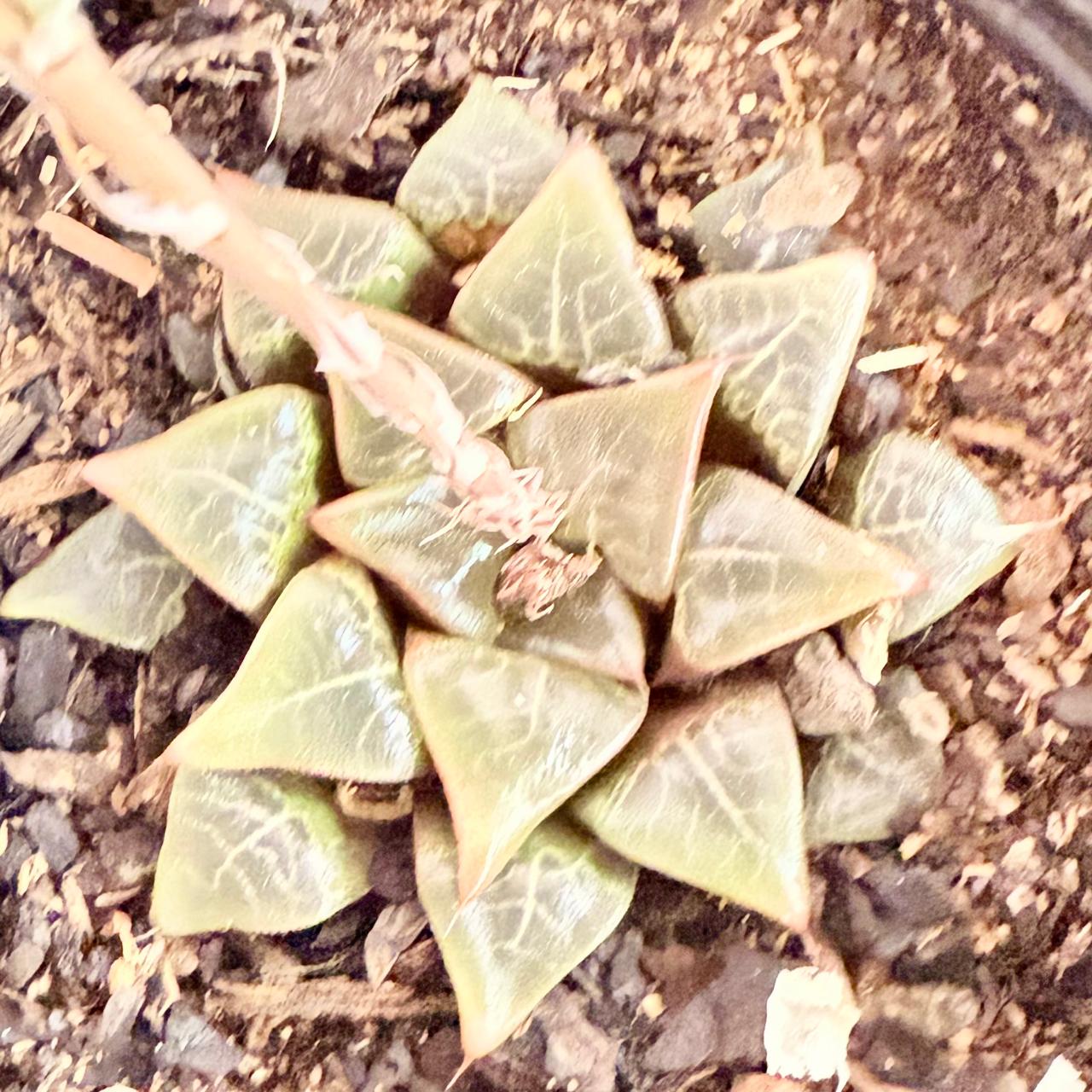
The Haworthia comptoniana hybrid is a striking and relatively rare succulent that blends the best features of its parent species, typically with varied leaf shapes and markings. This hybrid usually forms dense rosettes of thick, fleshy, triangular leaves. The leaves are typically a deep green, with translucent or white “windows” (a feature of the Haworthia genus) that help the plant adapt to low-light environments. The leaves may have a waxy coating and are often slightly fleshy, offering water retention capabilities, which is common in succulents.
The hybrid nature of Haworthia comptoniana can result in variations in leaf markings, including lighter stripes or spots, making each plant unique. The size and shape of the leaves are also influenced by the hybridization, typically leading to slightly larger or differently structured rosettes compared to the parent species.
Native Range:
Haworthia comptoniana originates from South Africa, where it grows in the dry, rocky environments of the Western Cape. These plants are well-adapted to the region’s hot, arid climate with limited rainfall. While the hybrid itself is cultivated widely in nurseries and collections, it inherits the resilience and unique characteristics of the native species, often thriving in similar conditions.
Care Tips:
- Light: Haworthia comptoniana hybrid thrives in bright, indirect light. Like other Haworthia species, it can tolerate some low light, making it ideal for indoor environments with filtered sunlight. However, it should be protected from harsh direct sunlight, as this may cause sunburn or scarring on the leaves.
- Watering: This hybrid is drought-tolerant, like other succulents, and should be watered sparingly. Let the soil dry out completely between waterings to avoid root rot. It is best to water deeply, but infrequently. The plant is more sensitive to overwatering than underwatering.
- Soil: Well-draining soil is essential for this plant. A mix of cactus and succulent soil with added sand or perlite will ensure proper drainage and prevent waterlogging, which can lead to root rot.
- Temperature: Preferring temperatures between 65°F to 80°F (18°C to 27°C), Haworthia comptoniana hybrid can tolerate slightly cooler temperatures but should be kept away from frost. It is ideal for warm indoor environments.
- Fertilizing: Fertilize during the growing season (spring and summer) with a balanced, diluted fertilizer. Avoid fertilizing in the winter, as the plant goes dormant during this time.
- Propagation: The Haworthia comptoniana hybrid can be propagated through offsets, which naturally grow at the base of the plant. These can be carefully separated and replanted to produce new plants.
Unique and Special:
One of the most unique aspects of the Haworthia comptoniana hybrid is its ability to adapt to low-light environments while still showcasing the beautiful translucent windows in its leaves. This makes it an excellent choice for those who want a hardy and attractive plant for indoor spaces that may not receive much direct sunlight. Additionally, the hybrid’s varied markings and color patterns offer a distinctive look, making each plant an individual specimen in its own right. The Haworthia comptoniana hybrid is a stunning, low-maintenance addition to any succulent collection, ideal for beginners and experienced growers alike.
Below are some species we are familiar with…
Haworthia angustifolia
Haworthia angustifolia hybrid
Haworthia bayeri hybrid
Haworthia comptoniana hybrid
Haworthia cooperi
Haworthia cymbiformis
Haworthia ginsekai
Haworthia glauca
Haworthia grey ghost
Haworthia herbacea
Haworthia iguana
Haworthia lime star
Haworthia mutica byukuya
Haworthia nan
Haworthia olive star
Haworthia picta
Haworthia truncata