
Echinopsis subdenudata
Echinopsis chamaecereus – The Peanut Cactus
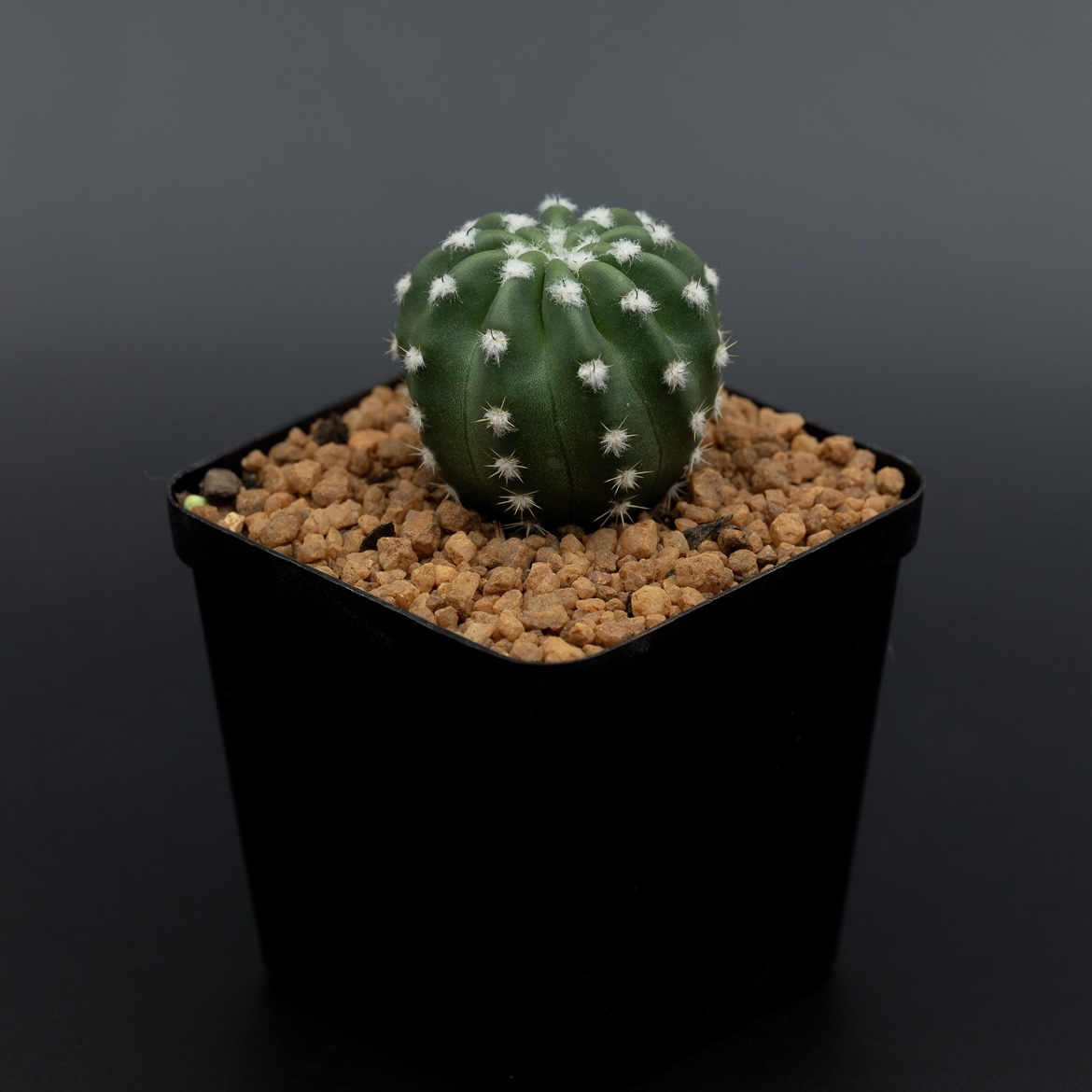
Common Characteristics: Echinopsis subdenudata, also known as the “Bishop’s Cap,” is a popular cactus species known for its striking appearance and low-maintenance care requirements. Here are the common characteristics of this species:
- Growth Habit: The plant has a spherical to cylindrical shape, with multiple ribs that run vertically along its surface. The cactus is typically solitary, though it can form small clusters over time.
- Size: Echinopsis subdenudata grows to a moderate size, typically reaching 6 to 8 inches (15 to 20 cm) in height and about 6 inches (15 cm) in diameter. It can sometimes grow slightly larger, depending on the conditions.
- Spines: This species is notably lacking in prominent spines, which is why it is sometimes referred to as a “denudata” cactus, meaning “bare” or “naked.” Instead of spines, it has fine, short, white or light-colored wool-like hair at the apex of the plant.
- Flowers: Echinopsis subdenudata produces large, funnel-shaped, white or pale yellow flowers that can open at night or during the day. The flowers are typically around 4 to 6 inches (10-15 cm) wide and are highly fragrant, adding an aromatic component to its appeal.
- Coloration: The cactus has a light green body, often with faint bluish or grayish tints, especially when exposed to bright light. This soft coloration enhances its elegant, understated look.
Native Range: Echinopsis subdenudata is native to the highlands of Bolivia and Argentina. It thrives in semi-arid environments, where it experiences periods of intense sun and dry conditions, interspersed with cooler nights.
Care Tips:
- Light: Like most cacti, Echinopsis subdenudata requires plenty of sunlight. It does well in bright, direct light and can tolerate some shade. For indoor cultivation, a south-facing window is ideal, but outdoor plants should be placed in full sunlight for at least 4-6 hours per day.
- Watering: During the active growing season (spring and summer), water thoroughly but infrequently. Ensure the soil is dry before watering again to avoid root rot. During the winter months, reduce watering significantly, as the plant enters dormancy.
- Soil: Use a well-draining cactus or succulent mix. You can also create your own mix by combining sand, perlite, and regular potting soil. Well-draining soil is essential to prevent water retention around the roots, which can cause rot.
- Temperature: Echinopsis subdenudata prefers warmer conditions but can tolerate temperatures as low as 50°F (10°C) for short periods. It thrives in temperatures between 70°F and 90°F (21°C-32°C) during the growing season. Protect it from frost and cold drafts.
- Fertilizing: Feed your cactus with a diluted cactus fertilizer every 4-6 weeks during the growing season. Avoid fertilizing in the winter when the plant is dormant.
- Repotting: Repot when the plant outgrows its container, typically every 2-3 years. Make sure the new pot has sufficient drainage to prevent waterlogging.
Propagation: Echinopsis subdenudata can be propagated through seeds or offsets. Seeds should be sown in a well-draining mix and kept in warm, bright conditions. Offsets can be carefully separated from the parent plant and planted in their own pots once they are large enough.
Unique and Special: One of the most special features of Echinopsis subdenudata is its lack of prominent spines, which makes it a desirable cactus for those who prefer a “soft” cactus without the risks of sharp spines. Additionally, its beautiful, fragrant flowers are often considered a highlight of the plant’s care cycle. These flowers open in a spectacular display, usually in the evening or early morning, adding a touch of elegance to its otherwise minimalistic look. The plant’s ability to thrive in dry conditions, combined with its unique flower display, makes it an ideal cactus for collectors or beginners seeking an aesthetically pleasing yet easy-care specimen.
Below are some species we are familiar with…
Echinopsis chamaecereus
Echinopsis chamaecereus hybrid