
Echinopsis chamaecereus hybrid
Echinopsis chamaecereus hybrid – The Peanut Cactus
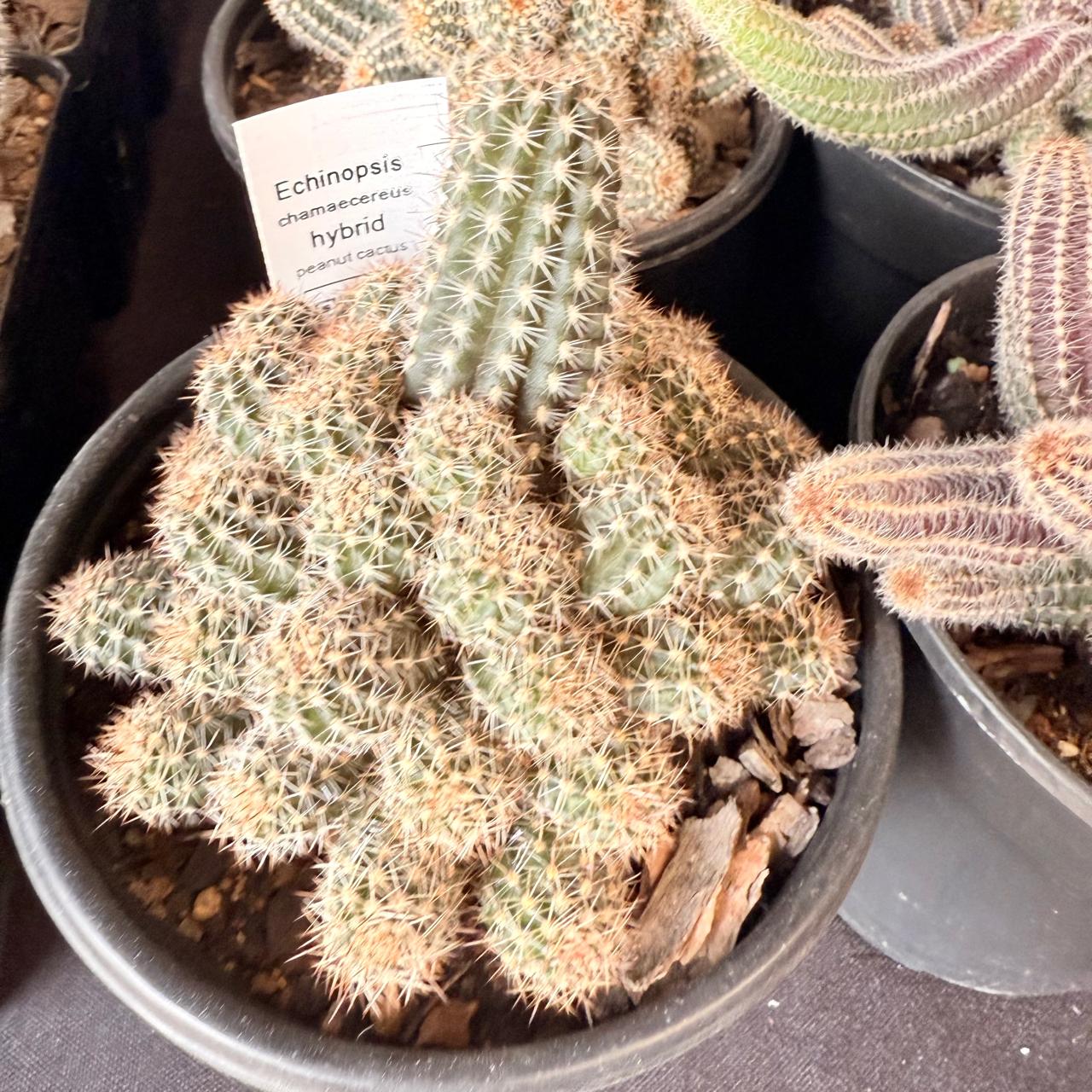
Common Characteristics: The Echinopsis chamaecereus hybrid is a cultivar or hybrid variety of the Echinopsis chamaecereus, often developed for specific traits like flower color, growth form, or spination. These hybrids tend to exhibit characteristics inherited from both parent plants, making them somewhat more variable in appearance. Here are the common features:
- Growth Habit: Like the parent species, the hybrid typically forms a low-growing, clumping cactus with multiple stems or offsets. The individual stems are cylindrical, often with a slightly more compact or varied appearance than the species.
- Spines: The spines of the hybrid can range from fine and hair-like, similar to the parent Echinopsis chamaecereus, to more pronounced or varied in color (yellow, white, or even red). Some hybrids may exhibit denser or less dense spination compared to the original species.
- Flowers: One of the most striking features of Echinopsis chamaecereus hybrids is their large, brightly colored flowers. Hybrids often show a greater variety of flower colors, such as pink, orange, or red, sometimes with different gradients or bi-color variations. The flowers are funnel-shaped, blooming during the spring or early summer.
- Coloration: The stems of the hybrid can be a vibrant green, similar to the parent species, but sometimes with slight variations like bluish tones or red-tinged ribs, depending on the hybrid’s specific traits.
Native Range: Since the Echinopsis chamaecereus hybrid is a cultivated variety, it does not have a specific native range. However, its parent species, Echinopsis chamaecereus, is native to the highland regions of northern Argentina. Hybrids are typically created in controlled environments by cross-pollination of two different Echinopsis species, or between different cultivars of Echinopsis.
Care Tips:
- Light: Echinopsis chamaecereus hybrids thrive in bright, direct sunlight. Place them in a location where they can receive at least 4-6 hours of sunlight per day. In indoor settings, a south-facing windowsill is ideal.
- Watering: As with the parent species, the hybrid is drought-tolerant. Water the plant thoroughly during the growing season (spring and summer), but only when the soil has completely dried out. In winter, reduce watering significantly to allow the plant to enter its dormant phase.
- Soil: Use a well-draining cactus mix or a mixture of sand, perlite, and standard potting soil. Proper drainage is essential to prevent waterlogging and root rot.
- Temperature: The hybrid enjoys warm conditions, with temperatures between 70°F to 100°F (21°C to 38°C) during the growing season. It can tolerate cooler temperatures but should be protected from frost. Avoid temperatures below 40°F (4°C).
- Fertilizing: Fertilize the plant during the active growing period with a diluted cactus fertilizer every 4-6 weeks. Avoid feeding in winter when the plant is dormant.
- Repotting: Repot the cactus when it becomes root-bound, or every 2-3 years. Ensure the new pot has adequate drainage.
Propagation: Propagation of Echinopsis chamaecereus hybrids can be done by taking offsets or stem cuttings. Allow the cuttings to callus over for a few days before planting them in a well-draining mix. These hybrids tend to root relatively quickly when kept in warm conditions with bright, indirect light.
Unique and Special: What makes the Echinopsis chamaecereus hybrid particularly special is the variety of traits it can inherit from its parent plants, resulting in unique flower colors, sizes, and even growth habits. The hybrid may be more resilient to environmental stressors or have enhanced flowering, providing more aesthetic variety than the original species. Moreover, the large, eye-catching flowers—sometimes in vibrant hues like peach or pink—make it a show-stopping addition to any cactus collection, especially when the plant is in bloom. Its small size and distinctive clumping habit also make it an ideal cactus for smaller spaces, containers, or decorative displays.
Below are some species we are familiar with…
Echinopsis chamaecereus
Echinopsis chamaecereus hybrid