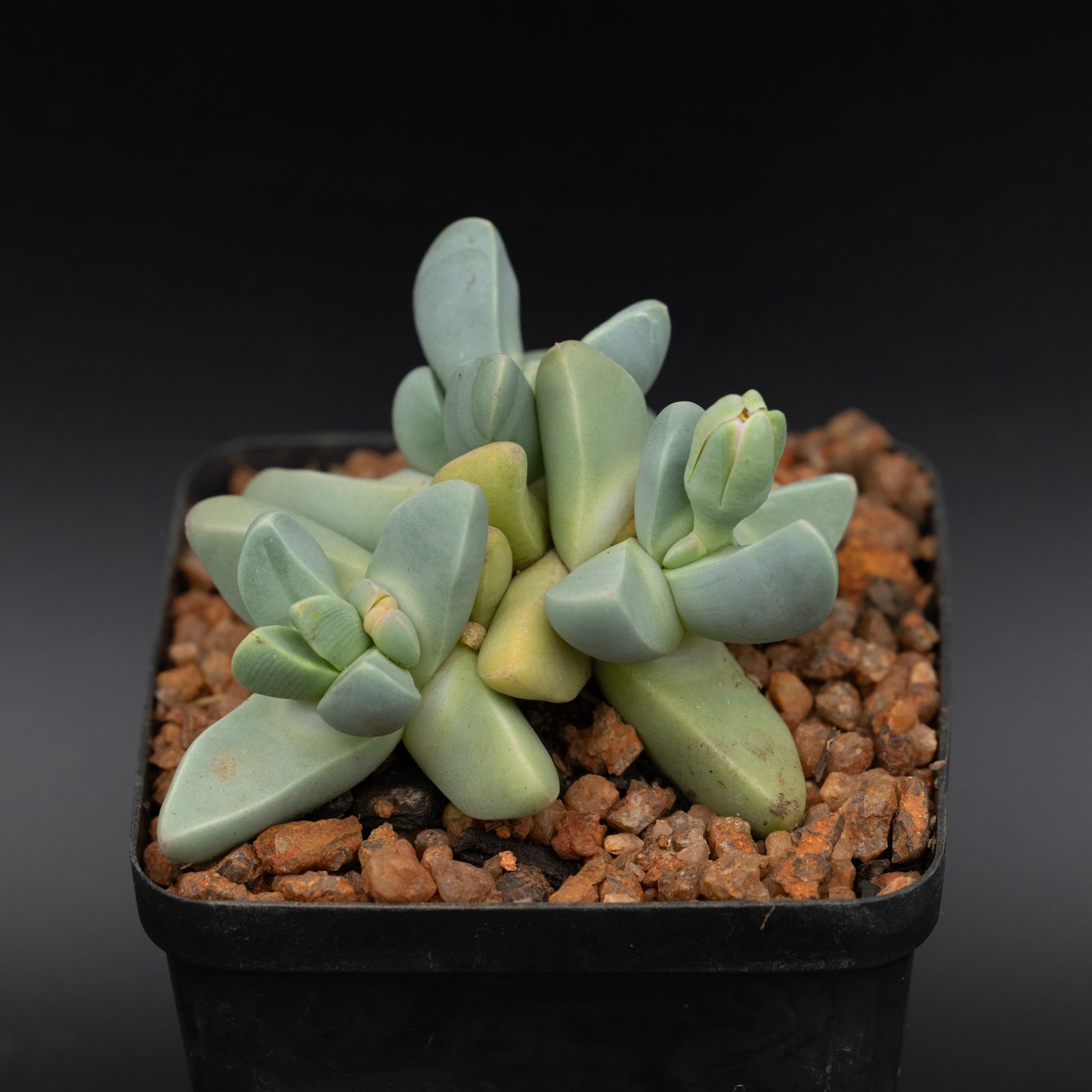
Dracophilus dealbatus
Dracophilus dealbatus – The White Dragon Plant
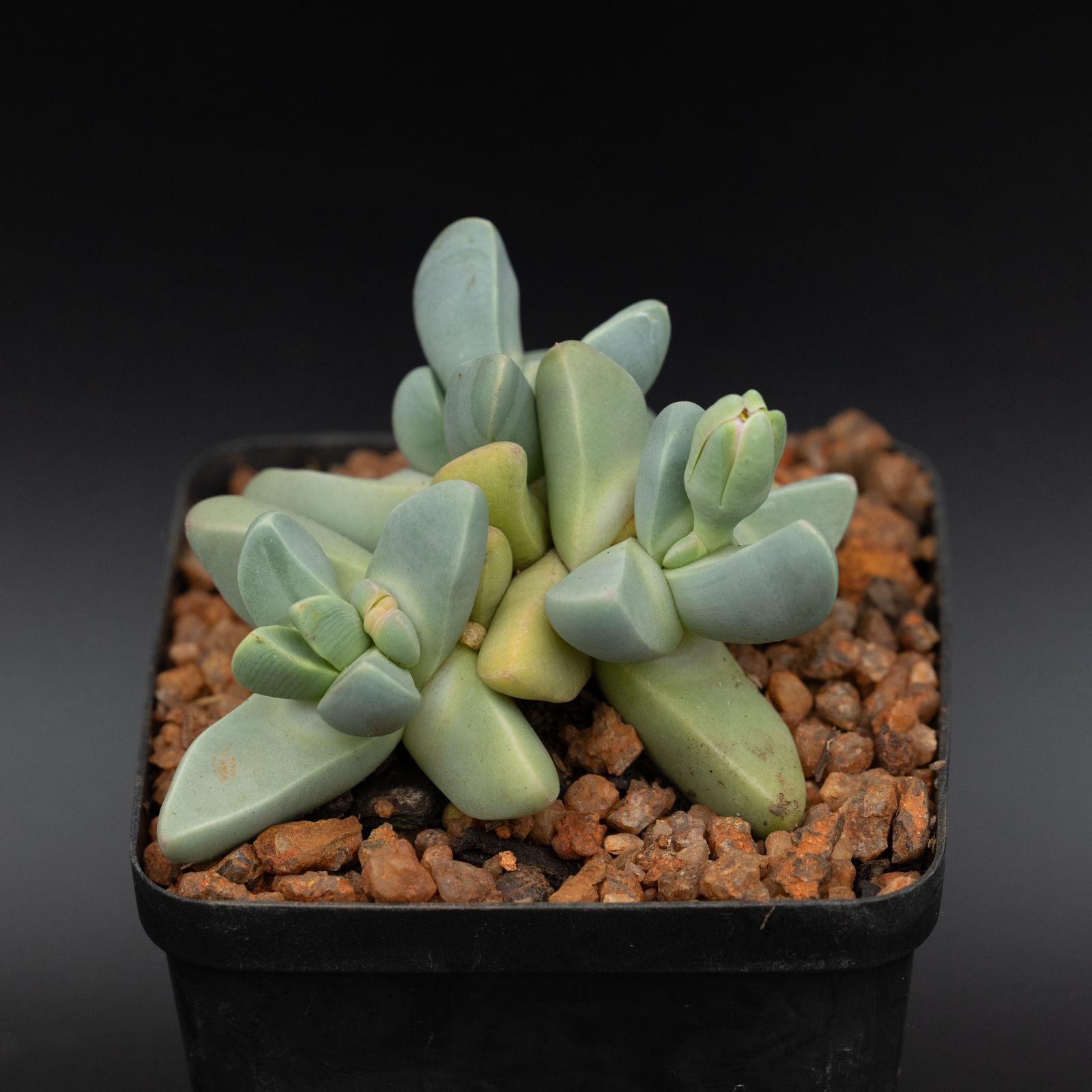
Dracophilus dealbatus is a unique and visually striking succulent from the Aizoaceae family. Known for its densely packed leaves and remarkable flower display, this species is popular among succulent enthusiasts for its unusual leaf textures and bright blooms. The name “dealbatus” translates to “whitened” or “whitewashed,” referencing the species’ pale leaf covering.
Common Characteristics
- Dense Rosette of Leaves: The leaves of Dracophilus dealbatus are thick, fleshy, and arranged in a compact rosette. They often appear grayish-green to almost white due to a fine, powdery coating, which helps protect the plant from intense sunlight.
- Fine Powdery Coating: A unique characteristic of this species is its powdery “bloom” on the leaves, giving it a whitish appearance. This coating helps reflect sunlight and reduce water loss.
- Bright, Dazzling Flowers: During late fall to early winter, Dracophilus dealbatus produces small, vivid yellow flowers that stand out brightly against the pale foliage. The flowers resemble daisies and open in response to sunlight, adding a splash of color to the plant.
- Low, Spreading Growth Habit: This species tends to grow low to the ground and may slowly spread, making it suitable for ground cover in xeriscape gardens or as an attractive addition to rock gardens and succulent collections.
Native Habitat and Origins
Dracophilus dealbatus is native to the arid regions of South Africa, specifically in areas with rocky, well-drained soils and high sunlight exposure. It has evolved to withstand long dry spells and harsh sunlight by developing a protective powdery coating on its leaves and a compact growth form.
Care Guide for Dracophilus dealbatus
To keep Dracophilus dealbatus healthy and thriving, it’s important to recreate its natural desert-like conditions:
- Soil: Plant in a well-draining soil mix, such as cactus or succulent soil, with added grit or sand to enhance drainage. This prevents root rot, as the plant cannot tolerate standing water.
- Watering: Water sparingly, as the plant is highly drought-tolerant. During its active growing season (fall to early winter), water only when the soil is completely dry. In its dormant summer period, reduce watering significantly.
- Light: Provide bright, direct sunlight. Dracophilus dealbatus thrives under full sunlight, which enhances its leaf color and encourages flower production.
- Temperature: Tolerates mild frost but should be protected from prolonged freezing temperatures. Ideal growing conditions are warm and dry, as too much humidity can lead to rot.
- Fertilization: Fertilization is generally unnecessary. If desired, apply a diluted, balanced fertilizer once during the growing season in fall.
Unique Feature: Nature’s Sunscreen
One of the most remarkable characteristics of Dracophilus dealbatus is its natural “sunscreen” – the powdery coating on its leaves acts as a reflective barrier, shielding the plant from intense UV rays and reducing water loss through evaporation. This adaptation not only aids its survival in extreme desert conditions but also gives the plant a striking, silvery-white appearance, making it a visually unique and low-maintenance addition to any succulent collection.
Below are some species we are familiar with…