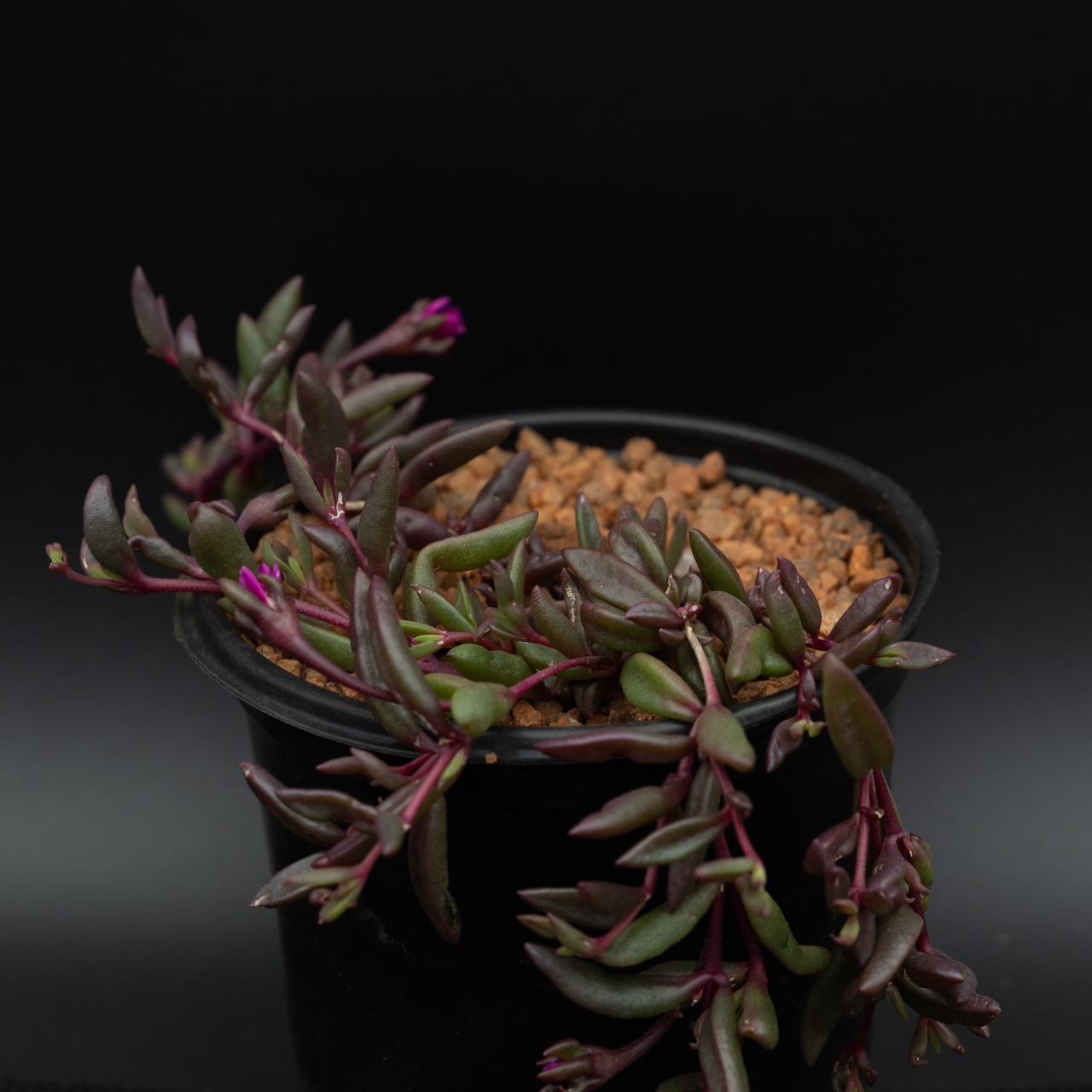
Delosperma
Delosperma – the Hardy Ice Plant
The genus Delosperma, commonly known as the ice plant, is a vibrant group of succulents within the Aizoaceae family. Known for their cold tolerance and prolific blooms, Delosperma species are widely used in gardens and landscaping for ground cover and erosion control. They are beloved for their easy-care nature, colorful flowers, and ability to thrive in challenging conditions.
Common Characteristics
- Ground-Covering Growth Habit: Delosperma plants grow low to the ground, spreading quickly to form dense mats that make them ideal for ground cover in rock gardens, slopes, and other areas where soil erosion may be a concern.
- Succulent, Evergreen Foliage: The leaves are fleshy, cylindrical, or slightly flattened, storing water to withstand dry spells. The foliage remains green year-round, providing consistent ground coverage even when the plant isn’t blooming.
- Bright, Dazzling Flowers: Delosperma is known for its abundant, daisy-like flowers in vibrant colors, such as pink, purple, yellow, red, and white. The flowers open in response to sunlight, creating a striking “carpet” of color in the garden during the blooming season, which typically lasts from late spring through summer.
- Drought and Cold Tolerance: Unlike many succulents, Delosperma species are remarkably cold-hardy and can survive temperatures well below freezing, depending on the species.
Native Habitat and Origins
Delosperma species are native to South Africa, where they grow in diverse habitats that range from coastal areas to mountainous regions. They have adapted to thrive in sandy, well-drained soils with intense sun exposure and minimal water. This adaptability has enabled them to become popular in various climates and gardens worldwide, particularly in areas with arid or semi-arid conditions.
Care Guide for Delosperma
Delosperma is relatively low-maintenance and well-suited to outdoor gardens, especially in regions with dry summers or cold winters:
- Soil: Plant Delosperma in well-draining, sandy or gravelly soil. Avoid clay or heavy soils, as poor drainage can lead to root rot.
- Watering: Water sparingly. While Delosperma can tolerate some drought, occasional watering during extremely dry periods in summer will encourage blooming. Allow the soil to dry out between waterings.
- Light: Full sun is ideal to maintain compact growth and ensure profuse flowering. Delosperma tolerates partial shade, but flowering may be reduced.
- Temperature: Delosperma is cold-hardy and can tolerate temperatures down to -20°F (-29°C) for some species. It is suitable for USDA Hardiness Zones 5–10, depending on the species. In colder regions, protect with a light mulch if prolonged freezes are expected.
- Fertilization: Fertilize lightly with a balanced fertilizer in early spring. Over-fertilizing can lead to excessive foliage growth and reduce flowering.
A Unique Feature: Frost-Covered “Ice” Look
One of the most distinctive features of Delosperma is its “ice plant” appearance. The leaves are covered with tiny, glistening cells that resemble ice crystals in sunlight. These specialized cells, known as bladder cells, store water and help the plant reflect intense sunlight, reducing evaporation and allowing it to thrive in harsh, arid climates. This icy appearance, combined with the plant’s vibrant blooms, makes Delosperma a visually striking and hardy addition to any garden, providing year-round beauty and interest.
Below are some species we are familiar with…

Delosperma esterhuyseniae