
Crassula pellucida
Crassula pellucida – The Watermelon plant
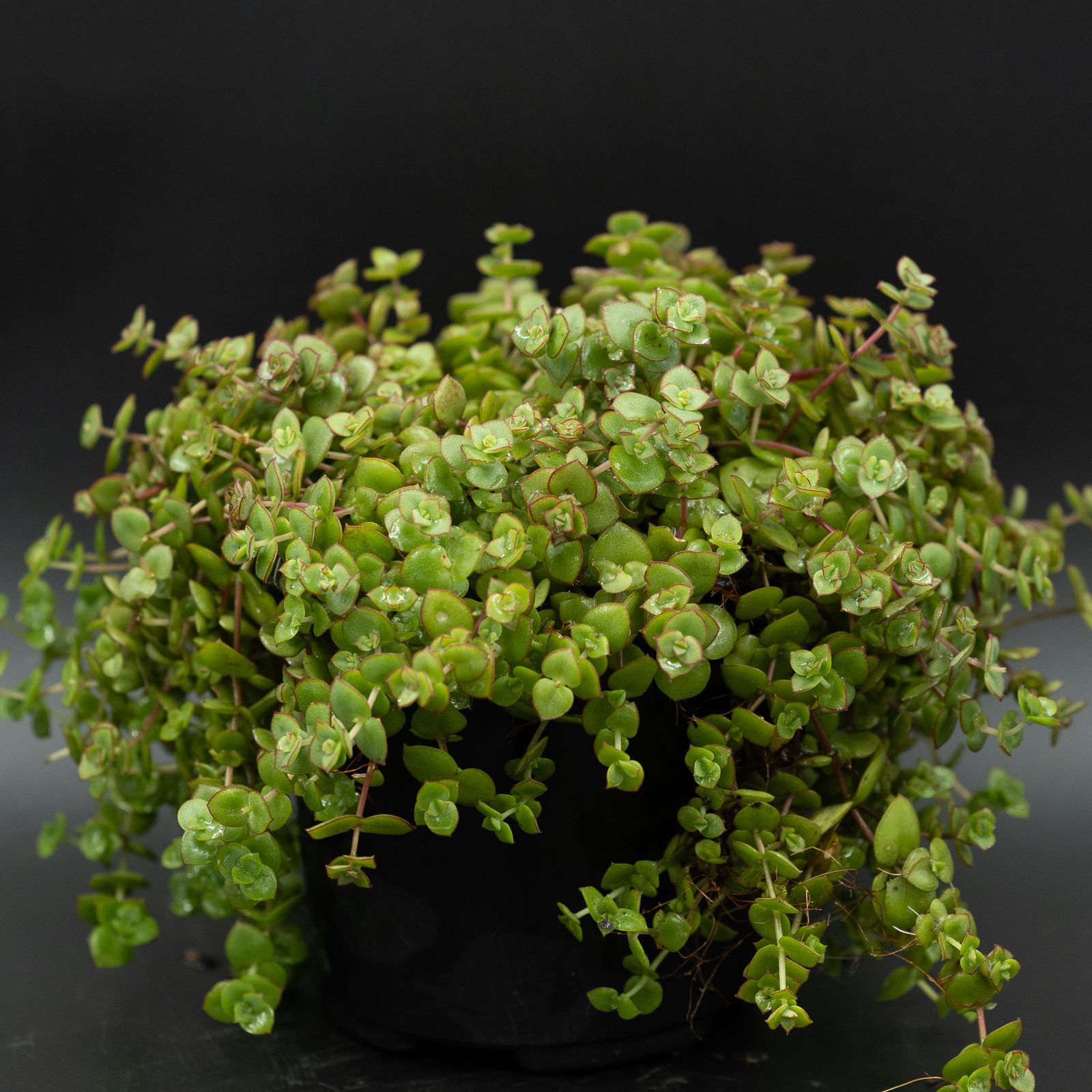
Crassula pellucida, also known as the “Watermelon Plant” or “Pellucid Crassula,” is a small, succulent species in the Crassulaceae family. This species is renowned for its attractive foliage, making it a popular choice among succulent enthusiasts.
- Growth Habit: Crassula pellucida has a trailing or spreading growth habit. It forms a dense mat of fleshy stems that grow to about 6 to 12 inches (15 to 30 cm) in height. The stems root at the nodes, allowing the plant to propagate naturally by forming new plants along its spreading network.
- Leaves: The leaves of Crassula pellucida are one of its most distinctive features. They are small, oval to round, and somewhat translucent, with a pale green or silvery tint. The leaves often have a light, translucent quality, which is where the name “pellucida” comes from, meaning “transparent” in Latin. The margins of the leaves are often tinged with red or purple, especially when the plant is stressed or exposed to sunlight.
- Flowers: The plant produces small, white or pinkish star-shaped flowers in clusters during the spring and summer. These blooms are relatively inconspicuous but add an extra layer of interest to the plant.
Native Range:
Crassula pellucida is native to South Africa, where it is typically found growing in rocky or well-drained soils. It is adapted to the arid climates of its native region, thriving in conditions that mimic the dry, Mediterranean climate.
Care Tips:
- Light: Crassula pellucida prefers bright, indirect sunlight. It can tolerate some direct sunlight but may need protection from the harsh midday sun, especially in hotter climates, as this can scorch the leaves. Indoor plants should be placed near a bright window with filtered light.
- Watering: Like most succulents, Crassula pellucida is drought-tolerant and does not require frequent watering. It should be watered thoroughly but allowed to dry out completely between waterings. Overwatering can lead to root rot, so it’s crucial to ensure the soil is well-draining and the plant is not left in stagnant water.
- Soil: Well-draining soil is essential for Crassula pellucida. A cactus or succulent mix works well, or you can add sand or perlite to regular potting soil to improve drainage. This helps to prevent water from accumulating around the roots, which can cause rot.
- Temperature: This species prefers temperatures between 60°F and 85°F (15°C to 29°C) but is not frost-hardy. If growing outdoors, it should be protected from freezing temperatures. Indoors, it can thrive in average room temperatures, but it should be kept away from cold drafts or extreme heat.
- Fertilizing: Fertilization is not necessary for Crassula pellucida unless it is grown in poor soil. A light feeding with a balanced, diluted liquid fertilizer during the growing season (spring and summer) will encourage healthy growth. Avoid fertilizing in the winter when the plant is not actively growing.
- Repotting: Crassula pellucida has a relatively slow growth rate, and it doesn’t need frequent repotting. When the plant becomes root-bound or the soil starts to break down, it can be repotted into a slightly larger container with well-draining soil.
Propagation:
Crassula pellucida can be easily propagated by taking stem cuttings. Simply cut a healthy stem with several leaves and allow the cutting to dry for a few days to prevent rotting. After that, place the cutting in well-draining soil and water sparingly until new roots form. It can also propagate naturally by rooting at the nodes along its spreading stems.
Unique and Special:
What makes Crassula pellucida particularly special is its unique translucent leaves. The light, almost glassy appearance of the leaves, along with their red-tinged edges, creates an almost ethereal quality to the plant. This quality gives the plant a “watermelon” look, with its subtle coloring and soft texture, which has earned it the common name “Watermelon Plant.” Additionally, it is an excellent choice for terrariums or hanging baskets due to its trailing nature and compact size. Its attractive appearance and low-maintenance care make it an ideal plant for both beginner and experienced succulent growers.