
Crassula pellucida variegata
Crassula pellucida variegata – The Variegated Watermelon Plant
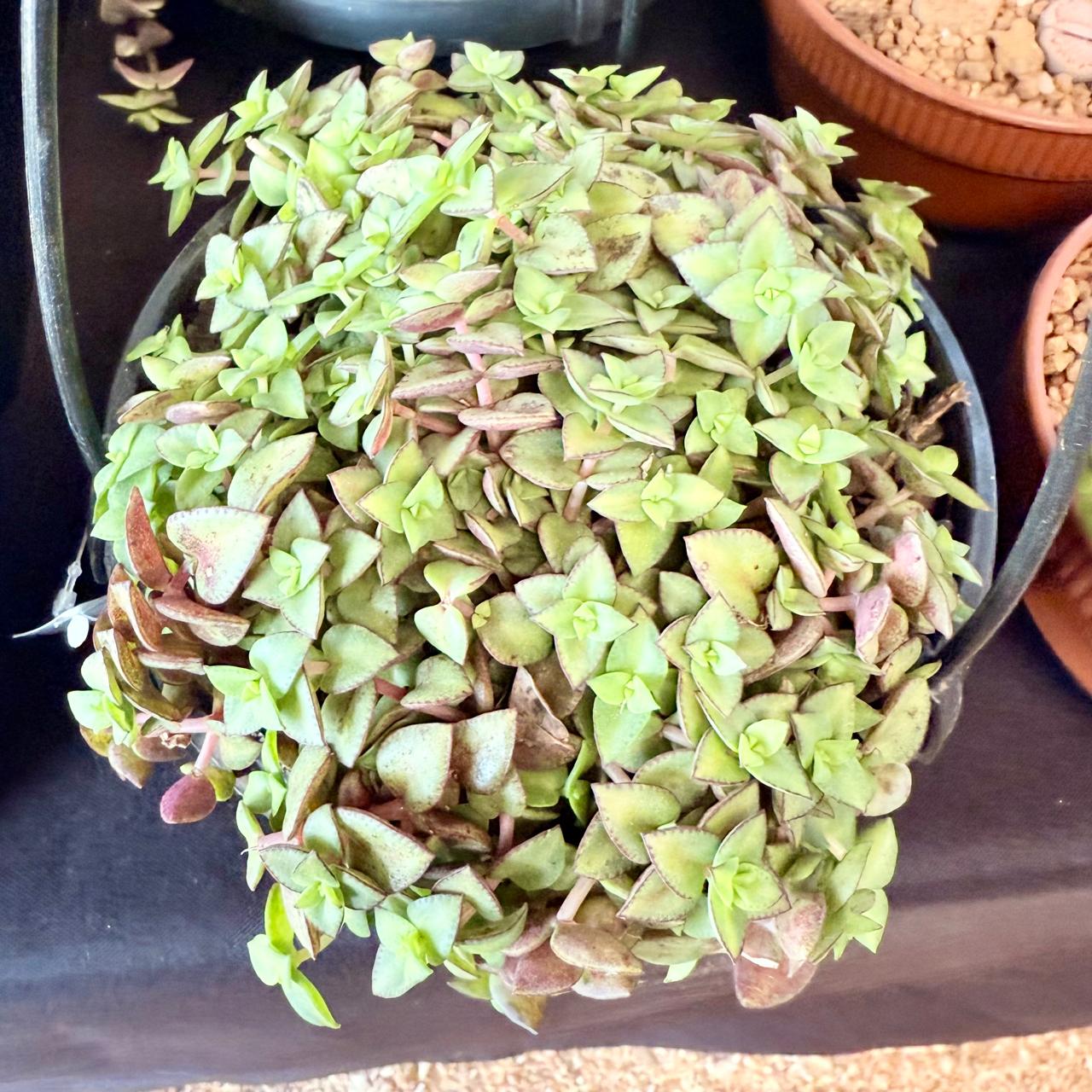
Crassula pellucida var. variegata is a strikingly beautiful cultivar of the species Crassula pellucida, often referred to as the “Variegated Watermelon Plant” due to its unique leaf coloration. This variety retains the general characteristics of the species but with an added flair in its appearance.
- Leaves: The most notable feature of this variegated form is its leaves. They are still small, fleshy, and translucent, but they have a beautiful variegation of light green, cream, and pinkish-red hues along the edges. This variegation, often asymmetrical, makes the plant stand out in any succulent collection, creating a multicolored, almost marbled effect. The edges of the leaves are typically flushed with a reddish or purple tint, especially under direct sunlight or in response to temperature fluctuations.
- Growth Habit: Like the non-variegated Crassula pellucida, the variegated version grows in a trailing, spreading manner. It forms a dense mat of stems, rooting at the nodes as it spreads outward. It grows to about 6 to 12 inches (15 to 30 cm) in height, but it can spread several feet wide if allowed.
- Flowers: The flowers of Crassula pellucida var. variegata are similar to the species, typically small, star-shaped, and white or pale pink, blooming in clusters during the warmer months. Though not as showy as the leaves, the flowers provide an added layer of interest.
Native Range:
Crassula pellucida var. variegata is native to South Africa, just like the original Crassula pellucida. In its native habitat, it thrives in dry, rocky, well-drained soils and is accustomed to the warm, Mediterranean climate typical of the region.
Care Tips:
- Light: This plant prefers bright, indirect light, but can tolerate some direct sunlight, which may intensify its leaf coloration, especially on the variegated parts. Too much direct sun can cause sunburn, particularly on the lighter parts of the leaves, so moderate exposure is ideal.
- Watering: As a succulent, Crassula pellucida var. variegata is drought-tolerant and should be watered thoroughly but infrequently. Allow the soil to dry out completely between waterings to prevent root rot. During the growing season (spring to summer), it may require more frequent watering, but be sure to reduce watering during the cooler months.
- Soil: This plant thrives in well-draining soil. A cactus or succulent mix works well, or you can add sand or perlite to regular potting soil to ensure good drainage. This is crucial to prevent water from accumulating around the roots and causing rot.
- Temperature: Crassula pellucida var. variegata prefers temperatures between 60°F to 85°F (15°C to 29°C) and is not frost-tolerant. If grown outdoors, it should be brought inside during the winter if temperatures fall below freezing. Indoor plants do well in average room temperatures.
- Fertilizing: While fertilization isn’t strictly necessary, you can feed the plant with a diluted, balanced fertilizer during the growing season (spring and summer) to encourage healthy growth. Avoid fertilizing during the winter, as the plant is dormant during this time.
- Repotting: This plant does not grow rapidly, so repotting is needed only when it becomes root-bound or the soil deteriorates. When repotting, choose a pot slightly larger than the current one and ensure it has good drainage.
Propagation:
Crassula pellucida var. variegata can be easily propagated by stem cuttings. Simply cut a healthy stem with several leaves, allow it to callous for a few days to prevent rotting, and then place it in well-draining soil. Keep the cutting lightly watered until roots form. This variety can also propagate naturally by rooting at the nodes.
Unique and Special:
The variegated form of Crassula pellucida is particularly prized for its stunning and colorful foliage. The contrast of light green, cream, and pinkish-red hues on the translucent leaves makes it a standout plant in any collection. Its ability to adapt well to indoor environments, including its trailing growth habit, also makes it perfect for hanging baskets or as a ground cover. The variegated version adds even more visual appeal to the plant compared to its non-variegated counterpart, creating a dynamic and eye-catching focal point in any space.
Below are some species we are familiar with…
Crassula benjamin
Crassula barklyi
Crassula capitella campfire
Crassula capitella var. thyrsiflora
Crassul acoperi var. exilis
Crassula drakensberg nova
Crassula exilis berry blush
Crassul exilis schmidtii
Crassula falcata
Crassula marnieriana
Crassul ovata
Crassula ovata curly
Crassula ovata hummel sunset
Crassul pellucida
Crassula pellucida variegata
Crassula perfoliata
Crassula perfoliata ivory tower
Crassula perfoliata var heterotricha
Crassula rupestris
Crassula socialis
Crassula swaziensis
Crassula swaziensis variegata