
Crassula benjamin
Crassula benjamin – Benjamin’s Crassula
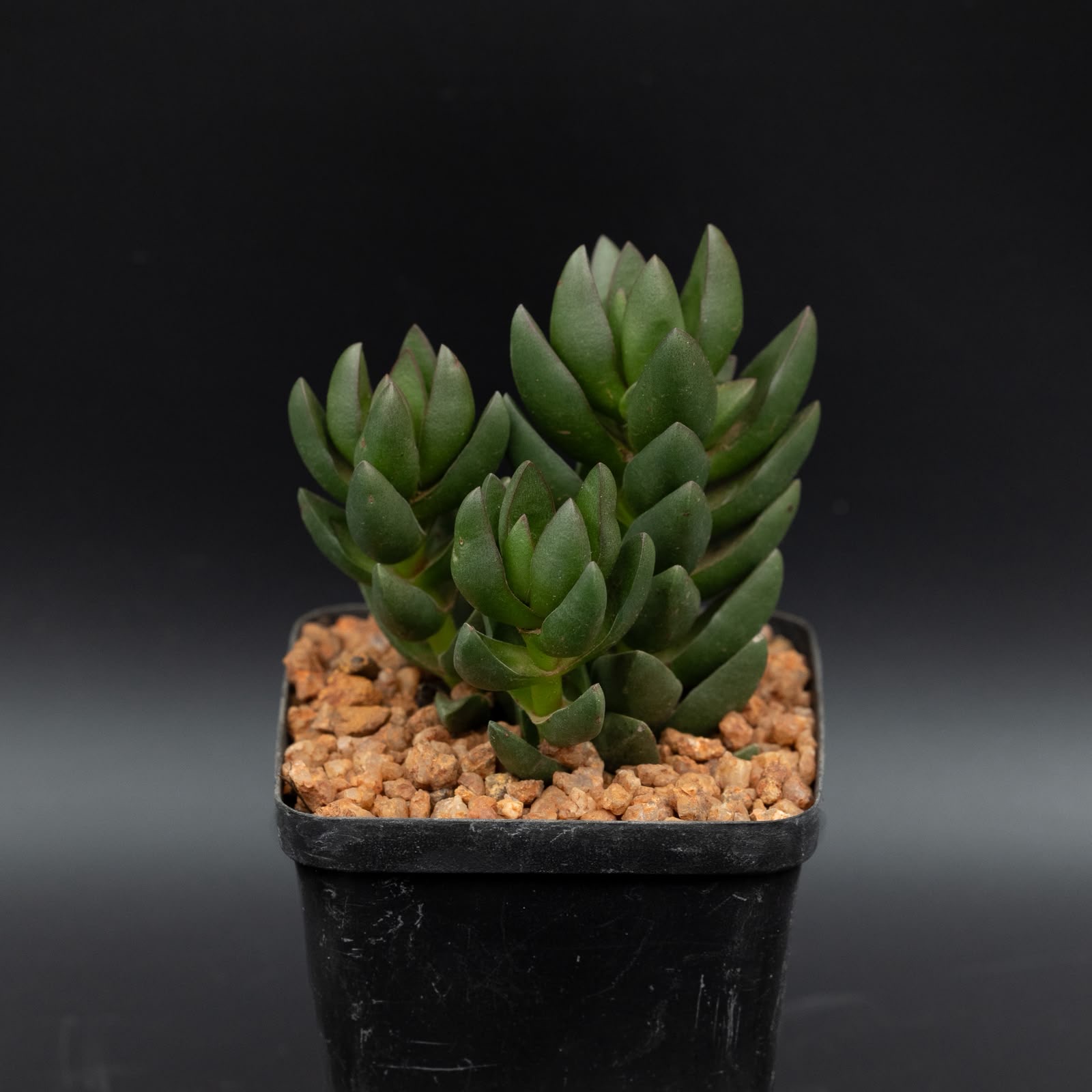
Crassula benjamin is a charming succulent plant from the Crassulaceae family, closely related to the well-known Crassula species like the jade plant. It is popular for its attractive appearance and low-maintenance care needs.
- Growth Habit: This plant typically grows as a small shrub or compact succulent, with a branching, bushy structure. It can reach a height of about 12 to 18 inches (30-45 cm), making it an ideal choice for container gardening or smaller indoor spaces.
- Leaves: The leaves of Crassula benjamin are thick, fleshy, and fleshy, typical of the succulent family. They are green to light gray-green in color and have a smooth, rounded shape. Some varieties may exhibit a hint of red or purple at the edges when exposed to stress or more sunlight.
- Flowers: Crassula benjamin produces small, star-shaped white or pale pink flowers in clusters during its blooming period, typically in the spring or summer. The flowers are not highly conspicuous but still add a delicate touch to the plant’s overall appearance.
Native Range:
Crassula benjamin is native to southern Africa, specifically South Africa, where it thrives in rocky, dry environments with good drainage. It is adapted to withstand periods of drought, making it a resilient plant for cultivation in a variety of climates.
Care Tips:
- Light: Crassula benjamin prefers bright, indirect sunlight, although it can tolerate some direct sun. Too much direct sun may cause the leaves to scorch, so it’s essential to place it in a spot where it gets adequate light without being exposed to intense, midday sun for long periods.
- Watering: Like many succulents, Crassula benjamin is highly drought-tolerant. It should be watered deeply but infrequently, allowing the soil to dry out completely between waterings. Overwatering is a common mistake, so ensure that the soil drains well and the pot has proper drainage.
- Soil: A well-draining succulent or cactus mix is ideal for Crassula benjamin. The plant should not sit in waterlogged soil, as this can lead to root rot. If using a standard potting mix, consider adding perlite or sand to improve drainage.
- Temperature: Crassula benjamin thrives in warm temperatures, ideally between 60°F and 85°F (15°C to 29°C). It is not frost-tolerant and should be brought indoors during winter in colder climates or protected from freezing temperatures.
- Humidity: This succulent prefers low to moderate humidity and can adapt well to the dry air found indoors. It should not be placed in areas of high humidity, as this can cause rot and fungal issues.
- Fertilizing: Fertilization is optional for Crassula benjamin. If desired, you can feed the plant with a diluted, balanced liquid fertilizer during the growing season (spring and summer). Avoid fertilizing during the dormant period (fall and winter).
- Repotting: Repot the plant every couple of years to refresh the soil and allow it to expand. Ensure the new pot has good drainage, as Crassula benjamin is sensitive to root rot caused by stagnant water in the soil.
Propagation:
This species is easily propagated from leaf or stem cuttings. To propagate, cut a healthy leaf or stem and let it callus for a few days to prevent rotting. Once calloused, plant it in a well-draining succulent mix and water sparingly until roots form. It can also be propagated by division if the plant produces offshoots.
Unique and Special:
What makes Crassula benjamin particularly special is its ease of care combined with its attractive, compact appearance. Its low-maintenance nature and tolerance for dry conditions make it an excellent choice for both novice and experienced gardeners. Additionally, its small size and bushy form make it an excellent choice for adding texture and greenery to indoor spaces, containers, and windowsills. Its relatively uncommon status in the succulent world adds a touch of uniqueness to any collection, making it a plant worth cultivating for collectors and enthusiasts alike.
Below are some species we are familiar with…
Crassula benjamin
Crassula barklyi
Crassula capitella campfire
Crassula capitella var. thyrsiflora
Crassul acoperi var. exilis
Crassula drakensberg nova
Crassula exilis berry blush
Crassul exilis schmidtii
Crassula falcata
Crassula marnieriana
Crassul ovata
Crassula ovata curly
Crassula ovata hummel sunset
Crassul pellucida
Crassula pellucida variegata
Crassula perfoliata
Crassula perfoliata ivory tower
Crassula perfoliata var heterotricha
Crassula rupestris
Crassula socialis
Crassula swaziensis
Crassula swaziensis variegata