Anacampseros
Genus Anacampseros – The Lucky rabbits’ foot or The rabbits’ food
The genus Anacampseros comprises small, charming succulents with compact rosettes, colorful foliage, and intriguing growth habits. These plants are cherished for their aesthetic appeal and ability to thrive in low-maintenance environments, making them ideal for succulent enthusiasts and collectors.
Common Characteristics
- Growth Habit: Typically low-growing and mat-forming. Many species produce trailing stems, creating a cascading effect.
- Leaves: Fleshy, small, and ovate to lanceolate. Colors range from green to deep purple, often with a powdery coating or fine hairs for protection.
- Flowers: Small, star-shaped, and brightly colored in shades of pink, white, or purple. Flowers open during the day, particularly in bright sunlight.
- Roots: Many species develop thick, tuberous roots or caudex-like structures for water storage.
- Dormancy: Goes through a dormant period, usually in winter, during which growth slows significantly.
Native Habitat and Origins
Anacampseros is native to arid and semi-arid regions of South Africa and Namibia. These plants thrive in environments with poor, rocky soils, extreme sunlight, and minimal rainfall.
Care Guide for Anacampseros
- Light: Requires bright light or full sun to enhance its vibrant foliage colors. Indoors, place near a south-facing window.
- Watering: Water sparingly using the “soak and dry” method. Allow the soil to dry completely between waterings. Reduce watering during dormancy.
- Soil: Use a fast-draining cactus or succulent mix. Adding sand or perlite improves drainage and prevents root rot.
- Temperature: Thrives in warm conditions and tolerates temperatures down to about 5°C (41°F). Protect from frost.
- Fertilizer: Feed with a diluted succulent fertilizer during the active growing season (spring and summer). Avoid fertilizing in winter.
- Propagation: Propagate via stem cuttings, leaf cuttings, or seeds. Cuttings should be allowed to callus before planting in well-draining soil.
Unique and Special Feature
A unique trait of Anacampseros is its tendency to develop small clusters of offsets, creating a dense, layered rosette arrangement over time. Additionally, many species display a fascinating ability to blend into their environment due to their cryptic coloration and compact growth. Beyond their visual charm, the name Anacampseros refers to ancient beliefs that these plants could “restore lost love,” adding an air of mystique to their cultivation.
Below are some species we are familiar with…

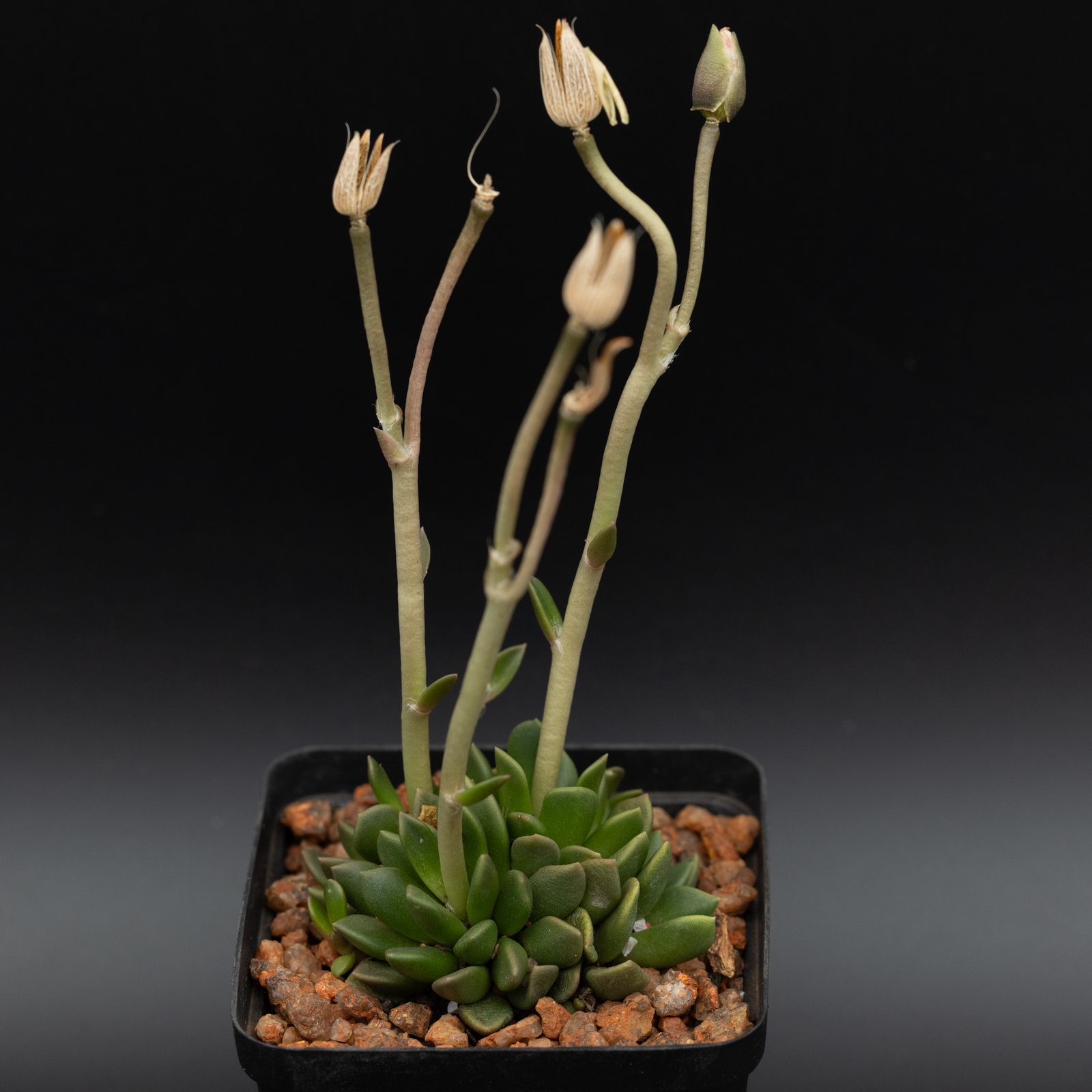
Anacampseros baeseckei
Anacampseros species