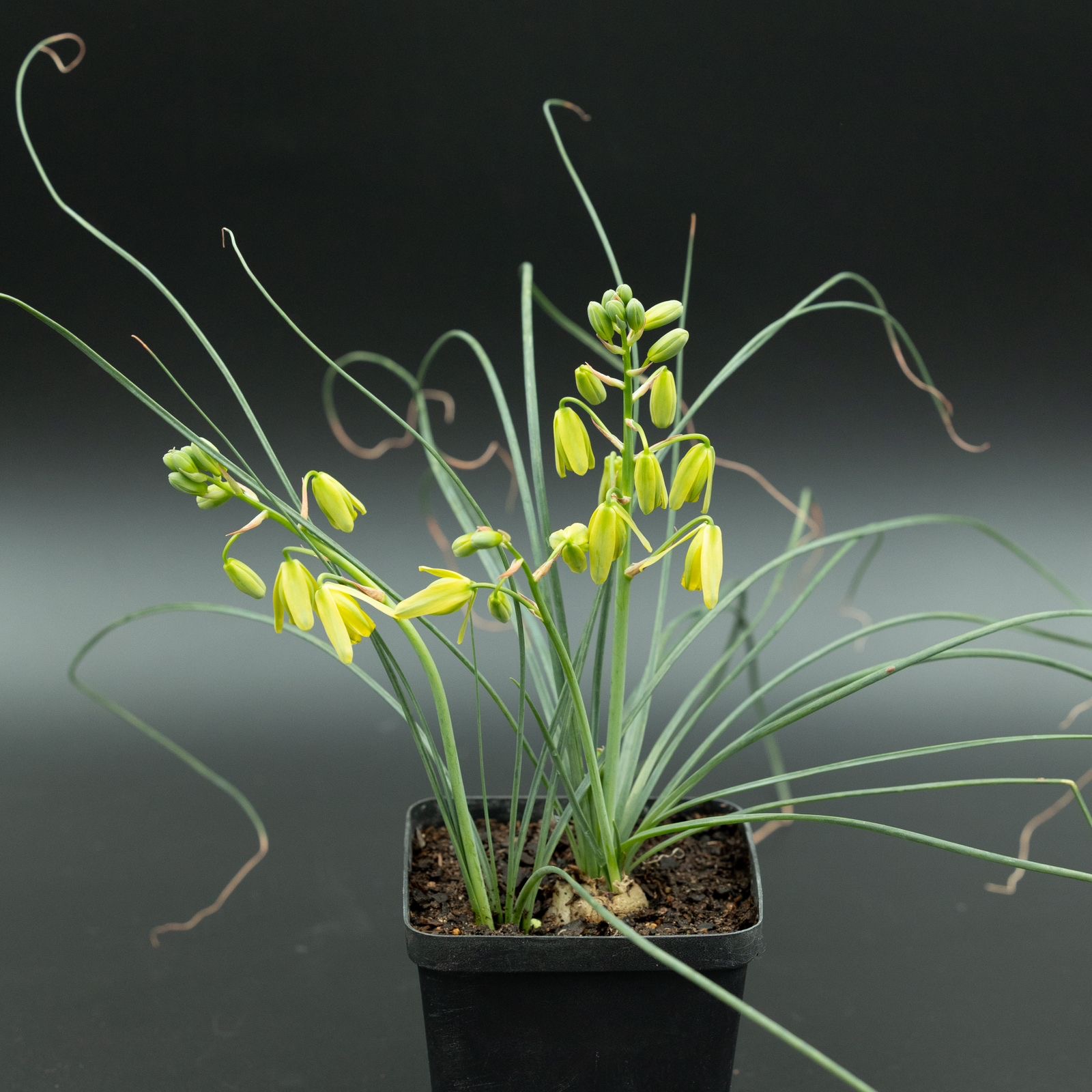
Albuca
Genus Albuca – The Slime Lily
The genus Albuca belongs to the Asparagaceae family and consists of a variety of bulbous perennial plants, many of which are known for their striking, twisted leaves and attractive flowers. There are approximately 200 species of Albuca, which are primarily native to South Africa and other regions of the Southern Hemisphere. Key characteristics of the Albuca genus include:
- Bulbous Growth Habit: Albuca species typically grow from bulbs, which store water and nutrients. The bulbs can vary in size, but they are generally smaller and rounded.
- Twisted or Corkscrew Leaves: One of the most distinctive features of Albuca plants is their long, narrow, twisted leaves that often have a corkscrew-like appearance. These leaves can be bright green or slightly fleshy and contribute to the plant’s unique ornamental appeal.
- Fragrant Flowers: Albuca species are known for their beautiful, often fragrant flowers, which can range in color from white and yellow to greenish. Some species, such as Albuca spiralis, produce flowers that have a delicate, sweet fragrance, making them particularly attractive in gardens or indoor settings.
- Cyclical Growth: Many Albuca species have a defined growing and dormancy cycle. After blooming, they often enter a period of dormancy, during which the leaves wither and the plant conserves energy within its bulb until the next growth cycle begins.
Native Habitat:
Albuca species are primarily native to Southern Africa, with a concentration in South Africa. Many species are adapted to survive in the region’s dry climates, thriving in well-draining soils and low rainfall conditions. They are commonly found in rocky areas, grasslands, and open woodlands, where they are protected from heavy rains by the surrounding vegetation. Some species can also be found in tropical or subtropical regions, but the majority are found in arid environments.
Care Requirements:
- Light: Albuca plants thrive in bright, indirect light. They can tolerate some direct sunlight, but too much intense sun can scorch the leaves, especially in warmer climates. In indoor settings, placing them near a south- or west-facing window will provide the best light for healthy growth.
- Watering: Albuca species are quite drought-tolerant and, like many bulbous plants, should be watered sparingly. During the growing season, they should be watered moderately, allowing the soil to dry out between waterings. Overwatering can lead to bulb rot, so it’s essential to ensure proper drainage in the pot or garden bed. During their dormancy period, water should be reduced or stopped entirely.
- Soil: Well-draining soil is essential for Albuca plants. A cactus or succulent mix works well, or a mixture of sand, perlite, and regular potting soil can provide the necessary drainage. The roots should not sit in waterlogged soil, as this can cause fungal issues and bulb rot.
- Temperature: Albuca plants prefer moderate temperatures, typically between 60°F and 80°F (15°C to 27°C). They are sensitive to frost, and most species are not frost-hardy, so it is important to bring them indoors or provide protection from the cold during the winter months. They also do best in climates with mild winters and warm summers.
- Humidity: Albuca species generally prefer low to moderate humidity levels. High humidity can lead to fungal diseases, so it’s important to maintain good airflow around the plant. In dry indoor conditions, occasional misting or placing a humidifier nearby can help to maintain healthy growth.
- Fertilization: During the growing season, feed Albuca plants with a diluted, balanced fertilizer every 4–6 weeks. A fertilizer with a higher potassium and phosphorus ratio can help encourage blooming. During the dormancy period, fertilization should be reduced or stopped entirely, as the plant is conserving energy.
- Repotting: Albuca plants do not need frequent repotting, but they should be repotted every few years or when they become root-bound. Use a pot that is only slightly larger than the current one to prevent excessive moisture retention, which could lead to root rot.
Unique Feature:
One of the most remarkable features of Albuca plants is their spiraling leaves, which give them a distinctive, corkscrew appearance. This unique leaf structure is especially evident in species like Albuca spiralis, which is often referred to as the “frizzle sizzle” plant due to the way its leaves twist. Additionally, many species of Albuca produce wonderfully fragrant flowers that attract pollinators, such as bees and butterflies. The combination of the quirky leaf structure and the pleasing scent of the flowers makes Albuca a highly sought-after plant among collectors and succulent enthusiasts.
An even more fascinating aspect of Albuca is its ability to go dormant during dry periods, making it an ideal candidate for xeriscaping or as a drought-tolerant houseplant. This adaptability allows it to survive in harsh, arid environments, and its growth cycle is a natural defense mechanism to conserve energy and water.
Below are some species we are familiar with…

Albuca polyphylla