
Agave applanata creme spike
Agave applanata creme spike- The Creme spike Century Plant
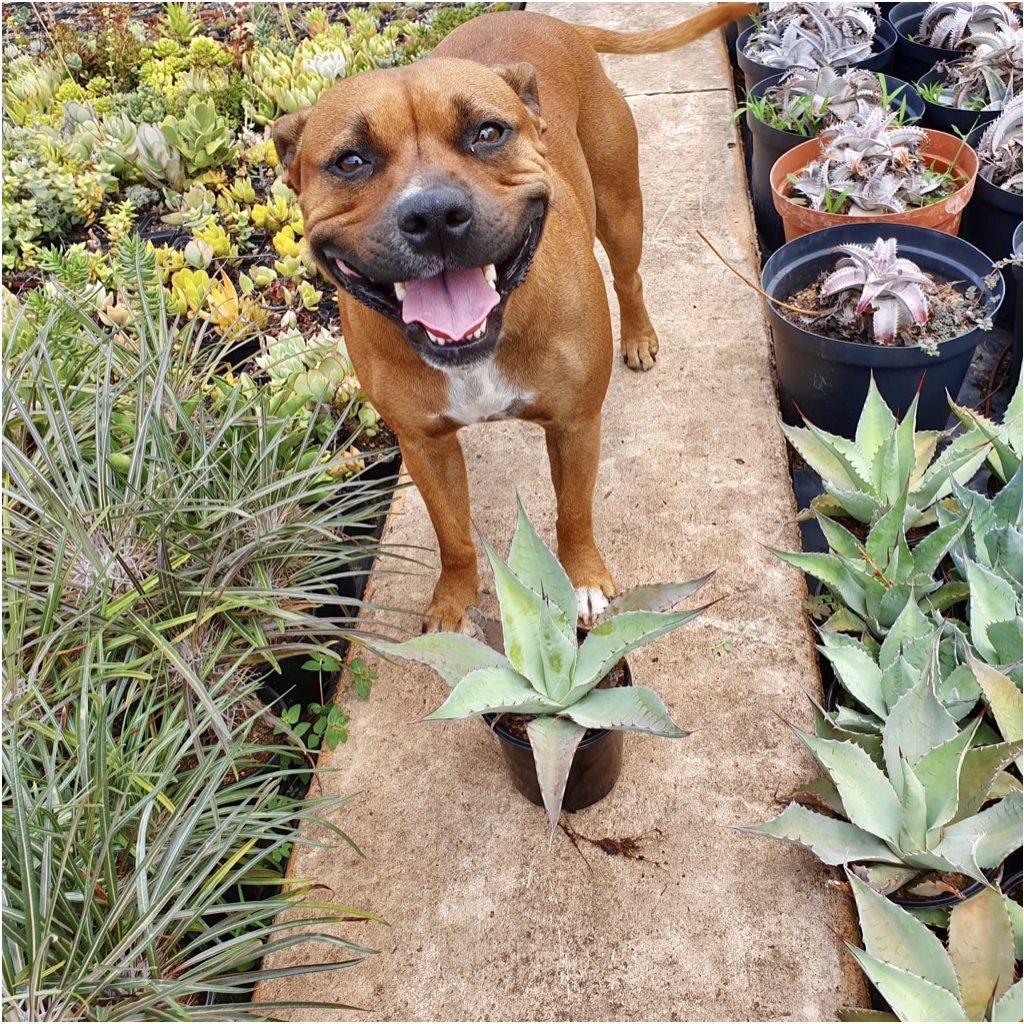
Overview: Agave applanata ‘Crème Spike’ is a striking cultivar of the species Agave applanata, commonly known as the Smooth Agave or Dwarf Agave. This particular cultivar is appreciated for its compact form, smooth, silvery leaves, and distinctive creamy white spines along the leaf edges, which give it a unique appearance. Agave applanata ‘Crème Spike’ is a popular choice for succulent collectors, landscapers, and gardeners who want a low-maintenance plant with a dramatic architectural presence.
Common Characteristics:
- Appearance and Growth Habit:
- Agave applanata ‘Crème Spike’ forms a dense, rosette-shaped structure with broad, smooth leaves that are typically grayish-blue to silvery-gray in color.
- The leaves are thick and fleshy, and they are adorned with cream-colored spines on their edges, which give this cultivar its distinctive appearance. These spines are non-persistent, meaning they may break off as the plant matures, but they add a dramatic effect when young.
- The rosettes are compact, typically growing to about 1 to 1.5 feet (30 to 45 cm) in height and width. While slow-growing, this species will gradually reach its full size over several years.
- The plant produces thick, spiny flower stalks when it blooms, which rise up from the center of the rosette, though the plant is monocarpic (it blooms only once and then dies).
- Flowers:
- The flowering stalk of Agave applanata ‘Crème Spike’ can reach up to 6-8 feet (1.8 to 2.4 meters) in height, bearing greenish-yellow or yellowish-orange flowers that are typical of the agave genus.
- The flowers are arranged in large clusters at the top of the tall stalk, attracting pollinators like bees and hummingbirds. As with most agaves, after flowering, the plant will die, though it often produces offsets (pups) before this happens, allowing it to propagate naturally.
- Leaves:
- The leaves are thick, fleshy, and succulent, offering a blue-gray to silvery appearance. They have a smooth texture with cream-colored spines that give them a softer look compared to the more commonly spined agaves.
- Each leaf has a slightly curved shape, with sharp tips that contribute to the plant’s striking silhouette.
- The overall effect is a plant that looks refined, with an elegant, geometric rosette that looks great in any garden, particularly in rock gardens or succulent landscapes.
- Root System:
- Agave applanata ‘Crème Spike’ has a shallow root system, which is typical for agave species. This allows the plant to thrive in well-drained soils, especially those found in desert or semi-arid environments.
Native Range:
Agave applanata is native to Mexico, specifically the central and northern regions of the country, where it grows in dry, rocky hillsides and areas with little rainfall. The species is adapted to thrive in arid conditions and is part of the Asparagaceae family. The cultivar ‘Crème Spike’ is an ornamental variety, selected for its unique color and smooth leaf texture, and it is often cultivated in gardens outside of its native range.
Care Tips:
- Light:
- Like most agaves, Agave applanata ‘Crème Spike’ requires full sun to thrive. It needs at least 6 hours of direct sunlight daily to maintain its vibrant leaf color and compact shape.
- If grown indoors, it should be placed in a bright, sunny window where it receives sufficient light, especially in the winter months.
- Watering:
- Agave applanata ‘Crème Spike’ is drought-tolerant and should be watered sparingly. Allow the soil to dry out completely between waterings. Overwatering is a common cause of root rot in agave plants.
- During the growing season (spring and summer), water about every 2-3 weeks. In fall and winter, reduce watering significantly as the plant enters a dormant phase.
- Ensure the plant has access to well-draining soil, as standing water around the roots can be detrimental to its health.
- Soil:
- Use a well-draining cactus or succulent mix for planting Agave applanata ‘Crème Spike’. Agaves prefer sandy, rocky, or gravelly soils that allow water to flow through easily.
- If planting in a container, make sure the pot has good drainage holes to prevent water from accumulating at the bottom.
- Temperature:
- This agave prefers warm temperatures and can tolerate heat very well. It grows best in temperatures ranging from 70°F to 90°F (21°C to 32°C).
- Agave applanata ‘Crème Spike’ is frost-sensitive and should be protected from temperatures below 32°F (0°C). If grown outdoors in regions prone to frost, it is advisable to bring the plant indoors or grow it in a container that can be moved during the colder months.
- Fertilization:
- Fertilize sparingly with a balanced, low-nitrogen fertilizer during the growing season. Use a diluted fertilizer once a month during the spring and summer to promote healthy growth.
- Avoid fertilizing in the winter months, as the plant is dormant and not actively growing.
- Repotting:
- Agave applanata ‘Crème Spike’ grows slowly, and repotting is only necessary when the plant has outgrown its container. This typically occurs every 2-3 years.
- When repotting, use a larger pot with good drainage and avoid burying the rosette too deep, as the crown of the plant should be kept above the soil line.
- Pruning:
- This agave requires minimal pruning. You can remove dead or damaged leaves to maintain the plant’s shape and appearance.
- Be cautious when handling the plant, as the sharp leaf tips and edges may cause injury.
- Propagation:
- Like many agaves, Agave applanata ‘Crème Spike’ can be propagated through offsets (pups). These pups can be carefully separated from the parent plant and replanted in their own pots once they are large enough to handle.
- Allow the offsets to callus over for a few days before planting them in well-draining soil to prevent rot.
Unique and Special Aspects:
Agave applanata ‘Crème Spike’ is valued not only for its silvery-blue leaves and creamy spines, but also for its compact rosette shape, making it a great addition to small gardens, container gardens, or even as an indoor succulent. Its unique coloration and smooth leaf texture differentiate it from other agave varieties, giving it a more refined and softer appearance while still offering the tough, drought-resistant qualities of the Agave genus. Additionally, its monocarpic nature, with its dramatic flowering and eventual death after blooming, makes it a fascinating, long-term project for gardeners who enjoy growing plants that take time to reach their full potential. This agave can also be used in xeriscaping, where its minimal water needs and architectural form make it an ideal choice for water-wise gardening.
Below are some species we are familiar with…
Agave americana mediopicta alba
Agave applanata creme spike
Agave colorata
Agave confederate rose
Agave creme brulee
Agave filifera
Agave geminiflora
Agave isthmensis
Agave isthmensis variegata
Agave kichiokan
Agave lophantha
Agave ovatifolia
Agave parryi
Agave parryi huachucensis
Agave parryi truncata
Agave stricta
Agave titanota
Agave toumeyana
Agave vilmoriniana
Agave victoriae-reginae
Agave victoriae-reginae picasso
Agave victoriae-reginae snow princess
Agave rum runner