
Aeonium castello paviae variegata
Aeonium castello-paviae variegata – The Miniature Variegated Irish Rose
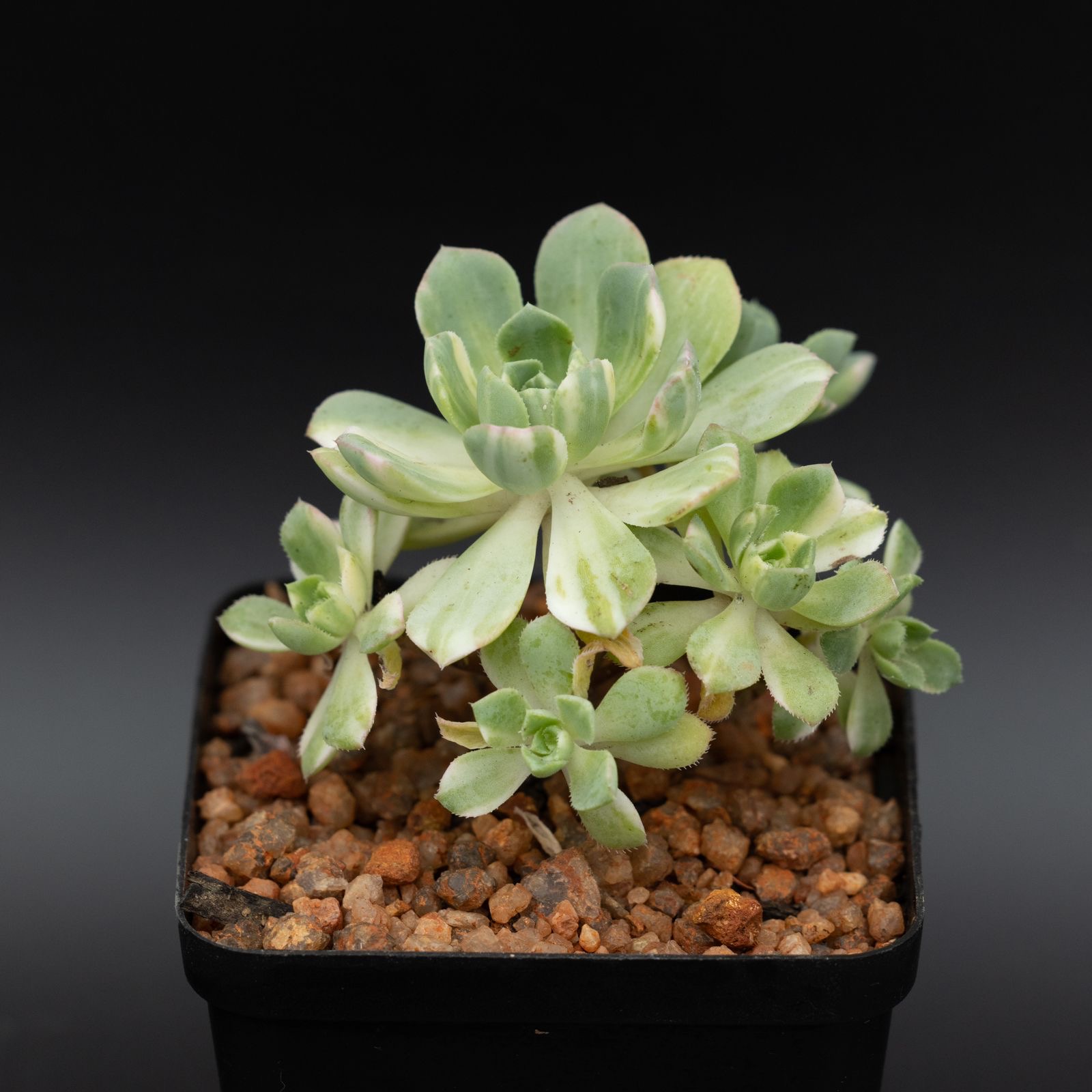
Aeonium castello-paviae variegata is a variegated form of the Aeonium castello-paviae, a succulent from the Crassulaceae family. This cultivar is admired for its striking appearance, with rosettes of thick, fleshy leaves that show a blend of creamy white, yellow, and green hues. Here are some of the common characteristics of this unique variety:
- Growth Habit: Aeonium castello-paviae variegata grows as a small, branching shrub with a rosette shape. The plant typically reaches a height of around 8 to 12 inches (20 to 30 cm). The rosettes are dense and compact, making it a great choice for small spaces, hanging baskets, or as part of a container garden.
- Leaves: The variegated leaves are thick and fleshy, with a smooth, waxy texture. The primary attraction of this cultivar is the striking variegation, where the leaves alternate between light cream, pale yellow, and deep green. This color pattern is enhanced when grown in bright light, creating a visually dynamic plant.
- Flowers: Aeonium castello-paviae variegata produces small star-shaped yellow flowers, which appear on long, thin stalks. Though the flowers are relatively unremarkable compared to the stunning foliage, they still provide a gentle, seasonal touch to the plant. The blooms typically occur in the spring or early summer.
Native Range:
While Aeonium castello-paviae variegata itself is a hybrid, the parent species, Aeonium castello-paviae, originates from the Canary Islands. These islands, characterized by mild, Mediterranean climates and rocky, dry soils, are ideal environments for Aeonium species. The variegated cultivar retains this affinity for warm, arid climates, making it well-suited for similar growing conditions.
Care Tips:
- Light: Aeonium castello-paviae variegata thrives in bright, indirect light. For best results, place the plant in a location where it can receive at least a few hours of sunlight each day. If the plant is exposed to too little light, it may lose some of its vibrant variegation, turning a duller green.
- Watering: This plant is drought-tolerant and should be watered only when the soil is completely dry. Overwatering can cause root rot, so it is essential to let the soil dry out between waterings. In the growing season (spring and summer), water the plant moderately, reducing watering during the winter months when growth slows down.
- Soil: Like most succulents, Aeonium castello-paviae variegata requires well-draining soil. A cactus or succulent mix with added perlite or sand will help ensure the soil doesn’t retain too much moisture, which could lead to root rot.
- Temperature: This Aeonium variety thrives in temperatures between 60°F and 75°F (15°C to 24°C). It is not frost-tolerant, so it is best to keep it indoors during the colder months or in areas with mild winters. Outdoors, it should be protected from frost and freezing temperatures.
- Humidity: This plant prefers low to moderate humidity levels. High humidity can encourage rot, so ensure the plant is kept in a dry environment, particularly during winter.
- Fertilizing: Feed Aeonium castello-paviae variegata with a diluted cactus or succulent fertilizer during the growing season. Fertilizing once a month should suffice. Avoid fertilizing in the winter when the plant is dormant or growing slowly.
- Repotting: Repot the plant every 1-2 years or when it becomes root-bound. Repotting is best done in the spring using fresh, well-draining soil. Choose a container that is slightly larger than the current pot to allow the plant room to grow.
Propagation:
Aeonium castello-paviae variegata can be propagated by stem cuttings. To propagate, cut a healthy stem with a few leaves and allow the cut end to callus over for a few days. Once the cutting has dried, plant it in well-draining soil and keep it in a warm, dry place until it roots. It is important to use sterilized tools to prevent infection or disease.
Unique and Special:
What makes Aeonium castello-paviae variegata particularly unique is its striking variegated foliage, which makes it one of the most visually appealing succulents. The creamy white and pale yellow edges of the leaves contrast beautifully with the green centers, and the colors become more vivid with exposure to bright sunlight. This plant not only adds beauty to succulent collections but is also relatively easy to care for, making it an excellent choice for both beginner and experienced gardeners. Its vibrant variegation can provide an ever-changing aesthetic as the leaves react to varying light and temperature conditions, giving it a dynamic, lively presence in any space.
Below are some species we are familiar with…
Aeonium castello-paviae variegata
Aeonium haworthii
Aeonium undulatum