
Adenium multiflorum
Adenium multiflorum – Impala Lily
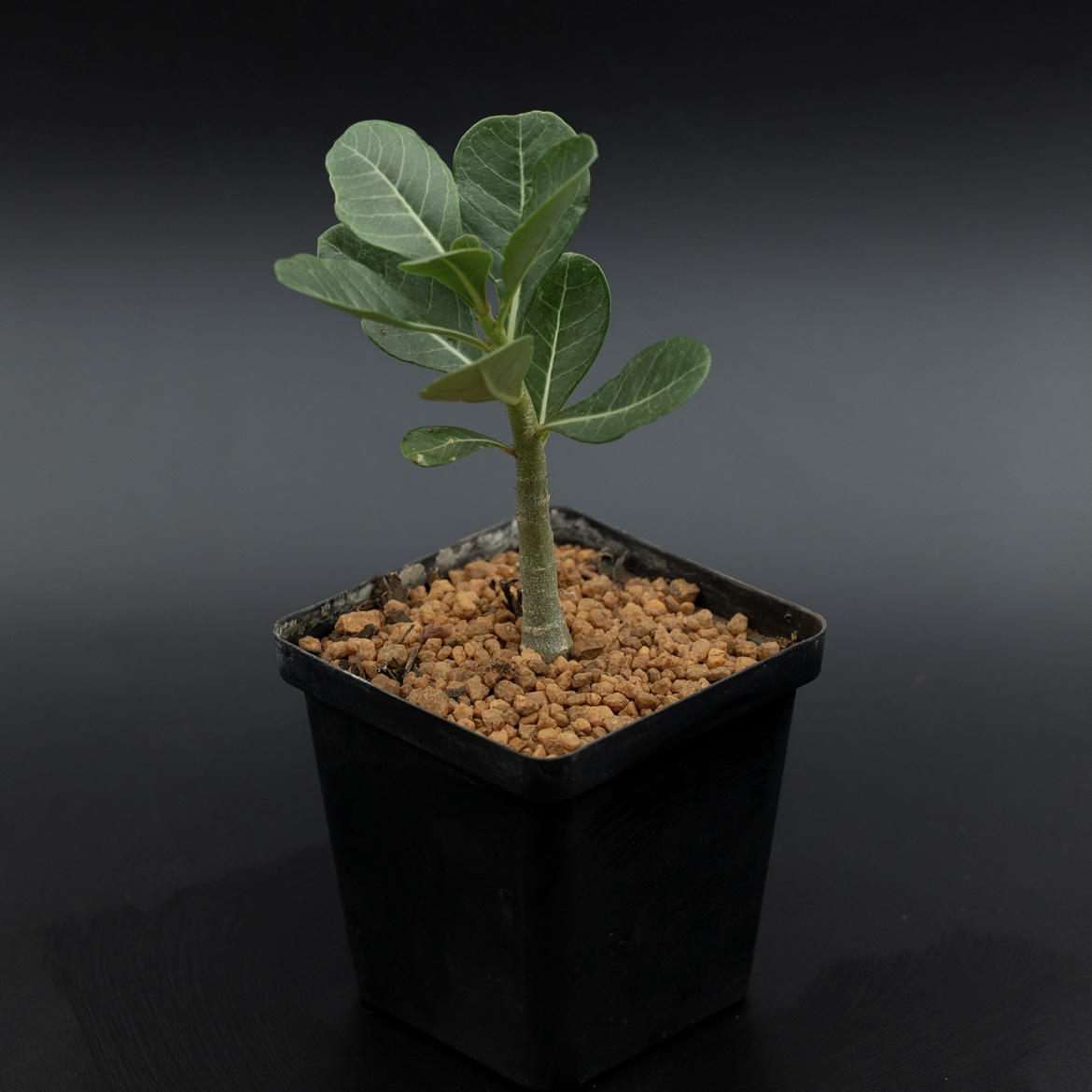
Adenium multiflorum, commonly known as the Impala Lily or Winter Rose, is a deciduous succulent shrub prized for its stunning flowers and thick, sculptural caudex. This species is characterized by the following traits:
- Growth Habit: Adenium multiflorum grows as a small shrub or small tree, typically reaching up to 2 meters (6.5 feet) in height. Its most distinctive feature is the swollen, bulbous caudex at its base, which serves as a water storage organ, making it well-suited to arid environments.
- Leaves: The plant produces glossy, green leaves that are simple and oval-shaped, with a smooth margin. The leaves are seasonal, dropping during the dry or winter months.
- Flowers: The flowers are its most striking feature, blooming in winter when the plant is leafless. They are star-shaped, with five petals, and come in vibrant shades of pink, white, and red, often with dark red edges and a lighter throat. These blooms appear in clusters at the tips of the branches and are highly ornamental.
- Stem and Bark: The stems are woody and often appear twisted or gnarled, adding to the plant’s visual appeal. The bark is grayish and smooth, with the caudex and branches providing a sculptural appearance.
- Toxicity: Like other species in the Adenium genus, the sap of Adenium multiflorum is toxic and has been traditionally used in hunting as a poison for arrows. Care should be taken to avoid ingestion or contact with the sap.
Native Range:
Adenium multiflorum is native to southern Africa, where it thrives in the arid and semi-arid regions of South Africa, Mozambique, Zimbabwe, and Eswatini (Swaziland). It is typically found in rocky outcrops, savannahs, and dry woodland areas, often growing in well-draining, sandy, or gravelly soils.
Care Tips:
- Light: This species thrives in full sun and requires plenty of bright, direct light to encourage flowering. If grown indoors, place it near a south-facing window or provide supplemental lighting.
- Watering: Adenium multiflorum is drought-tolerant and prefers infrequent but deep watering. Allow the soil to dry out completely between waterings to prevent root rot. During its dormant period (winter), reduce watering significantly, as the plant stores water in its caudex.
- Soil: Use a well-draining succulent or cactus mix, ideally with a combination of sand, gravel, and organic matter. Good drainage is essential to avoid waterlogged conditions.
- Temperature: This species prefers warm temperatures and thrives between 70°F and 85°F (21°C – 29°C). It is not frost-tolerant and should be protected from temperatures below 50°F (10°C). In cooler climates, grow it in containers and bring it indoors during the winter.
- Humidity: Adenium multiflorum is well-adapted to low humidity conditions but can tolerate moderate indoor humidity levels.
- Fertilization: Feed the plant with a balanced, low-nitrogen fertilizer during its active growing season (spring and summer). Avoid fertilizing during the dormant period.
- Pruning: Prune to shape the plant and remove dead or damaged branches. Pruning can also encourage branching and a fuller appearance.
- Repotting: Repot every 2-3 years in spring, just as the plant begins its active growth phase. Choose a pot that is slightly larger than the caudex and has adequate drainage.
Unique and Special Aspects:
Adenium multiflorum is celebrated for its breathtaking winter blooms, which emerge when the plant is leafless, creating a dramatic display of vibrant flowers on bare, sculptural branches. This flowering pattern makes it a stunning focal point in gardens or as a container specimen.
The swollen caudex is another unique feature, giving the plant a bonsai-like aesthetic. Over time, the caudex develops into striking, irregular shapes that vary from plant to plant, making each specimen visually unique. Adenium multiflorum’s ability to thrive in harsh conditions while producing such showy blooms has made it a symbol of resilience and beauty in adversity in its native regions.
Below are some species we are familiar with…