
Cheiridopsis pillansii
Cheiridopsis pillansii – The Sunset Mesemb.
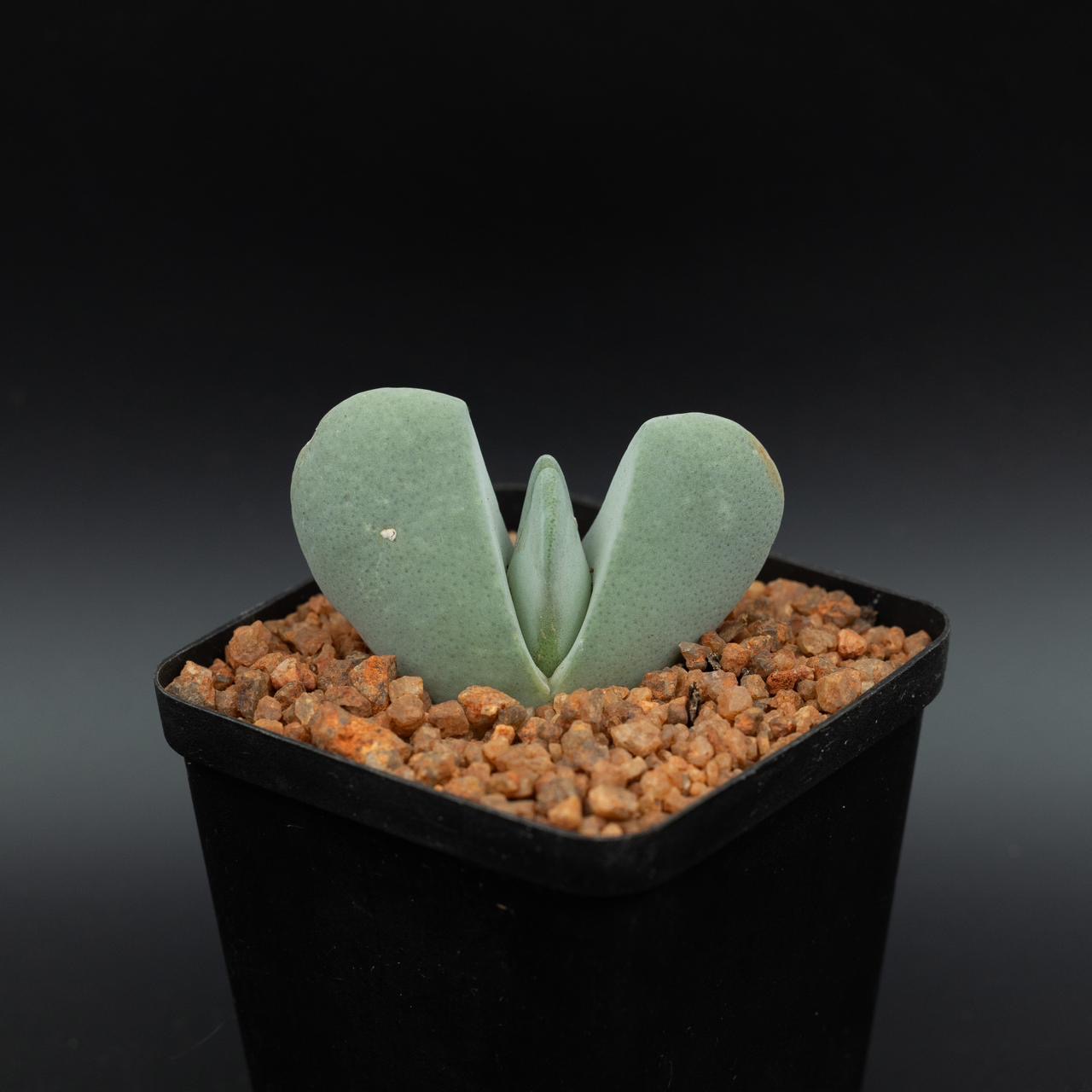
Cheiridopsis pillansii is a striking succulent in the Aizoaceae family, known for its thick, fleshy leaves and large, vibrant blooms. This distinctive plant brings a unique structural element to any succulent collection, especially for those who appreciate unusual desert plants.
Common Characteristics
- Paired, Blue-Green Leaves: C. pillansii is characterized by its thick, triangular leaves that grow in pairs, often in a blue-green to grayish hue. Each leaf pair creates a v-shape that allows the plant to capture moisture and sunlight efficiently.
- Seasonal Leaf Sheathing: Like other Cheiridopsis species, C. pillansii forms a protective sheath from older leaves, creating an insulating layer during its dormant period.
- Large, Yellow-Orange Flowers: In late winter to early spring, C. pillansii produces daisy-like flowers in warm shades of yellow and orange, creating a beautiful “sunset” effect against the cool tones of its foliage.
- Compact, Clumping Growth: This species stays low to the ground, forming small clusters or clumps that spread gradually over time.
Native Habitat and Origins
Cheiridopsis pillansii is native to the arid regions of Namaqualand and the Richtersveld in South Africa. These areas experience intense sunlight, rocky soils, and minimal rainfall, which have driven C. pilansii to develop unique drought-adaptive traits for survival in these harsh, exposed environments.
Care Guide for Cheiridopsis pillansii
With simple care requirements, C. pilansii thrives in well-lit and dry conditions, making it a low-maintenance yet rewarding choice for enthusiasts of desert plants:
- Soil: Plant in a well-draining succulent or cactus mix, ideally with added sand or pumice to improve drainage and mimic its natural rocky habitat.
- Watering: Water sparingly, allowing the soil to dry out completely between waterings. During its winter growing season, water only once every few weeks. In summer, reduce watering significantly as the plant enters dormancy.
- Light: This species thrives in bright, direct sunlight, which enhances its leaf color and encourages flowering. Indoors, it should be placed in a sunny window or under grow lights.
- Temperature: While C. pillansii can tolerate cool temperatures, it is frost-sensitive and prefers temperatures above 40°F (4°C). In colder climates, bring it indoors or keep it in a greenhouse during winter.
- Fertilization: Use a diluted cactus fertilizer once at the start of the growing season in early winter to encourage new growth and blooms.
A Unique Feature: Efficient Water Storage in Paired Leaves
A fascinating feature of Cheiridopsis pillansii is its specialized paired leaves, which are structured to maximize water storage and reduce moisture loss in dry conditions. This adaptation allows the plant to survive prolonged drought periods, making it an ideal candidate for xeriscaping or water-wise gardens. The unusual shape of the leaves also adds a geometric quality to its appearance, making C. pillansii as visually striking as it is resilient.
Below are some species we are familiar with…

Cheiridopsis namaquensis
Cheiridopsis pillansii
