
Olea africana
Olea europaea subsp. africana – The Wild Olive
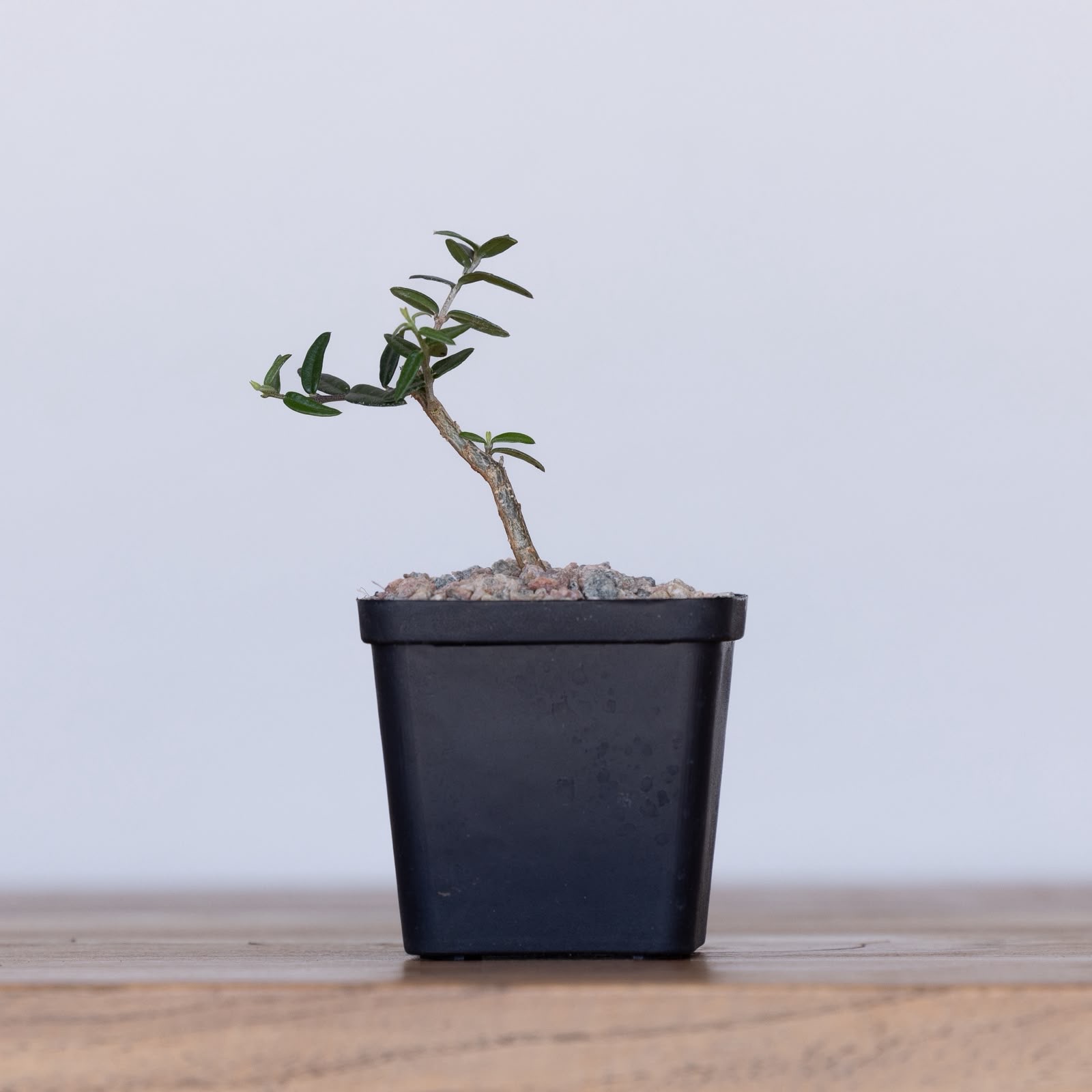
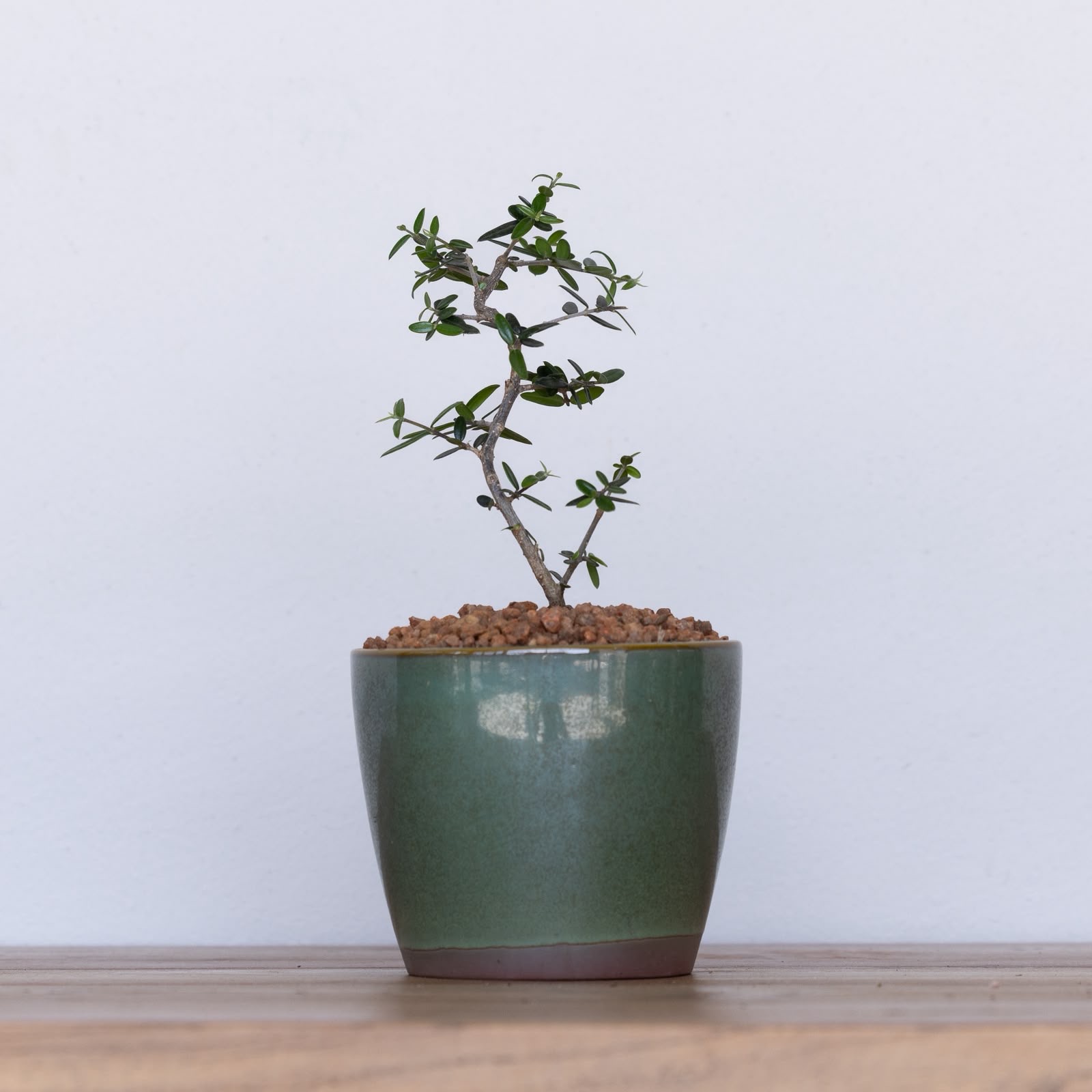
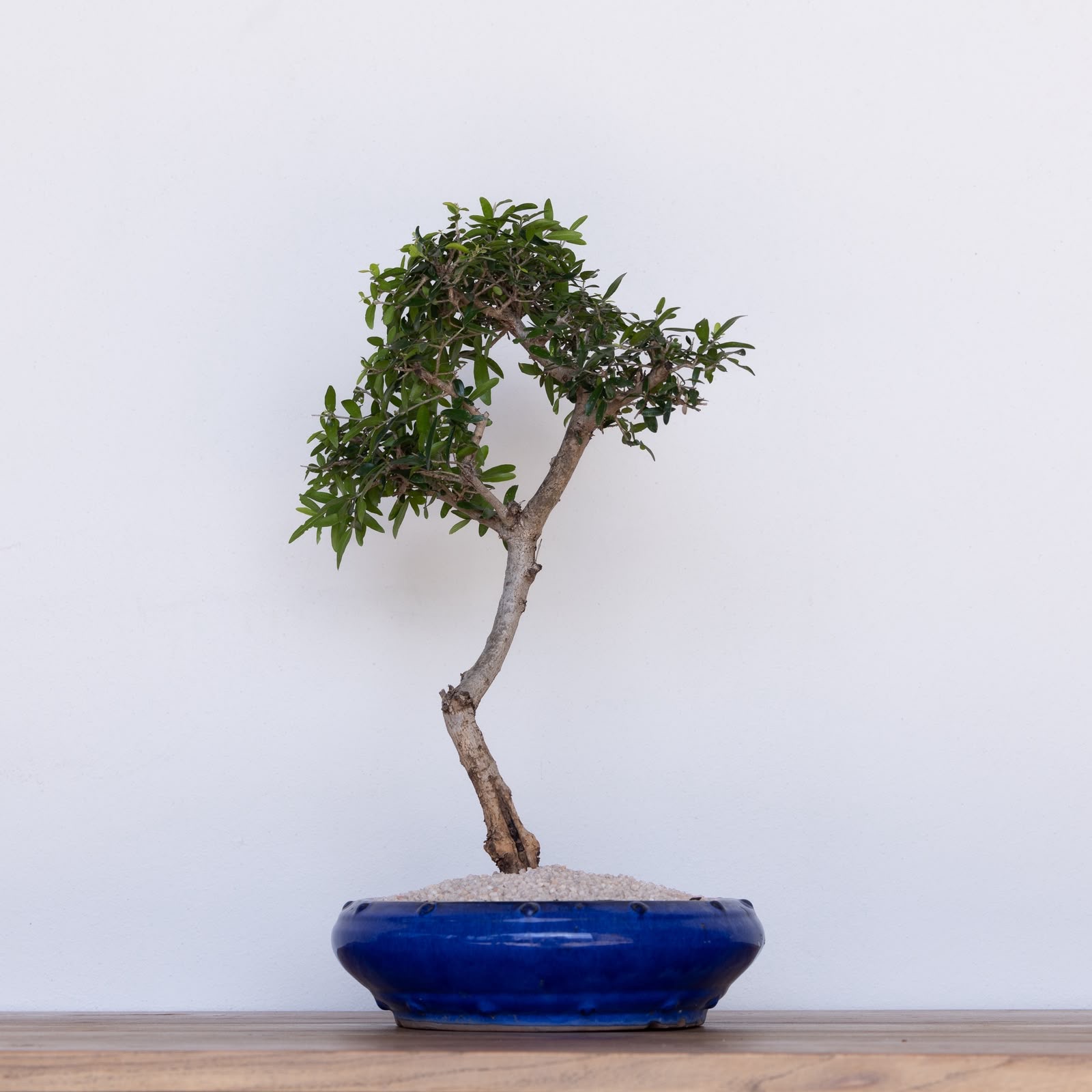

Description:
Olea europaea subsp. africana, commonly known as the Wild Olive, is a hardy indigenous South African tree highly valued for bonsai. It develops small, narrow grey-green leaves with silvery undersides, finely textured bark, and a naturally rugged trunk that becomes more characterful with age. Mature trees may produce small creamy-white flowers followed by dark purple to black olive-like fruit.
The Wild Olive responds exceptionally well to pruning, wiring, and regular trimming, making it ideal for developing dense branching and compact foliage. Its strong trunk, natural deadwood features, and ability to survive harsh conditions allow it to create the appearance of an ancient tree even at a relatively small scale.
General Bonsai Care:
- Light: Prefers full sun to very bright light. Good sunlight encourages compact growth, smaller leaves, and dense branching.
- Water: Water thoroughly when the upper layer of soil begins to dry. Although drought tolerant once established, bonsai specimens should not be allowed to remain completely dry for extended periods.
- Soil: Use a free-draining bonsai mix that provides good aeration while retaining enough moisture for healthy root growth.
- Temperature: Thrives in South Africa’s warm conditions and tolerates light frost. Protect young or recently repotted trees from severe cold.
- Feeding: Feed regularly during the growing season with a balanced bonsai fertilizer. Reduce feeding during cooler periods when growth slows.
- Pruning: Trim new shoots regularly to maintain shape and encourage fine ramification. Larger branches can be pruned during active growth, and the tree generally responds well to hard pruning.
- Wiring: Young branches are flexible and easy to wire, while older branches become hard and brittle. Check wire regularly to prevent scarring.
- Repotting: Repot every two to three years while young, and less frequently as the tree matures. Root pruning is best done as active growth begins.
With its silver-green foliage, weathered bark, and remarkable resilience, the Wild Olive captures the spirit of the African landscape in miniature—an enduring bonsai that becomes more impressive with every passing year.
Below are some species we are familiar with…