
Ferocactus horridus
Ferocactus horridus – The Fish Hook Barrel Cactus
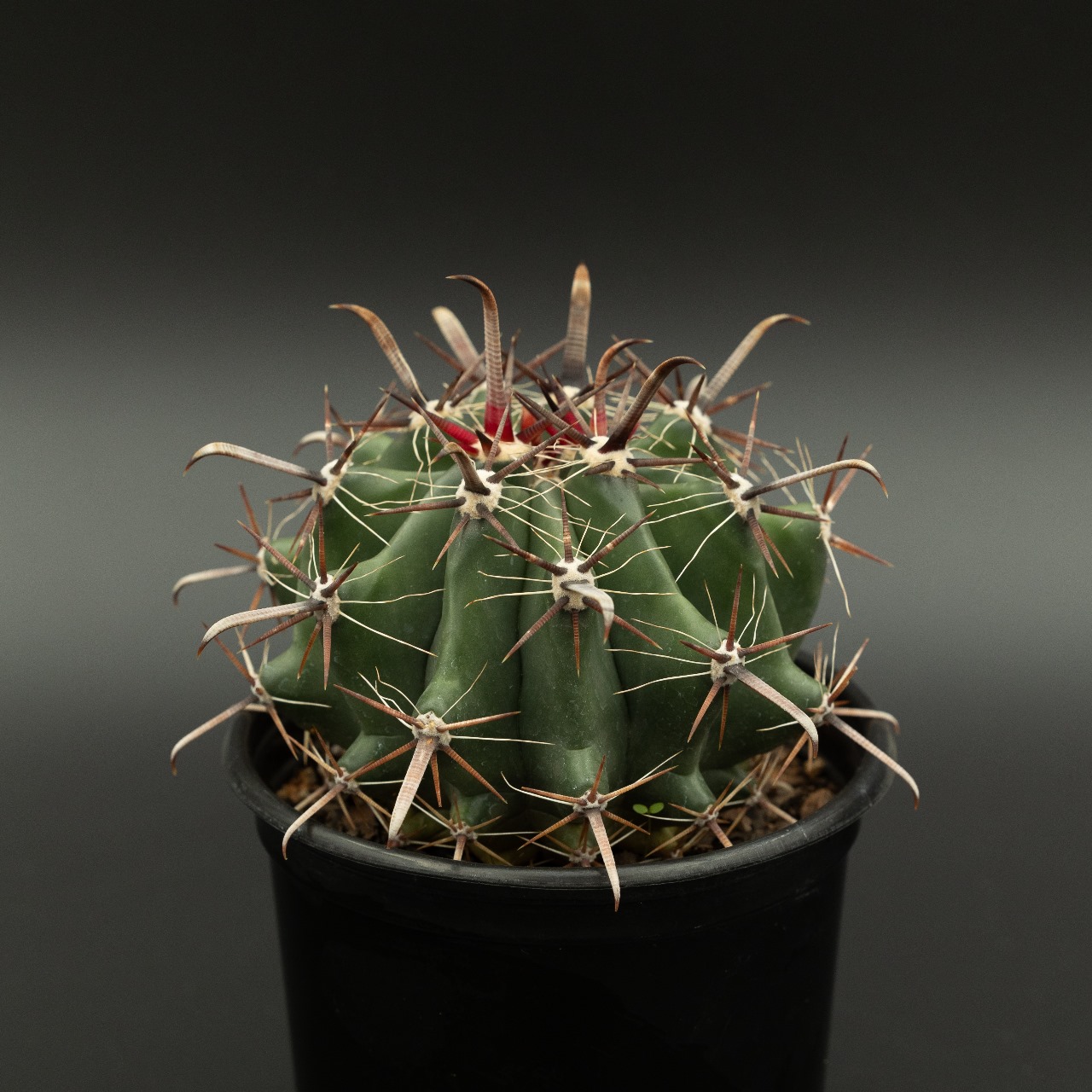
Ferocactus horridus is a striking barrel cactus species belonging to the Cactaceae family. Renowned for its robust and heavily spined appearance, this plant is a favorite among cactus enthusiasts. Its bold silhouette and vibrant spines make it a standout in any xeriscape or succulent collection.
Common Characteristics
- Form: Ferocactus horridus is a solitary, globular to barrel-shaped cactus that becomes more columnar as it matures. It has a well-defined, symmetrical ribbed structure.
- Spines: This species is particularly noted for its prominent spines, which are large, stiff, and often curved. The spines can range in color from red to yellow, creating a striking contrast against the plant’s green body.
- Size: The cactus grows to about 30–70 cm (12–28 inches) in height and 30–40 cm (12–16 inches) in diameter when mature, though growth is relatively slow.
- Flowers: Ferocactus horridus produces funnel-shaped flowers at the crown of the plant during the growing season, typically in shades of yellow or orange. These blooms are small compared to the size of the plant but add a delightful splash of color.
- Fruits: Following flowering, the plant produces small, fleshy fruits that are yellow and contain numerous seeds.
Native Habitat
Ferocactus horridus is native to the arid and semi-arid regions of Mexico, particularly in Baja California and Sonora. It thrives in desert environments, growing on rocky slopes and gravelly soils. Its natural habitat is characterized by high temperatures, intense sunlight, and minimal rainfall, making it well-adapted to drought conditions.
Care Requirements
- Light: Provide bright, direct sunlight for at least 6–8 hours daily. Outdoors, it thrives in full sun, while indoors, a south-facing window or grow light is essential for maintaining its health and shape.
- Watering: This cactus is drought-tolerant and requires minimal watering. Allow the soil to dry out completely between waterings. During the growing season (spring to summer), water once every 2–4 weeks. Reduce watering in the winter when the plant is dormant. Overwatering can lead to root rot.
- Soil: Use a well-draining cactus or succulent mix. Adding coarse sand or perlite to standard potting soil can improve drainage. This plant prefers slightly acidic to neutral soil.
- Temperature: Ferocactus horridus thrives in warm temperatures and is not frost-tolerant. Maintain temperatures between 18–35°C (65–95°F). If grown in cooler climates, it should be kept indoors or in a greenhouse during the winter.
- Fertilizer: Feed the plant with a cactus-specific fertilizer diluted to half strength during the growing season, approximately once a month. Avoid fertilizing in the winter.
- Repotting: Repot every 2–3 years or when the plant outgrows its pot. Choose a pot slightly larger than the current one, and handle carefully to avoid injury from the spines.
- Propagation: Ferocactus horridus can be propagated from seeds, though germination is slow and requires patience. Ensure a warm, bright environment for seed germination.
Unique and Special Feature
What makes Ferocactus horridus particularly special is its robust and fearsome spines, which serve as an effective defense mechanism against herbivores in its natural habitat. Beyond their protective function, the spines are visually striking and play a role in shading the cactus from the harsh desert sun. Its ability to survive and even thrive in some of the harshest environments on Earth is a testament to its resilience and adaptability. When it blooms, the contrast of its delicate flowers against the rugged, spiny body is a truly mesmerizing sight, showcasing the beauty and diversity of desert flora.
Below are some species we are familiar with…
Ferocactus glausescens
Ferocactus horridus
Ferocactus histrix
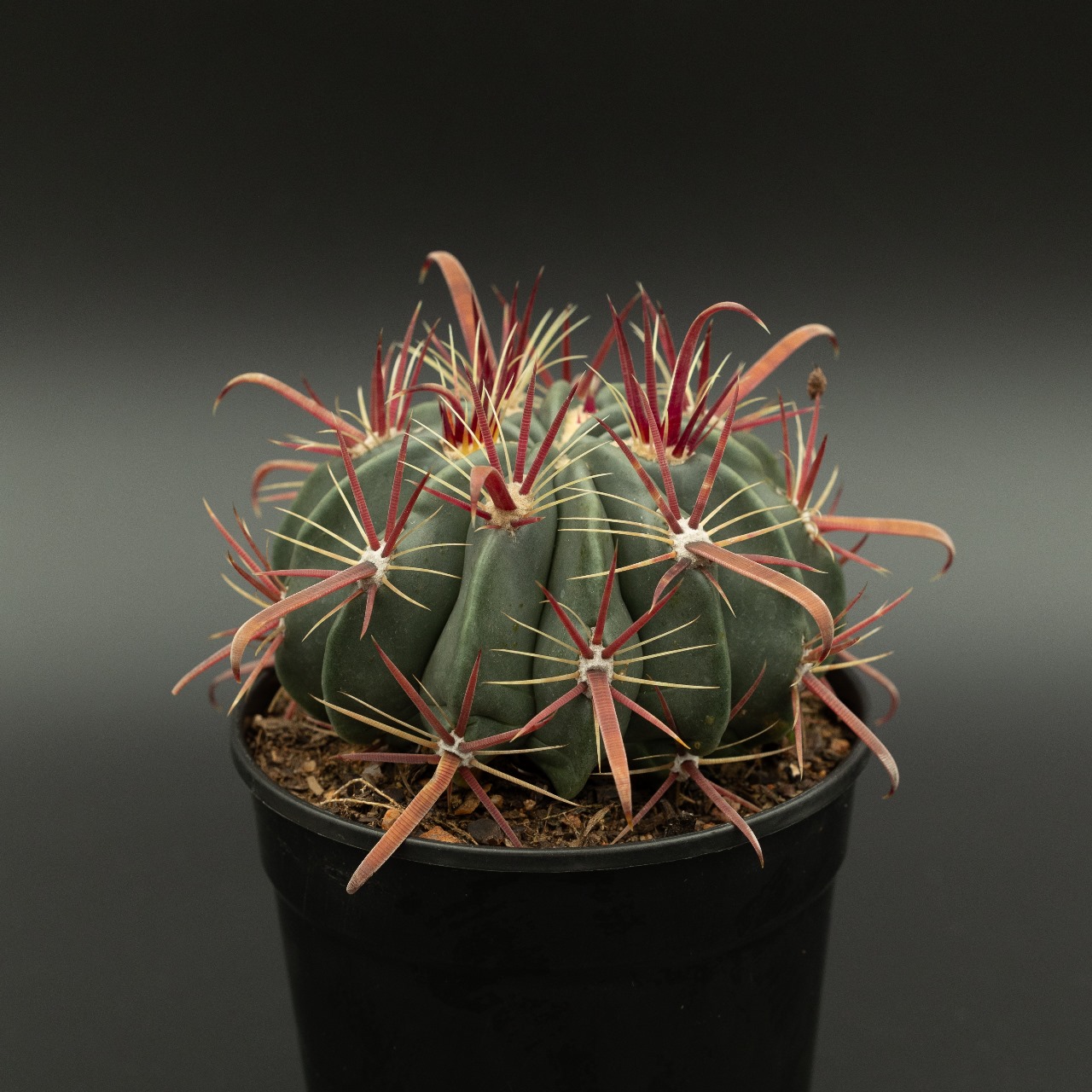
Ferocactus latispinus
Ferocactus latispinus flavispinus

Ferocactus stainesii