
Haworthiopsis attenuata bones
Haworthiopsis attenuata bones – The Zebra’s Bones Succulent
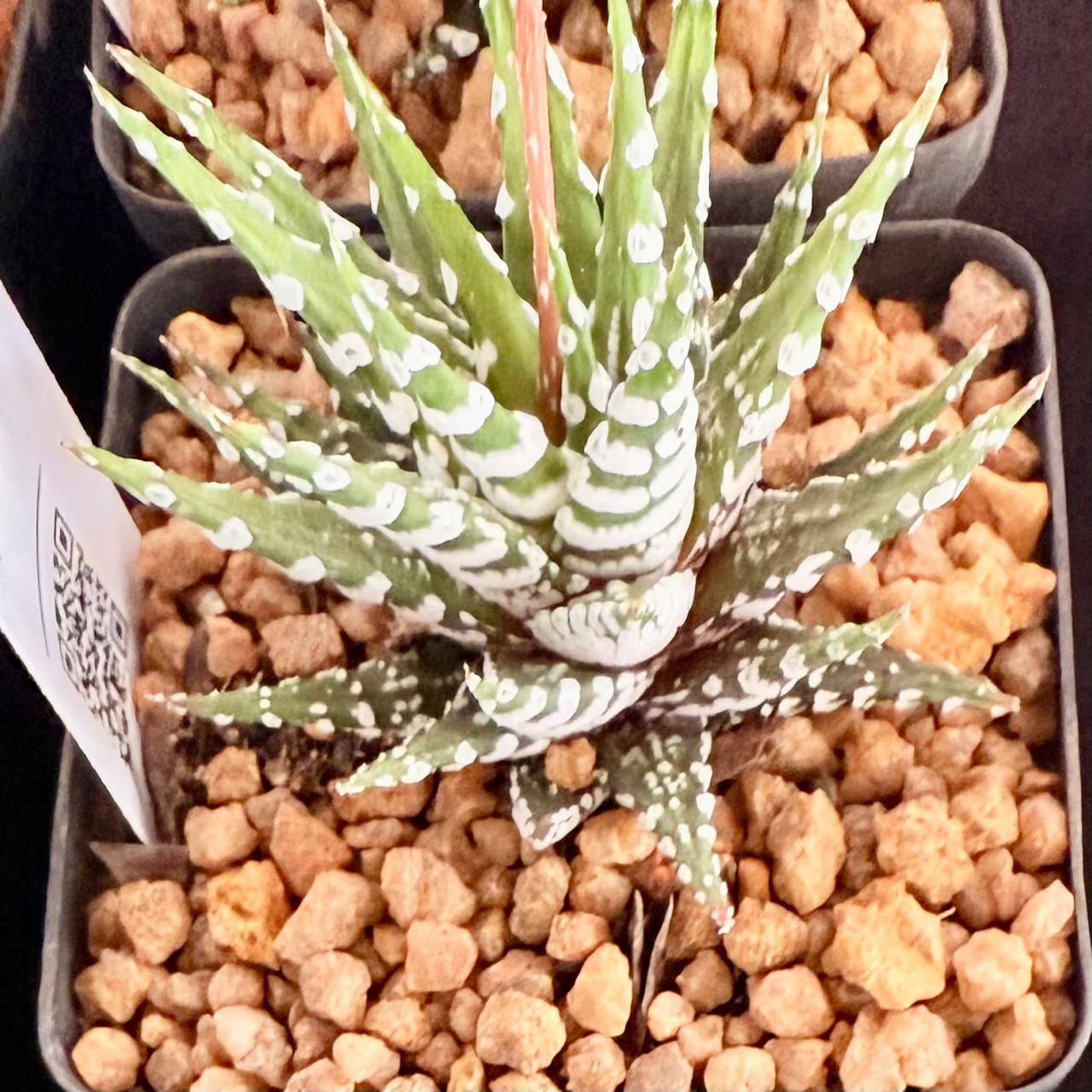
Haworthiopsis attenuata ‘Bones’ is a cultivar of the popular Haworthiopsis attenuata, known for its unique and striking appearance. This variety, often referred to as “Bones,” stands out due to its elongated, spindly leaves that have a more skeletal, angular appearance compared to the more compact, rosette-forming H. attenuata. The leaves of ‘Bones’ are a pale green with a translucent, almost white quality, especially along the edges, giving it a “bone-like” appearance. The characteristic white, spiny markings along the edges of the leaves are prominent, and the plant retains the striking “zebra” pattern of its parent species.
The plant tends to grow in an open, sparse rosette form, with leaves that are more upright and less dense than other Haworthiopsis varieties. It grows to about 8–10 inches (20–25 cm) in height and can spread outwards as it matures. Like its parent, the flowers are small, tubular, and usually white or light pink, blooming on tall spikes during late winter or early spring.
Native Range:
Haworthiopsis attenuata ‘Bones’ is a cultivar derived from the Haworthiopsis attenuata species, which is native to South Africa. These plants typically grow in rocky, well-drained soils in the southwestern part of the country, particularly in areas where there is moderate sunlight and occasional rainfall. The cultivar maintains the resilience and adaptability of the species, thriving in similar environments and conditions.
Care Tips:
- Light: Haworthiopsis attenuata ‘Bones’ thrives in bright, indirect light but can tolerate some direct sunlight, especially in cooler conditions. Too much direct sunlight can scorch the leaves, so it’s best to place it in a location where it receives filtered sunlight.
- Watering: This cultivar is drought-tolerant, like all succulents, and should be watered sparingly. Allow the soil to dry out completely between waterings. In the winter, reduce watering to prevent overwatering, as the plant goes into a semi-dormant state.
- Soil: Use a well-draining soil mix, such as a cactus or succulent mix, with added sand or perlite for improved drainage. Avoid heavy or clay-rich soils, as they can retain too much moisture and cause root rot.
- Temperature: Haworthiopsis attenuata ‘Bones’ does well in temperatures between 60°F and 80°F (15°C–27°C). It can tolerate brief periods of cooler temperatures, but should be protected from frost. In regions with cold winters, it is best to bring the plant indoors or provide adequate shelter.
- Fertilizing: Feed the plant with a diluted, balanced fertilizer during the active growing months (spring and summer). Avoid fertilizing in the winter when the plant is dormant. Use a low-concentration solution to prevent over-fertilization.
- Propagation: Like other Haworthiopsis varieties, ‘Bones’ can be propagated through offsets, leaf cuttings, or by separating pups from the base of the plant. Leaf cuttings should be allowed to callus for a few days before being placed in well-draining soil.
Unique and Special:
Haworthiopsis attenuata ‘Bones’ is special for its skeletal, angular leaf structure, which distinguishes it from the more compact and rounded form of the standard Haworthiopsis attenuata. The plant’s pale, translucent leaf edges, combined with the prominent white spines, give it a unique “bone-like” aesthetic. This makes it an intriguing and visually striking addition to any succulent collection. The plant’s resilience and adaptability also make it an excellent choice for beginners or those with limited gardening experience, while still offering a visually dynamic presence.
What sets this cultivar apart is its ability to thrive in slightly lower light conditions compared to many other succulents, making it an excellent indoor plant for those with indirect light sources. Its distinctive, minimalist look and easy care requirements make it a great choice for collectors and plant enthusiasts.
Below are some species we are familiar with…
Haworthiopsis attenuata
Haworthiopsis attenuata bones
Haworthiopsis attenuata colossal bones
Haworthiopsis attenuata enon
Haworthiopsis coarctata
Haworthiopsis colossal coarctata
Haworthiopsis coarctata bellula
Haworthiopsis crocodile skin
Haworthiopsis fasciata
Haworthiopsis fasciata lime
Haworthiopsis limifolia
Haworthiopsis marble queen
Haworthiopsis reinwardtii
Haworthiopsis scabra starkiana