
Haworthia bayeri hybrid
Haworthia bayeri hybrid – The windowed haworthia
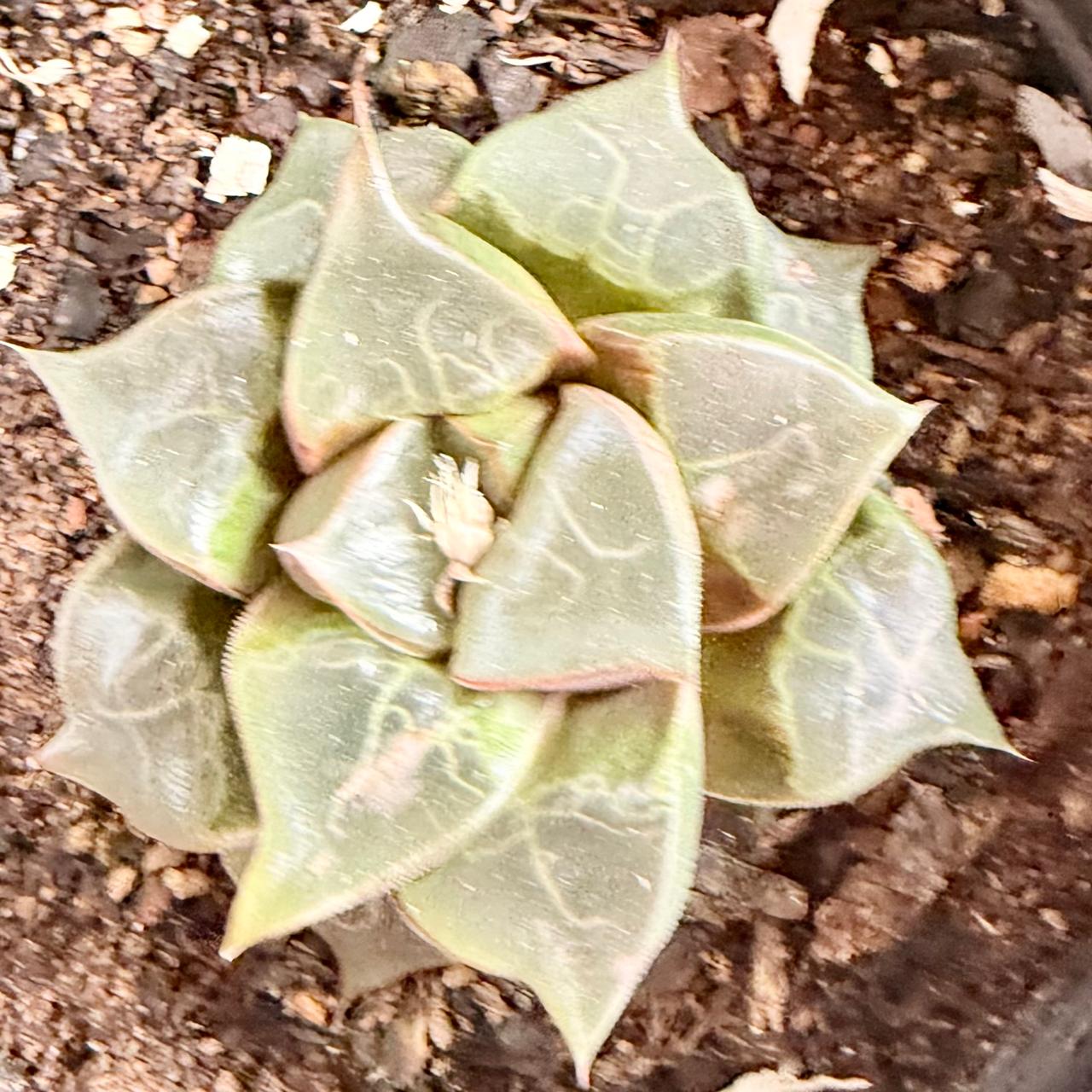
The Haworthia bayeri hybrid is a beautiful, compact succulent that exhibits the best features of its parent species. It typically has rosettes of thick, fleshy, pointed leaves that are arranged tightly, forming a symmetrical shape. The leaves are usually a deep green, sometimes with a slightly translucent or glassy appearance due to the specialized “windows” (trichomes) on the leaf surfaces, which allow the plant to photosynthesize in low light conditions.
The hybrid is known for its striking texture and color variations, which can include a mix of green and light yellow or white markings, depending on the specific hybridization. The leaves can sometimes have a slight red or purple tinge at the edges when exposed to bright sunlight, giving the plant a colorful, eye-catching look. The hybrid nature of this Haworthia means it may exhibit variations in leaf shape and markings compared to pure species plants.
Native Range:
The Haworthia bayeri species, from which the hybrid is derived, is native to South Africa. Specifically, it is found in the Western Cape region, where it thrives in rocky, arid environments with limited rainfall. While hybrids like the Haworthia bayeri hybrid are often cultivated in nurseries and collections, they maintain the hardiness of their parent species. These hybrids benefit from the ability to adapt to various growing conditions, including both high and low light environments.
Care Tips:
- Light: Haworthia bayeri hybrid prefers bright, indirect light. It can tolerate some direct sunlight, especially in cooler climates or during the morning hours. However, in very hot or harsh sunlight, the plant may suffer from sunburn, so it’s best to protect it during the peak afternoon sun.
- Watering: Like most succulents, this hybrid thrives with infrequent watering. It’s best to let the soil dry out completely between waterings to avoid root rot. Water thoroughly when the soil is dry but ensure that the pot has excellent drainage.
- Soil: Well-draining soil is essential for this plant. A cactus or succulent mix with added sand or perlite works well to ensure proper drainage and to prevent the roots from sitting in moisture, which can lead to rot.
- Temperature: Haworthia bayeri hybrid prefers temperatures ranging from 65°F to 80°F (18°C to 27°C). It is sensitive to cold and should be protected from temperatures below 40°F (4°C).
- Fertilizing: During the growing season (spring and summer), you can feed the plant with a diluted, balanced fertilizer. Avoid fertilizing in the winter months when the plant is in dormancy.
- Propagation: The Haworthia bayeri hybrid can be propagated through offsets or by leaf cuttings, though propagation via offsets is more common. It’s a relatively slow-growing plant, but with proper care, it can eventually form a beautiful cluster of rosettes.
Unique and Special:
What makes the Haworthia bayeri hybrid particularly special is its stunning appearance and adaptability. The hybrid nature of the plant often results in unique color patterns, with varying shades of green and white, as well as distinctive translucent spots on the leaves. This makes the hybrid an attractive option for collectors and enthusiasts. Additionally, the plant’s resilience to both low-light conditions and drought makes it an excellent choice for beginners or those looking to add a low-maintenance, beautiful succulent to their collection. The hybrid’s ability to thrive in less-than-ideal conditions, combined with its decorative appearance, makes it a standout in any succulent garden.
Below are some species we are familiar with…
Haworthia angustifolia
Haworthia angustifolia hybrid
Haworthia bayeri hybrid
Haworthia comptoniana hybrid
Haworthia cooperi
Haworthia cymbiformis
Haworthia ginsekai
Haworthia glauca
Haworthia grey ghost
Haworthia herbacea
Haworthia iguana
Haworthia lime star
Haworthia mutica byukuya
Haworthia nan
Haworthia olive star
Haworthia picta
Haworthia truncata