
Sansevieria dooneri
Sansevieria dooneri – Dooner’s Snake Plant
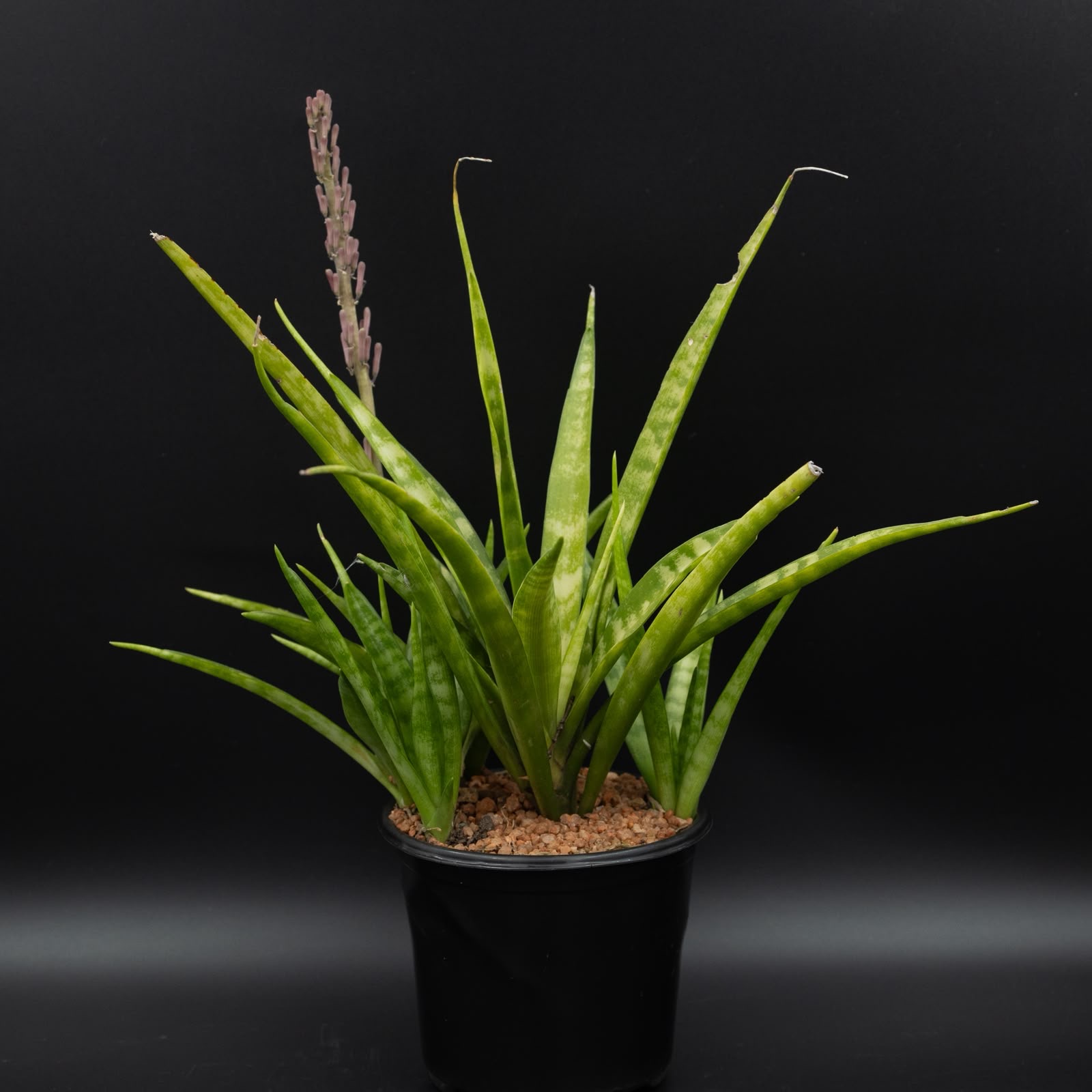
Sansevieria dooneri, also known as Dooner’s snake plant or Dooner’s Sansevieria, is a lesser-known species from the Asparagaceae family. This species is one of the many varieties of the popular Sansevieria genus, which includes well-known varieties like Sansevieria trifasciata (the snake plant or mother-in-law’s tongue). Sansevieria dooneri is prized for its unique, upright leaves and distinctive markings, making it a favorite among collectors and indoor gardeners alike.
Common Characteristics:
- Foliage: Sansevieria dooneri has long, narrow, and stiff leaves that grow in a rosette pattern. The leaves are dark green with lighter, contrasting horizontal stripes or spots, often with a slightly glossy texture. The leaves can grow up to 2 feet (60 cm) tall, though they tend to remain somewhat compact, making them suitable for smaller spaces. The shape of the leaves is sword-like, tapering to a sharp point at the top, which is characteristic of many Sansevieria species.
- Growth Habit: The plant tends to grow upright, with multiple rosettes emerging from the base, and it does not spread as aggressively as some other Sansevieria species. Its upright growth and slow expansion make it well-suited for container gardening or as a decorative indoor plant. It tends to form a dense, bushy clump.
- Flowers: Sansevieria dooneri produces small, tubular flowers that appear on long, thin flower stalks. These flowers are generally white or cream-colored and have a pleasant fragrance. Flowering is rare when grown indoors but can occur in optimal conditions, typically in the summer months.
Native Habitat:
Sansevieria dooneri is native to tropical and subtropical regions of West Africa, where it thrives in rocky, well-drained soils. Like many Sansevieria species, it is adapted to survive in dry, low-light conditions and can withstand periods of drought. The plant’s natural environment often consists of scrublands and rocky hillsides, where it grows in crevices that provide shelter from the harsh midday sun.
Care Instructions:
- Light: Sansevieria dooneri is a versatile plant when it comes to lighting conditions. It thrives in bright, indirect light but can also tolerate low light, making it an excellent choice for indoor environments. While it can survive in shaded areas, its growth may slow down in low-light conditions. However, prolonged exposure to direct sunlight can lead to leaf burn, so indirect light is ideal.
- Watering: As with most Sansevieria species, Sansevieria dooneri is drought-tolerant and requires minimal watering. Overwatering is the most common cause of issues with this plant. It is best to allow the soil to dry out completely between waterings. During the growing season (spring to summer), the plant can be watered once every two weeks, and in the winter months, it should be watered even less frequently. Ensure the pot has good drainage to avoid root rot.
- Soil: This species prefers well-draining, slightly sandy soil. A cactus or succulent mix is ideal, but you can also create your own mixture by adding sand or perlite to regular potting soil. Good drainage is essential to prevent water from accumulating at the roots, which can cause the plant to rot.
- Temperature: Sansevieria dooneri prefers temperatures between 60°F to 85°F (15°C to 29°C) and is sensitive to cold. It should not be exposed to temperatures below 50°F (10°C), as this can damage the plant. It does well in typical household temperatures and is relatively low-maintenance in terms of temperature care.
- Fertilization: This plant is not a heavy feeder, so it does not require frequent fertilizing. During the growing season (spring and summer), you can feed it with a balanced, diluted fertilizer once a month. During the dormant period (fall and winter), it should not be fertilized.
Unique and Special Feature:
One of the most unique aspects of Sansevieria dooneri is its ability to purify the air. Like other Sansevieria species, it is an excellent air purifier that can remove toxins such as formaldehyde and benzene from indoor environments. This makes it a great choice for homes and offices, contributing to a cleaner and healthier atmosphere. Additionally, its attractive and unique foliage adds an elegant touch to any room, and its low-maintenance nature makes it a perfect plant for beginner gardeners or those with a busy lifestyle. Its ability to thrive in low light and with minimal water requirements is another reason it stands out as a favored choice among houseplant enthusiasts.
Below are some species we are familiar with…
Sansevieria dooneri
Sansevieria hyacinthoides
Sansevieria pearsonii
Sansevieria trifasciata
Sansevieria trifasciata laurentii
Sansevieria trifasciata laurentii nana