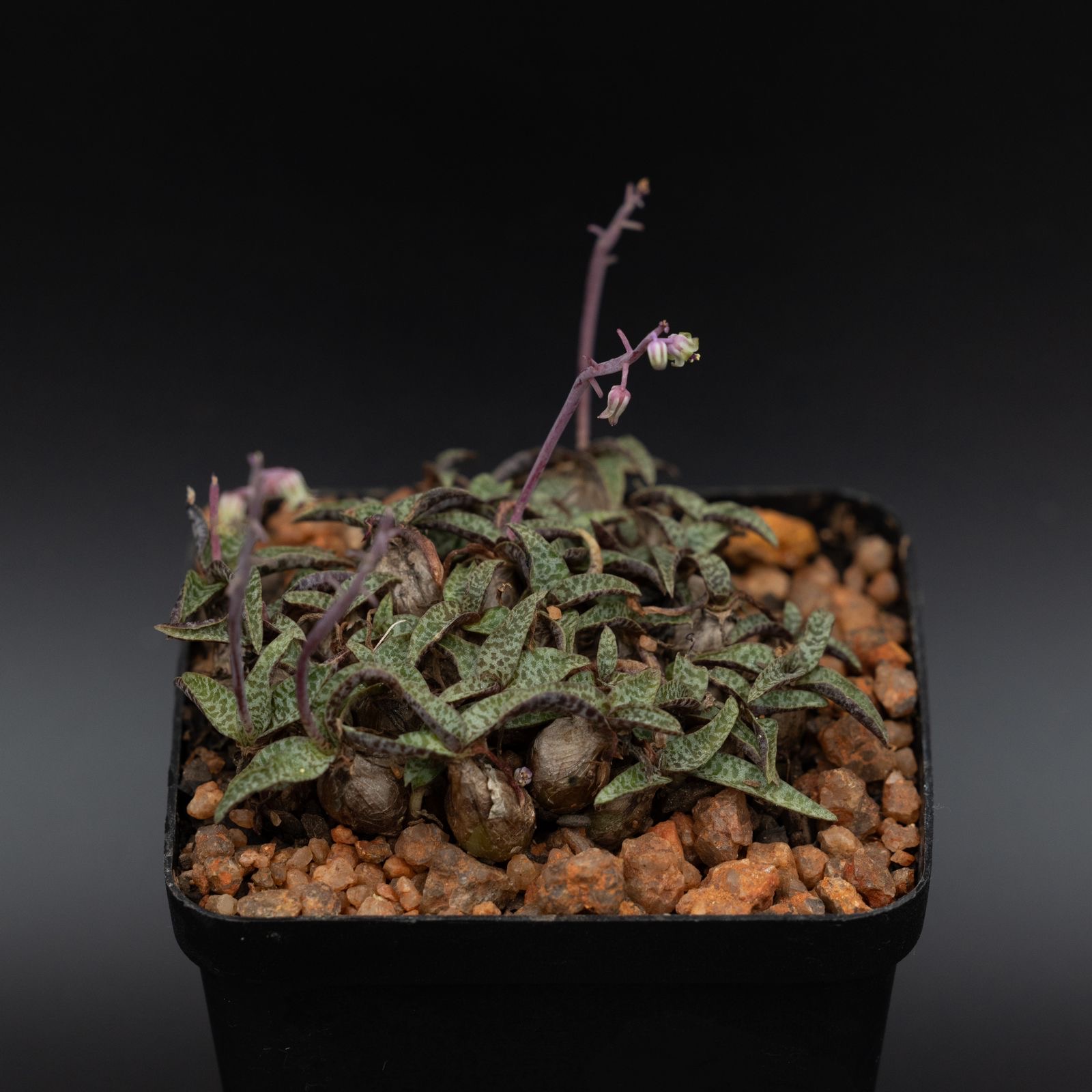
Ledebouria socialis
Ledebouria socialis – The Silver Squil

Ledebouria socialis, commonly known as the Silver Squill or Purple-Leaf Squill, is a fascinating species from the Asparagaceae family. Native to southern Africa, particularly South Africa, this low-growing perennial is prized for its unique foliage and striking appearance. It’s a popular choice for houseplant enthusiasts due to its attractive features and relatively easy care requirements.
Common Characteristics:
- Leaves: One of the most distinctive features of Ledebouria socialis is its fleshy, spotted leaves. The leaves are elongated, lance-shaped, and have a glossy green color with purple spots or blotches on the upper surface. The undersides of the leaves often have a purple hue, adding to the visual interest. The leaves grow in rosettes and can reach up to 12-18 inches (30-45 cm) in length.
- Flowers: The plant produces small, bell-shaped flowers, typically green or pale lilac in color, borne on a slender stalk. While the flowers are not the primary attraction, they do add a delicate contrast to the plant’s striking foliage. The flowering season typically occurs in late winter to early spring.
- Growth Habit: Ledebouria socialis is a compact, clumping plant that spreads by producing offsets or bulb-like structures from its base, allowing the plant to form dense colonies over time. It tends to remain relatively low in height, making it an ideal choice for container gardening or as a ground cover in a dry garden.
Native Habitat:
This species is native to the arid regions of southern Africa, including areas of South Africa, Namibia, and Lesotho. It typically grows in rocky outcrops, on hillsides, and in semi-arid environments. It thrives in areas where the conditions are dry but still receives occasional rainfall, which helps to sustain the plant during its growing period.
Care Instructions:
- Light: Ledebouria socialis prefers bright, indirect light. While it can tolerate some direct sunlight, prolonged exposure to strong sun can cause the leaves to burn or lose their vibrant colors. Ideal lighting conditions are a well-lit room with filtered sunlight, such as near a window with sheer curtains.
- Watering: This species is quite drought-tolerant and should be watered sparingly. It is best to allow the soil to dry out between waterings, as the plant is susceptible to root rot in overly moist conditions. During the growing season (spring and summer), water every 1-2 weeks, while in winter, reduce watering to once a month or less.
- Soil: Ledebouria socialis prefers well-draining, sandy or cactus mix soil. It can be grown in a standard potting mix as long as it is amended with sand or perlite to improve drainage. Avoid heavy, moisture-retentive soils, which can lead to root rot.
- Temperature: This plant thrives in warm environments and prefers temperatures between 60°F to 85°F (15°C to 29°C). It is not frost-tolerant, so it should be kept indoors during cold months if grown in regions with freezing temperatures. In areas with mild winters, it can be grown outdoors in containers that are moved inside when the temperature drops.
- Fertilization: While not a heavy feeder, Ledebouria socialis benefits from occasional feeding during the growing season. A diluted, balanced liquid fertilizer (such as a 10-10-10) applied once a month during spring and summer will encourage healthy growth. Avoid fertilizing in winter, as the plant is typically in a dormant phase.
Unique and Special Feature:
What sets Ledebouria socialis apart is its beautiful, variegated foliage, which makes it a standout in any collection of houseplants. The combination of green and purple spots on its leaves gives it a striking appearance that changes with the light, adding to its appeal as a decorative accent. The plant is relatively easy to propagate from offsets, allowing gardeners to create new plants for free. Additionally, it is an excellent choice for those looking for a plant that can thrive with minimal care, making it perfect for beginners.
Fun Fact: In its native environment, Ledebouria socialis is often found growing in rocky, well-drained soils where it receives just the right amount of moisture during the rainy season. The plant has evolved to store water in its fleshy leaves, making it highly resilient in its arid habitat. This water-storing ability helps it endure drought periods, giving it an almost “survivalist” quality, which contributes to its popularity as a low-maintenance houseplant.
Special Note: In addition to its ornamental value, Ledebouria socialis is sometimes grown in succulent gardens or used in mixed containers, where its striking foliage provides contrast to other plants. It pairs especially well with other drought-tolerant species like Agave or Euphorbia.
Below are some species we are familiar with…
Ledebouria socialis