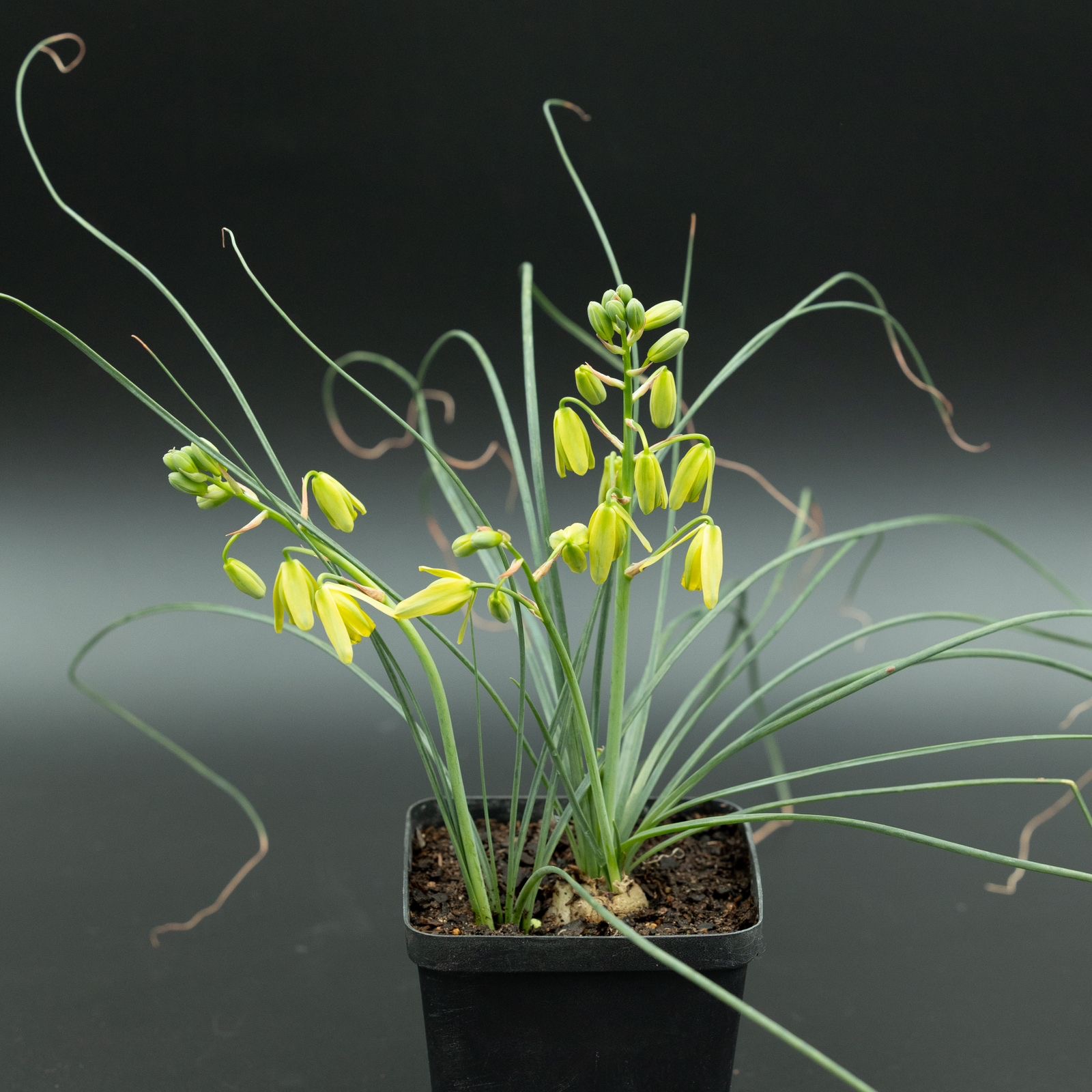
Albuca polyphylla
Albuca polyphylla – The Pregnant Onion

Albuca polyphylla, from the family Asparagaceae, is a unique and fascinating succulent species, known for its striking appearance and delightful fragrance. This species is often referred to as the “spiral albuca” or “starry albuca” due to the spiral arrangement of its leaves and the shape of its flowers.
Common Characteristics:
- Leaves: Albuca polyphylla is characterized by long, narrow, and twisted leaves that form a rosette. These leaves can be green to grayish-green in color and have a corkscrew-like appearance, which gives the plant its unique, spiral shape. They emerge in a dense cluster and can grow up to 12 inches (30 cm) long.
- Flowers: The flowers of Albuca polyphylla are another standout feature. They are star-shaped, white or pale yellow with green veins, and they bloom in the spring. The flowers are strongly scented, often described as sweet or reminiscent of vanilla. This makes the plant especially popular for fragrance gardens or indoor plant collections.
- Growth Habit: This species has a bulbous growth habit, storing water in its bulb during dry periods. During the growing season, the plant can produce a tall flower spike from the center of the rosette, which is topped with multiple fragrant flowers.
Native Habitat:
Albuca polyphylla is native to the Eastern Cape Province of South Africa, particularly in the region’s dry, rocky areas. It is adapted to a Mediterranean climate, with distinct wet and dry seasons, which is important for understanding its watering needs.
Care Instructions:
- Light: This plant thrives in bright, indirect light. While it can tolerate some direct sunlight, particularly in the morning or late afternoon, it is best to avoid prolonged exposure to harsh midday sun, which can scorch the leaves. It’s ideal for windowsills or locations with bright but filtered light.
- Watering: Albuca polyphylla is a drought-tolerant plant, thanks to its bulbous structure, but it should be watered regularly during its growing season (spring and summer). The key is to let the soil dry out between waterings to prevent root rot. In the winter, reduce watering significantly as the plant goes dormant. It’s crucial to avoid letting the plant sit in water, so ensure proper drainage in the pot or soil.
- Soil: Well-draining soil is essential. A mix formulated for succulents or cacti, or a sandy-loam mixture with added perlite or pumice, works well for this species. Avoid heavy, clay-based soils that retain too much moisture.
- Temperature: Albuca polyphylla prefers temperatures between 50°F (10°C) and 85°F (29°C) and should be protected from frost. It is best grown outdoors in USDA hardiness zones 9-11 or as an indoor plant in cooler climates.
- Fertilization: Apply a balanced, diluted fertilizer during the growing season (spring through early summer) every few weeks to promote healthy growth. Avoid fertilizing during the winter months when the plant is dormant.
Unique and Special Feature:
One of the most unique aspects of Albuca polyphylla is its spiral-shaped leaves, which create an eye-catching display. In addition, the plant’s flowers are not only beautiful but also highly fragrant, attracting pollinators and adding a sensory experience to your garden or home.
Fun Fact: Albuca polyphylla is sometimes referred to as a “corkscrew plant” because of the twisting, spiral shape of its leaves. This makes it an excellent choice for those looking to add a unique, architectural touch to their succulent or bulb collections.
Special Note: The plant’s bulb is able to survive dry spells and can even go dormant during extreme heat, storing energy until more favorable growing conditions return. Because of this adaptability, Albuca polyphylla is a great choice for those new to succulent care or gardeners looking for a low-maintenance yet stunning plant.
Below are some species we are familiar with…
Albuca polyphylla