
Titanopsis hugo-sclechteri
Titanopsis hugo-sclechteri – Hugo’s Jewel

Titanopsis hugo-schlechteri is a rare and captivating succulent, admired for its intricate leaf textures and coloration. This species blends seamlessly with its rocky habitat, demonstrating an incredible adaptation to its environment.
Common Characteristics
- Growth Habit: A low-growing, clump-forming succulent with rosettes that typically measure around 3–5 cm (1–2 inches) in diameter.
- Leaves: Short, triangular, and fleshy leaves with warty, textured surfaces. The tips often have colors ranging from gray-green to pink, orange, or cream, giving the plant a striking appearance.
- Flowers: Produces small, daisy-like flowers that are usually yellow or pale orange. These flowers bloom in autumn or early winter, opening during the day.
- Roots: Compact root system suitable for growing in nutrient-poor, rocky soils.
- Lifespan: A long-lived perennial, thriving in harsh, arid environments.
Native Habitat and Origins
This species is native to the arid regions of Namibia and South Africa. It is commonly found in quartzite gravel and limestone-rich soils, where its textured appearance helps it blend into its surroundings, offering protection from predators.
Care Guide for Titanopsis hugo-schlechteri
- Light: Thrives in bright, indirect sunlight or full sun. Ensure gradual acclimation to full sun to prevent scorching.
- Watering: Water sparingly during its growing seasons (autumn and spring). Allow the soil to dry completely between waterings. During summer dormancy, water only if the plant shows signs of severe dehydration.
- Soil: Prefers well-draining, gritty soils such as a cactus mix with added pumice or coarse sand.
- Temperature: Hardy in USDA zones 9-11. While it can tolerate brief exposure to mild frost, it should be protected from freezing conditions.
- Fertilizer: Apply a diluted, low-nitrogen cactus fertilizer once or twice during the active growing season. Avoid over-fertilizing.
- Propagation: Propagation is best done through seeds, though offsets can occasionally form. Sow seeds in a well-draining mix, keeping the substrate lightly moist until germination.
Unique and Special Feature
The textured leaves of Titanopsis hugo-schlechteri resemble weathered stone, an adaptation that not only provides camouflage but also reflects light to minimize water loss in its arid habitat. Its striking resemblance to its surroundings makes it a marvel of natural design, perfect for collectors and enthusiasts who appreciate plants with an evolutionary story.
Below are some species we are familiar with…
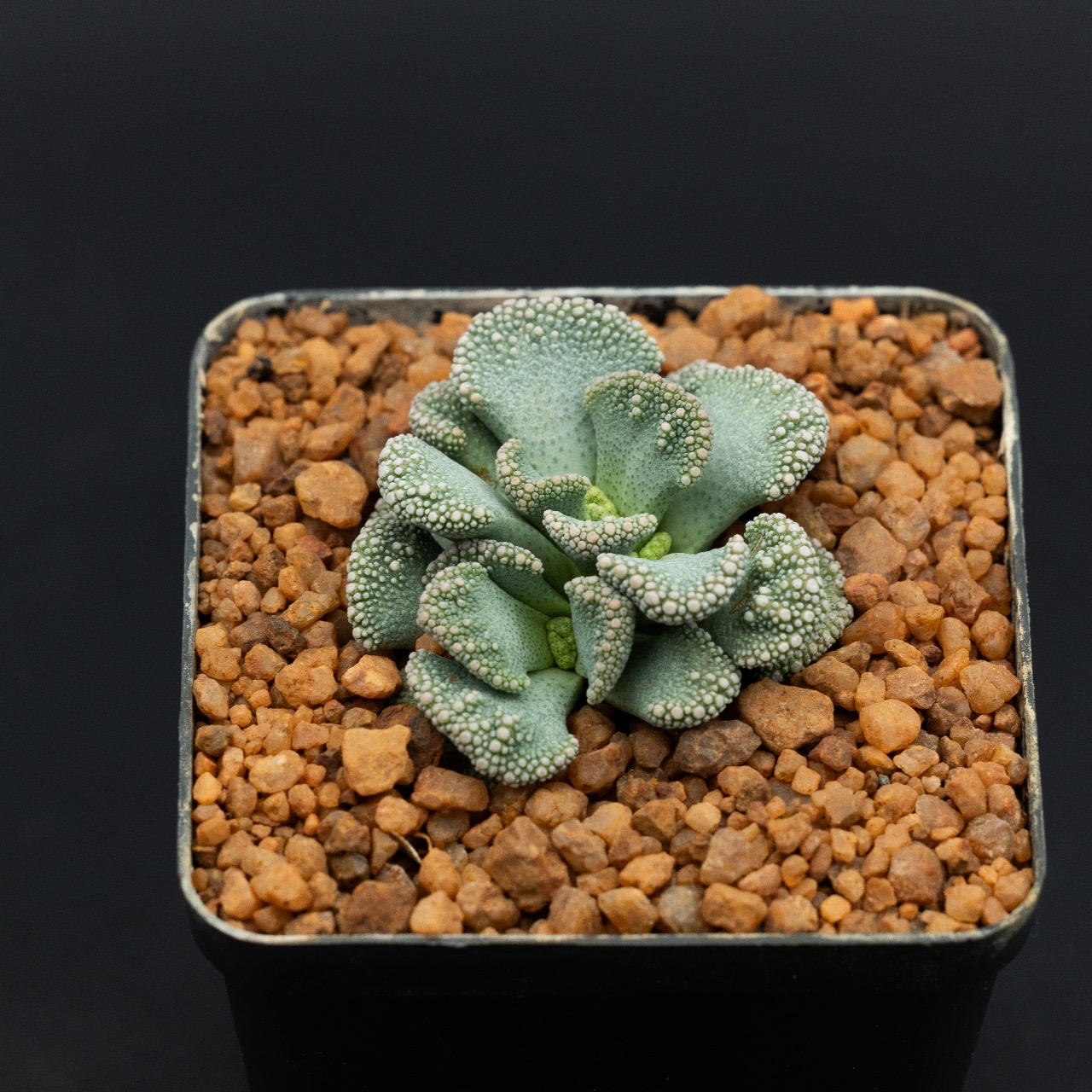
Titanopsis calcarea
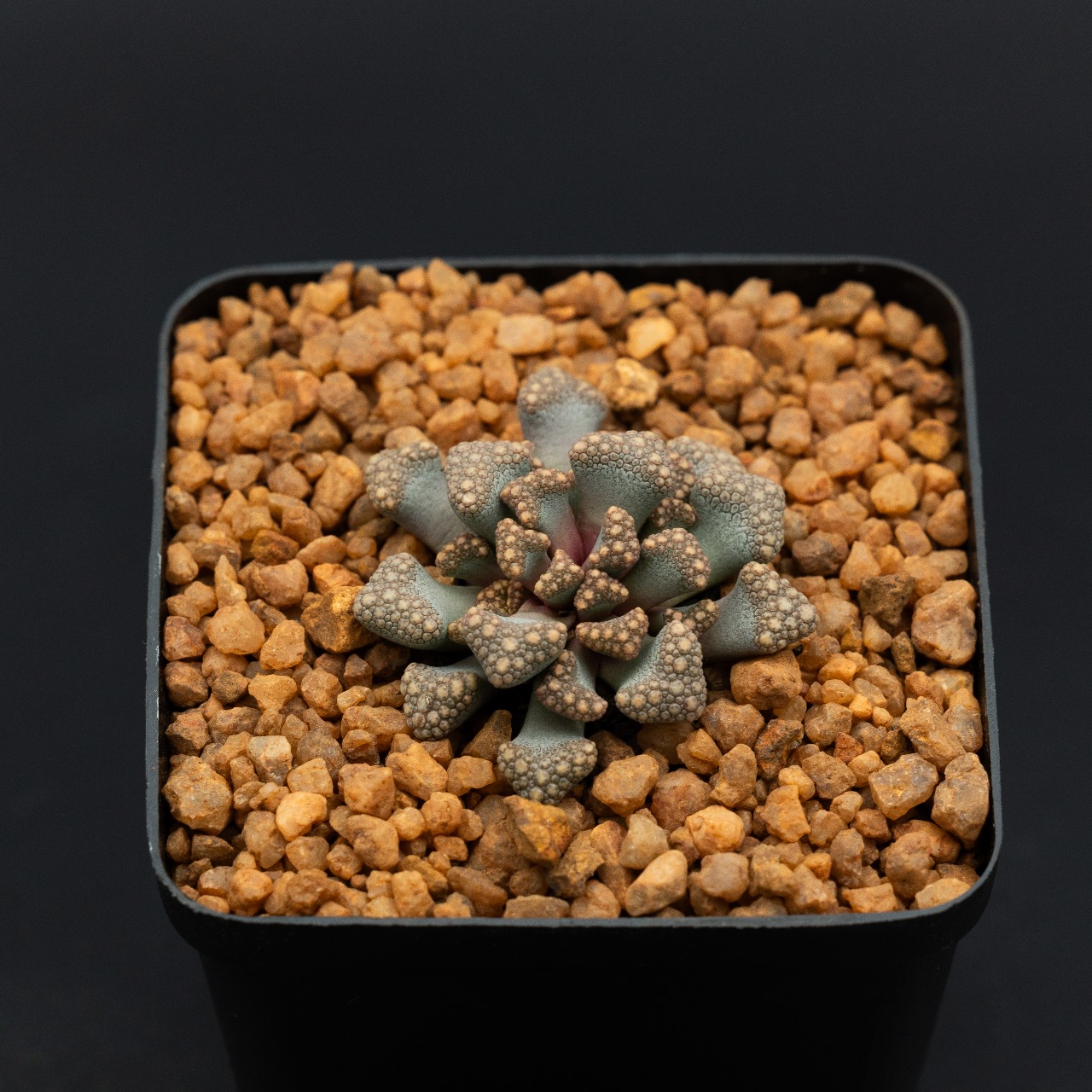
Titanopsis hugo-sclechteri
